
Furnace Repair in the Village of Baldwinsville
There is no default Baldwinsville house, so the age of your furnace genuinely cannot be guessed from the address.
Furnace Repair quote in Baldwinsville
Share a few details so we can confirm coverage and arrange the right next step.
Would you rather talk it through? Call (315) 640-3590, answered 24/7.
$100 off your first job
Credited by us on your first booked job.
- One credit per customer per property, on your first booked job.
- Valid through December 31, 2026.
Mention this offer when you book. Full terms.
20.6 percent prewar, 20.1 percent since 2000
The American Community Survey 2020-2024 five-year estimates put the median year structure built in Baldwinsville village at 1975, plus or minus 4 years. Of 3,784 housing units, 779 were built in 1939 or earlier, 20.6 percent, 2,145 before 1980, 56.7 percent, and 761, 20.1 percent, in 2000 or later, the highest new build share of any village in the county.
Source: US Census Bureau, American Community Survey 2020-2024 5-year estimates, tables B25034, B25035, B25040 and B25003, Baldwinsville village, New York, accessed 2026-09-13
Of 3,689 occupied housing units in Baldwinsville village, the American Community Survey 2020-2024 five-year estimates report 2,327 heated with utility gas, 63.1 percent, and 1,208 with electricity, 32.7 percent, the second highest electric heating share of any place in Onondaga County. Only 4 units are recorded on fuel oil and 70 on bottled, tank or LP gas. Of the occupied units, 1,902, 51.6 percent, are owner occupied.
Source: US Census Bureau, American Community Survey 2020-2024 5-year estimates, tables B25040 House Heating Fuel and B25003 Tenure, Baldwinsville village, New York, accessed 2026-09-13
The Residential Code of New York State requires Category IV condensing appliances to be provided with an auxiliary drain pan where damage to any building component would occur from a stoppage in the condensate drainage system, with an exception for appliances that automatically shut down operation in the event of such a stoppage. It also requires condensate pumps located in uninhabitable spaces such as attics and crawl spaces to be connected to the appliance or equipment served so that when the pump fails the appliance is prevented from operating.
Source: Residential Code of New York State, Chapter 24 Fuel Gas, sections G2404.10 (307.5) and G2404.11 (307.6), via UpCodes, accessed 2026-09-13
The village where the housing gives nothing away
Most places in this county have a shape you can predict. Baldwinsville does not. 779 of its 3,784 housing units were built in 1939 or earlier, 20.6 percent, and 761 were built in 2000 or later, 20.1 percent, the highest new build share of any village in Onondaga County, with a median year built of 1975 plus or minus four years. On the fuel side 2,327 of 3,689 occupied units burn utility gas, 63.1 percent, the lowest gas share among the villages here. So a furnace call at a Baldwinsville address could be an atmospheric appliance on a masonry chimney or a sealed condensing unit venting through a sidewall, and the useful first step is establishing which.
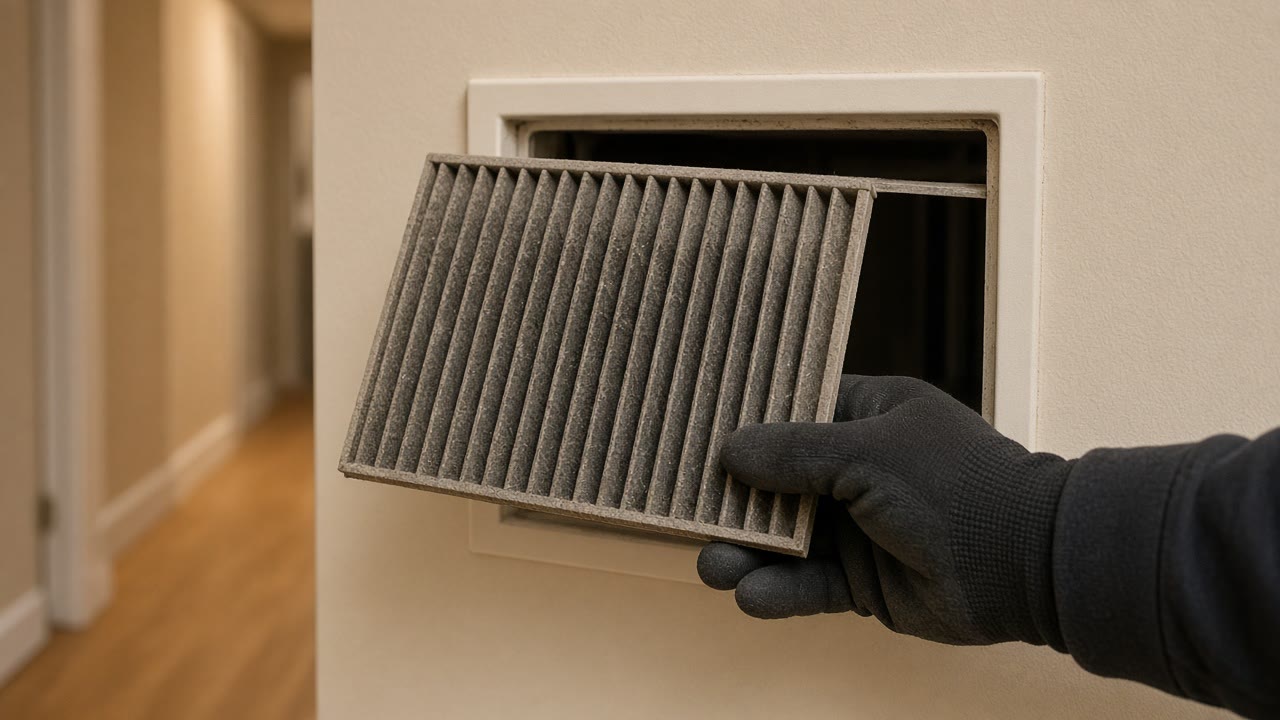
Work out which kind of system you own
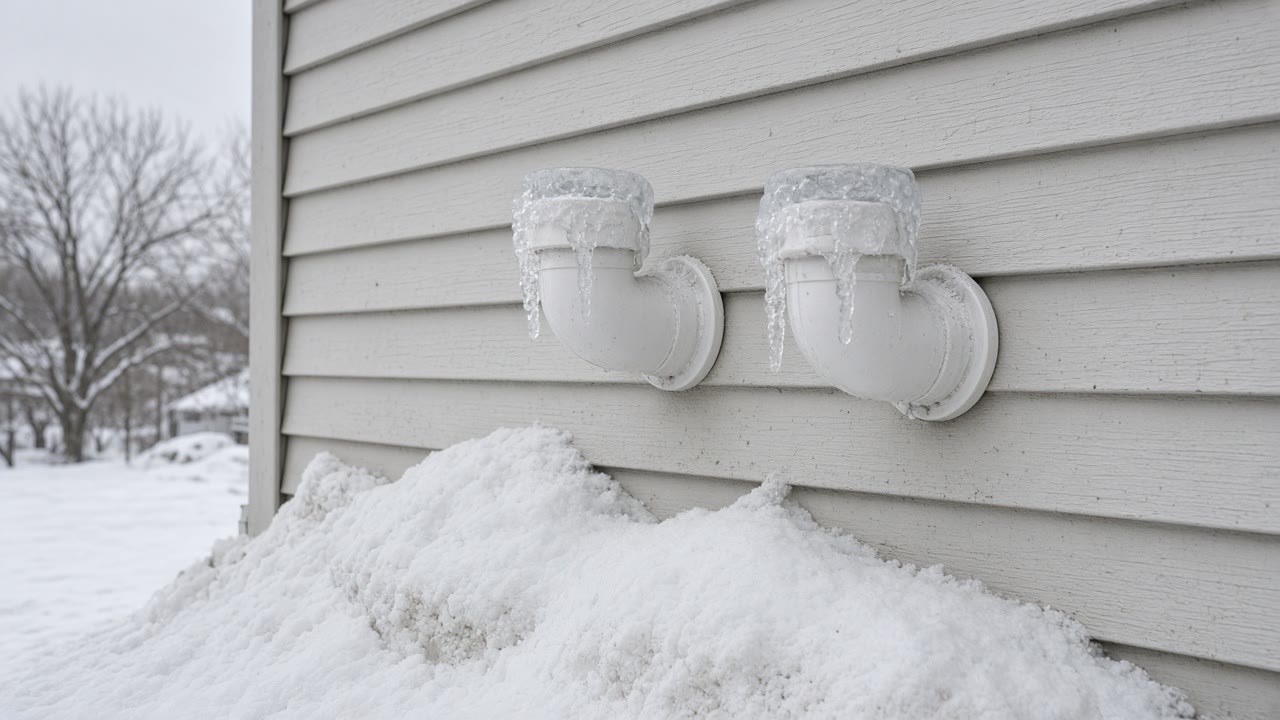
Two observations settle it. Look at where the exhaust goes: a metal pipe rising into a masonry chimney means an atmospheric appliance and the questions are draft, flue condition and combustion air. A pair of plastic pipes going out through a wall means sealed combustion and the questions are pressure switches, condensate drainage and whether the terminations are clear. Then look for a drain: a condensing furnace makes water, and the code requires a condensate pump in an uninhabitable space to be wired so the appliance cannot run when the pump fails. Knowing which family your furnace belongs to before you describe the fault means the contractor arrives with the right parts, and in a village where a fifth of the housing is prewar and a fifth is this century, that is not a safe assumption to leave to chance.
Follow the exhaust with your eyes
Metal pipe into a chimney, or plastic pipes through a wall. That single observation splits Baldwinsville furnaces into two families with almost entirely different fault lists, and it takes ten seconds in the basement.
A condensing furnace that stopped quietly may have stopped itself
The code requires a condensate pump in an uninhabitable space to be connected so the appliance is prevented from operating when the pump fails. A clean silent shutdown with no smell and nothing tripped is often that interlock doing its job.
The lowest village gas share in the county
63.1 percent of Baldwinsville's occupied units heat with utility gas, against 32.7 percent on electricity. So a village no-heat call is more likely here than almost anywhere in this metro to have nothing to do with a furnace at all.
Metal pipe into a chimney, or plastic through a wall?
That answer changes the whole diagnosis. Send it with your Baldwinsville address and what the furnace is doing.
Other Baldwinsville systems we arrange work on
Village questions about two kinds of furnace
How do I tell what kind of furnace I have in Baldwinsville?
Look at the pipes leaving the top of it. A single metal flue pipe rising into a masonry chimney is an atmospheric appliance, and it draws its combustion air from the room, so the condition of the chimney and the air supply in the basement both matter. Two plastic pipes running out through an exterior wall means sealed combustion: it takes its air from outside and pushes exhaust out under pressure, and it makes condensate that has to drain. The village housing is split almost evenly between the eras that produced each, with 20.6 percent built before 1940 and 20.1 percent since 2000, so there is no safe guess. Tell us which you see.
My Baldwinsville furnace stopped with no noise and nothing tripped. What is that?
On a condensing appliance, look at the drain first. These furnaces produce water as a normal part of running, and the residential code requires a condensate pump located in an uninhabitable space such as an attic or crawl space to be connected to the equipment so that the appliance is prevented from operating when the pump fails. It also requires an auxiliary drain pan where a stoppage would damage the building, with an exception where the appliance shuts itself down. A quiet, clean stop is very often exactly that: the system protecting your ceiling. Check for standing water in the pan or a full pump before you call anybody.
Tell us what the village furnace is doing
What the exhaust looks like, what it did before it stopped, and the ZIP code. There is no obligation.