
Syracuse and the surrounding Onondaga County area
Furnace Repair and No Heat Calls in Syracuse and Onondaga County
Find out why a forced air furnace has stopped making heat, starting with the cheap causes, before paying anyone to look at it.
Furnace Repair quote
Tell us what the furnace is doing and what it burns, and we will put you in front of licensed, insured contractors who diagnose before they price. If it turns out to be a thermostat battery, we would rather you heard that.
Would you rather talk it through? Call (315) 640-3590, answered 24/7.
$100 off your first job
Credited by us on your first booked job.
- One credit per customer per property, on your first booked job.
- Valid through December 31, 2026.
Mention this offer when you book. Full terms.
What actually stops a furnace in a Syracuse basement
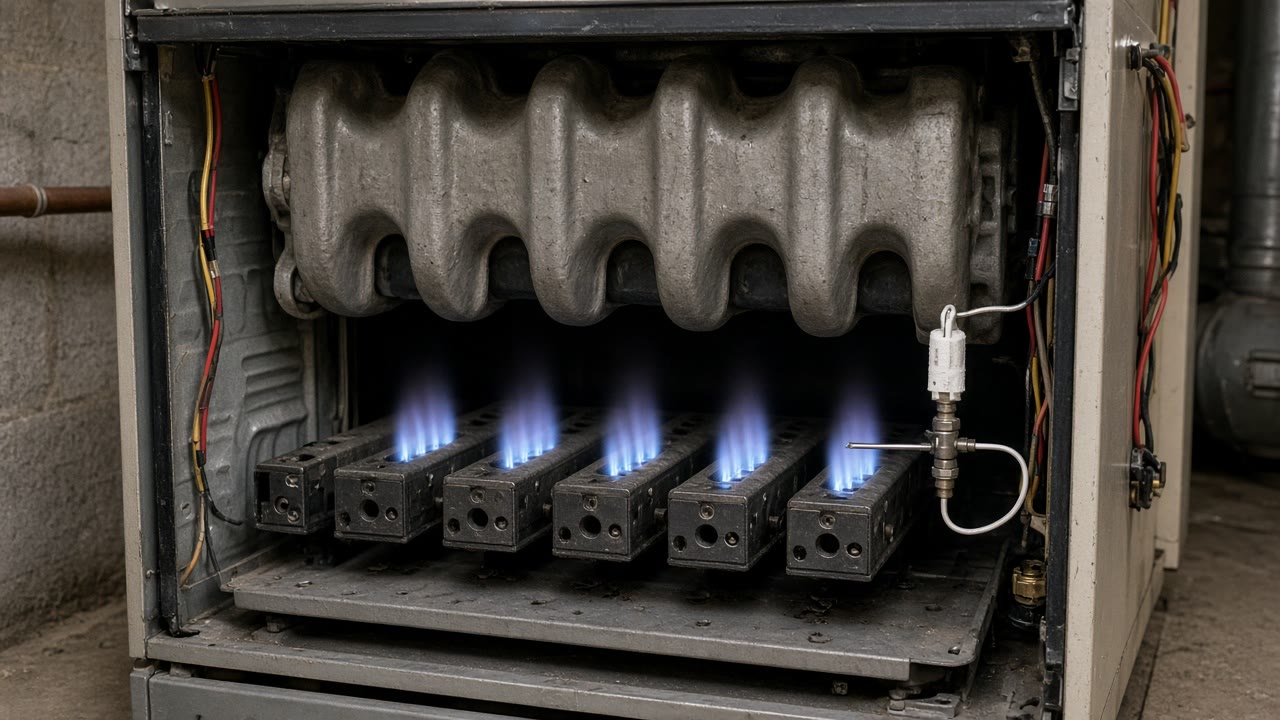
A furnace that has quit does not announce what it will cost to fix, and the gap between the cheapest answer and the most expensive one is the whole reason this call feels risky. So the cheap causes get named first here, by name: a thermostat set wrong or running on dead batteries, the furnace switch on the basement wall knocked off, a tripped breaker, a filter choked enough to trip the limit, a dirty flame sensor, a failed igniter, a blocked condensate drain on a high efficiency unit. Several of those are not faults at all. Section G2431.2 of the Residential Code of New York State, a New York amendment, requires every fuel gas space heating appliance in a home to shut the fuel off when the flame or pilot goes out, so a furnace that lights and drops out after a few seconds is a furnace doing what state code makes it do. The repair is to clean the sensor, never to defeat the device. Knowing that is the difference between reading a diagnosis and reading a sales pitch.
- Thermostat faults, dead batteries, broken low voltage wiring and a furnace switch somebody knocked off at the top of the stairs
- Ignition faults on gas furnaces: hot surface igniters, spark modules, pilot assemblies and gas valves
- Flame sensor cleaning, which is the repair for a furnace that lights and then drops out a few seconds later
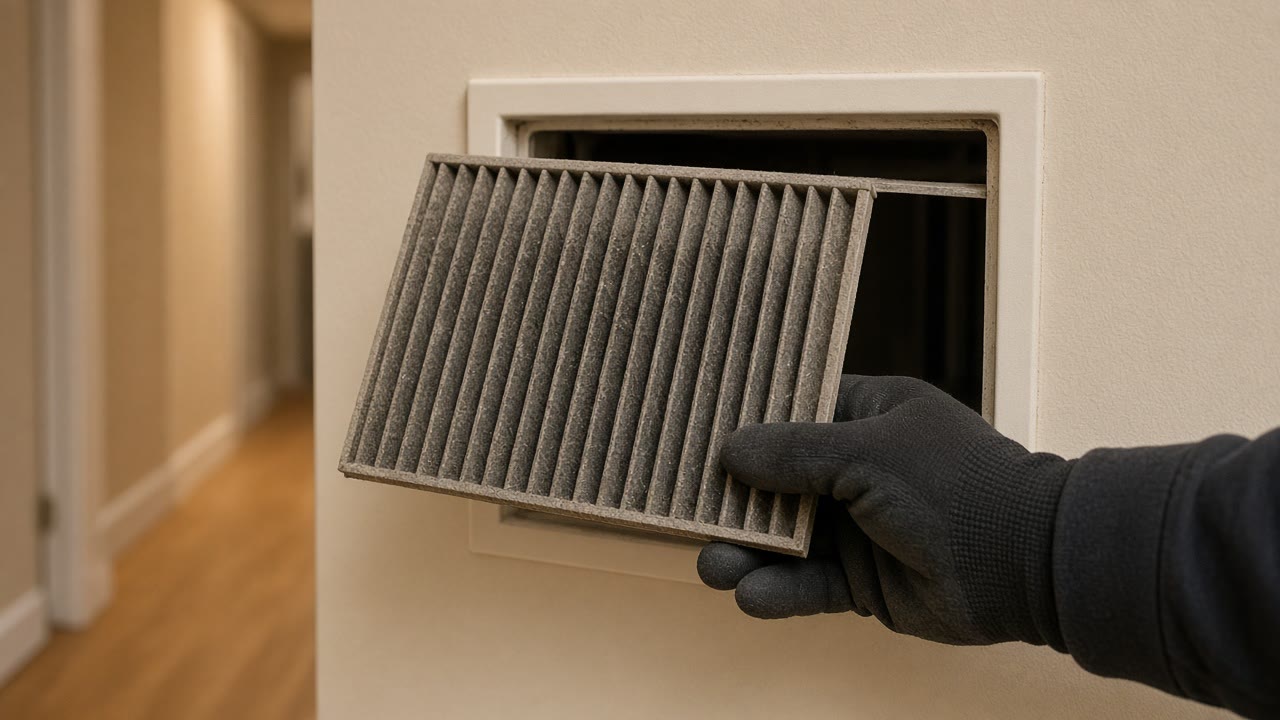
- Limit trips caused by restricted airflow: a choked filter, closed or blocked returns, and a blower wheel loaded with dust
- Blower motor, blower capacitor and variable speed motor control faults
- Pressure switch, inducer motor and vent blockage faults on induced draft furnaces
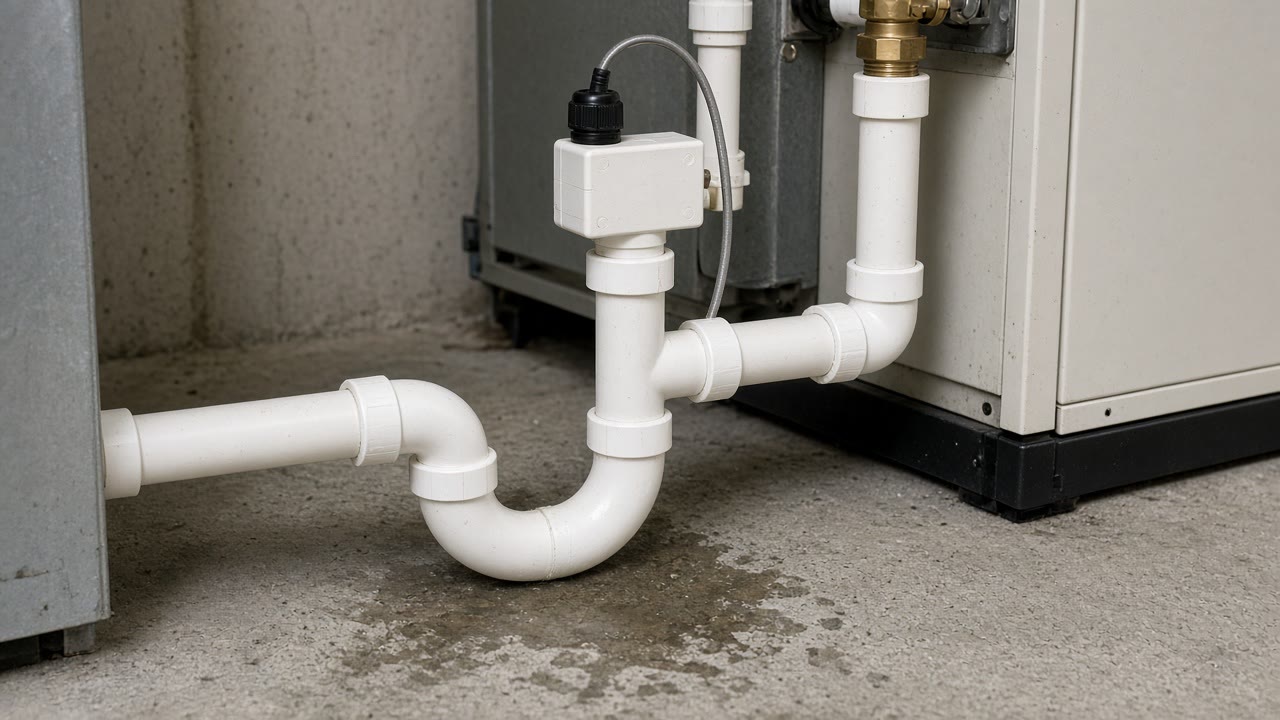
- Condensate drain, trap and pump blockages on high efficiency condensing furnaces, including the shutdown the appliance performs on purpose
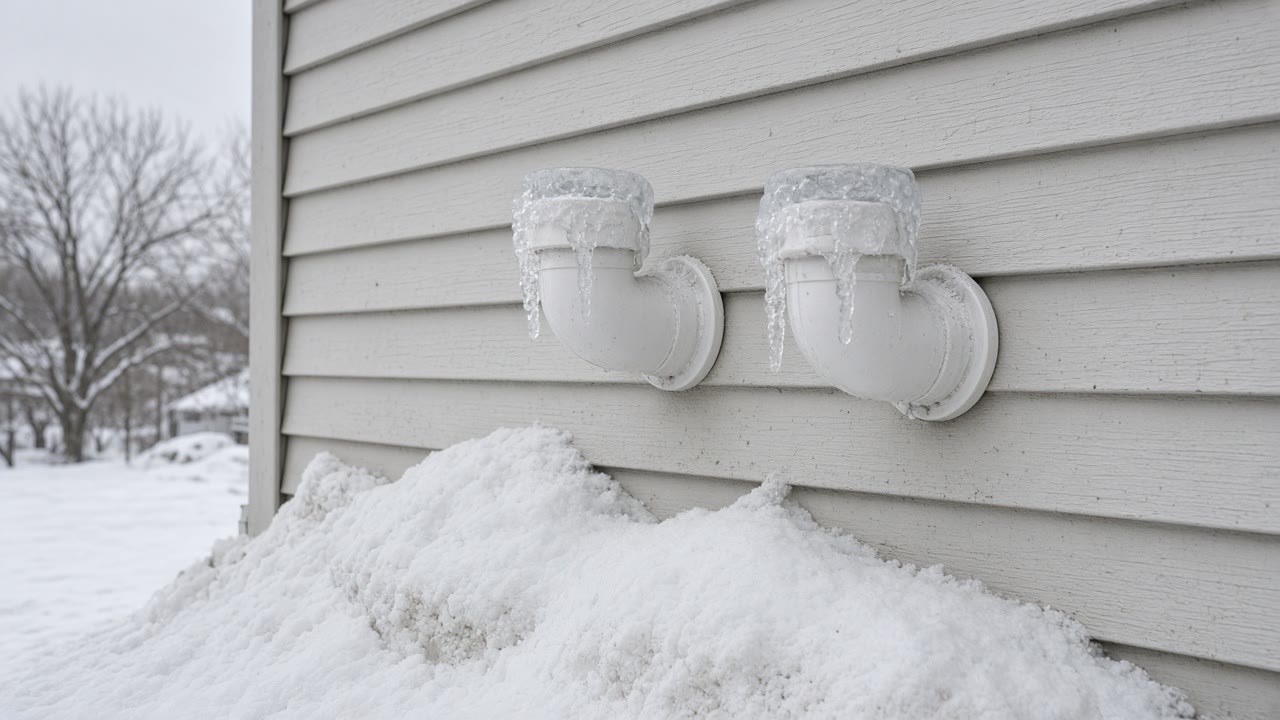
- Vent and combustion air terminations blocked by snow, ice, a nest or a screen
- Oil burner faults on oil fired warm air furnaces: nozzle, electrodes, cad cell and fuel supply
- Delivered fuel faults that look like appliance faults, including an empty propane tank and a closed supply valve
- Control board, transformer and safety circuit faults
- Combustion testing and heat exchanger examination where a carbon monoxide or combustion finding is in question, including a second opinion on an appliance another contractor has shut down
What changes the scope of a furnace call
Two furnaces with the same symptom can be two completely different jobs. These are the things that decide which one you have, and most of them are settled before a panel comes off.
Whether the furnace is atmospheric or sealed combustion
It changes the entire fault list. An older atmospheric furnace vents into a chimney and fails at the burner, the pilot and the draft. A sealed combustion furnace pulls its air through a pipe in the wall and fails at the pressure switch, the inducer and the condensate drain. Which one is in your basement is largely decided by when the house was built, and this county spans the whole range: the American Community Survey 2020-2024 estimates put the median build year in the city of Syracuse at 1948, plus or minus 2 years, with 43.1 percent of its housing built in 1939 or earlier, while the town of Cicero's median is 1980 and is the newest in Onondaga County.
What the appliance burns, and where the fuel comes from
There is a cause of no heat that costs nothing and only exists on some systems. The American Community Survey 2020-2024 estimates report 69.3 percent of occupied homes in the city of Syracuse on utility gas, but in the town of Skaneateles the combined bottled gas and fuel oil share is 20.3 percent, the highest in the county, and in Marcellus it is 9.1 percent. One home in five in Skaneateles heats from a tank on the property, and a tank can simply be empty. Establishing the fuel first is the cheapest step in the whole call.
How the vent terminates outside, and what the weather has done to it
Section G2427.8 of the Residential Code of New York State requires the bottom of a vent terminal to sit not less than 12 inches above finished ground level. Separately, the 1991-2020 NOAA normals for Syracuse Hancock International Airport give an annual snowfall normal of 123.8 inches, with 13.4 days a year dropping three inches or more and 1.1 days dropping ten or more. A sidewall vent set at the code minimum is lawful and is also one drift away from a lockout. If the furnace stopped after a heavy fall, the terminations outside are the first thing to look at and they cost nothing to check.
Whether anything has changed in the basement since the furnace went in
Section 27-54(h) of the City of Syracuse Property Conservation Code requires direct fired heat producing equipment and the enclosure around it to have a supply of air adequate to replenish what complete combustion consumes at the equipment's rated gross output, delivered through openings to the exterior or to interior spaces that open to the exterior. Finishing a basement, sealing an enclosure or adding a powerful kitchen or bathroom exhaust fan can starve a furnace that ran for twenty years. If the trouble started after work was done elsewhere in the house, the air supply is worth checking before the furnace is condemned. That section is the City's requirement and applies to city addresses; the underlying combustion air principle applies everywhere.
The night it failed on
Section 27-54(a)(2) of the City of Syracuse Property Conservation Code states that the capability of heating equipment to maintain the required indoor temperature is judged against an outside temperature of minus ten degrees Fahrenheit. Almost nobody knows that sentence is there. The 1991-2020 NOAA normals give Syracuse 7.1 nights a year at or below 0F, 4.0 of them in January, against 129.5 nights at or below 32F. A furnace that holds the house in November and loses ground on the coldest night of January is not struggling with a cold snap, it is failing the standard the city itself uses to judge equipment. That figure is a City ordinance figure for city addresses, not a design temperature and not a county wide one.
Whether the address sits inside the city line
This genuinely changes who may lawfully do the work. New York does not license heating and cooling contractors at the state level: the Department of State's Division of Building Standards and Codes says contractor licensing is not its function and that every city, town and village administers the Uniform Code in its own jurisdiction, and New York Business Express lists only the federal Section 608 requirement for an HVAC contractor. Inside the City of Syracuse there is a Board of Mechanical Examiners, and its Class C Residential HVAC Mechanical License covers homes of not more than two families with furnaces up to 200 MBH input. A city homeowner can ask which class the person in their basement holds, and the answer means something specific.
Whether the furnace makes water
The Residential Code of New York State requires Category IV condensing appliances to have an auxiliary drain pan where a stoppage in the condensate drainage would damage a building component, with an exception for appliances that shut themselves down when that happens, and requires a condensate pump in an attic or crawl space to be connected so that the appliance cannot run if the pump fails. So a high efficiency furnace that has died with no other symptom is often not broken. It has stopped itself because the drain or the pump blocked, which is a cheap thing to rule out before anyone opens a wallet.
Not sure whether it is the furnace or the thermostat?
Say what it is doing and somebody who works on these decides, instead of you guessing at nine at night.
How a no heat call runs, from your kitchen to the basement
Run the five checks that cost nothing
Thermostat first: set to HEAT, set above room temperature, fan on AUTO rather than ON, and batteries changed if it takes them. Then the switch at the top of the basement stairs that looks like a light switch and is not. Then the breaker, which may be labeled for something else. Then the filter, because a choked one trips the high limit and shuts the furnace down. Then walk outside and look at the vent pipes, especially after snow. If one of those is the answer you have saved a call, and none of it needs a tool.
Tell us the symptom in the words you would use on the phone
Blowing but not hot, running for a minute then stopping, silent with no noise at all, or locking out and restarting. Those four describe different circuits and send a different first question back. Add what the appliance burns and roughly how old the house is, and say whether the heat arrives through vents or radiators, because that decides whether this is even the right service.
The request is matched to a contractor who covers the address
Contractors are matched by property rather than by person, because a ZIP code routes a lead to a town and a street address routes it to a house. They are licensed and insured. For a city of Syracuse address the relevant credential is a City mechanical license, granted by the Board of Mechanical Examiners on a written examination with a pass mark of 70 percent after a documented experience review; the city publishes a list of HVAC contractors by license heading, and its licensing department can be reached on (315) 448-8773.
The diagnosis follows the sequence of operation, not a hunch
A furnace starts a defined sequence every time it is asked for heat: thermostat call, inducer, pressure switch proof, igniter, gas valve, flame proof, blower. A diagnosis finds where that sequence stops. That is why the question of which stage it reaches matters more than the noise it makes, and why a technician who watches a full cycle before quoting is doing the job properly.
You are shown the part, at the appliance
The single most repeated line in reviews of this trade is that the technician showed them the part. It is a reasonable thing to ask for and it is the cheapest protection there is. A burned igniter, a sooted flame sensor, a split inducer wheel and a waterlogged pressure switch hose all look like what they are once somebody holds them up.
The repair happens, or it stops honestly
Plenty of furnace faults come down to a part and an hour. Some are not. Where the finding is a combustion or carbon monoxide problem the appliance stays off, because that decision belongs to safety rather than to the quote, and where the honest answer is that this system has reached the end, the diagnosis says so and stops there. This site arranges repair and diagnosis. It is not paid to sell you a new system, which is why it can afford to tell you when you may not need one.
The paperwork question is answered for your municipality
19 NYCRR 1203.3(a)(1) requires permits for work that must conform to the Uniform Code, then lets each municipality exempt listed categories in its own program, including repairs and like for like equipment replacement that does not alter the equipment's listing. Because the exemption is optional, neighboring towns answer differently: the Village of Liverpool names new and replacement furnaces, boilers and central air conditioning on its own permit list, while the Town of Salina's published list says additions or new heating systems and does not mention replacement. Inside the City of Syracuse the HVAC permit is a separate trade permit from any residential construction permit, and even where no permit is required the work still has to comply with the Codes.
What furnace repair looks like
Where furnace repair starts and stops
When you may not need this at all
- If it is blowing and the air is not hot, check the fan setting on the thermostat before anything else. Set to ON, the blower runs continuously whether or not the burners are lit, and a working furnace looks broken. Set it to AUTO and see what happens.
- Dead thermostat batteries and a thermostat knocked off HEAT are real and common, and neither needs a contractor. A thermostat with a blank or frozen screen is the first thing to rule out, not the last.
- There is a switch at the top of the basement stairs that looks like a light switch and turns the furnace off. Painters, movers and children find it. Check it before you pay anybody to find it for you.
- A filter choked enough to trip the high limit produces a furnace that runs, gets hot and shuts down repeatedly. Changing it costs a few dollars and may be the whole repair.
- After a heavy snowfall, a high efficiency furnace that has locked out may simply have a buried vent. The Residential Code of New York State sets the vent terminal minimum at 12 inches above finished ground level and Syracuse's snowfall normal is 123.8 inches a year, so clearing snow away from the terminations is the cheapest maintenance in this trade.
- If the house heats from radiators or baseboard rather than vents, this is not your service and a page about filters and blowers describes somebody else's house. Boiler and radiator work is arranged separately.
- If the heating is delivered fuel, check the tank gauge. An empty tank is a complete explanation for no heat and it does not exist on a gas system.
- If you rent inside the City of Syracuse, section 27-54(a)(1) of the Property Conservation Code requires 68 degrees Fahrenheit in habitable rooms, measured two feet from exterior walls and five feet above the floor, from September fifteenth to May thirty first whenever the outside temperature is below 55 degrees. That is a standard your landlord has to meet, and the repair is not yours to arrange.
- Somebody else may pay for this. New York's Home Energy Assistance Program carries a Heating Equipment Repair and Replacement benefit toward repairing or replacing a home's primary heating equipment for eligible homeowners. Onondaga County administers it from 421 Montgomery Street, 2nd floor, Syracuse, on (315) 435-2700, and the county states that this component cannot be applied for online, only by telephone or in person. The program year generally begins in November and closes when funding runs out, which the county says can be as early as mid March, so the time to ask is before the equipment fails. Check current eligibility with the county rather than with us.
- If a carbon monoxide alarm is sounding, this is not a repair call first. The New York State Department of Health says to get everyone out into fresh air immediately and contact the fire department and the gas company or a heating contractor.
What is out of scope
- Selecting, sizing and installing a new furnace. Where the diagnosis reaches the end of this system, it says so and stops there rather than turning into a system sale.
- Ductwork design, duct replacement and duct cleaning.
- Domestic water heaters, which are a separate appliance in almost every house here even when they sit beside the furnace.
- Gas piping beyond the appliance connection, the gas meter and anything on the utility's side of it.
- Rebuilding or relining a masonry chimney, which is masonry work and is priced as masonry work.
- Oil tank replacement, removal, or cleanup where a tank has leaked.
- Putting an appliance back into service that another contractor has shut down on a combustion or gas safety finding. A second opinion is arranged; overriding somebody else's safety decision is not.
- Boilers, radiators, steam and baseboard hot water systems, which are their own trade and their own license capacity in the City of Syracuse.
- Electrical work beyond the furnace circuit, its disconnect and its low voltage controls.
Towns where we arrange furnace repair
- Furnace Repair in Syracuse
- Furnace Repair in North Syracuse
- Furnace Repair in East Syracuse
- Furnace Repair in Liverpool
- Furnace Repair in Cicero
- Furnace Repair in Clay
- Furnace Repair in Salina
- Furnace Repair in DeWitt
- Furnace Repair in Fayetteville
- Furnace Repair in Camillus
- Furnace Repair in Baldwinsville
- Furnace Repair in Marcellus
- Furnace Repair in Skaneateles
- Furnace Repair in Solvay
What homeowners ask when the furnace has stopped
It is blowing but the air is not hot. What is that?
Start with the thermostat fan setting, because on ON the blower runs whether or not there is a flame and a healthy furnace looks dead. If it is on AUTO and the air is still cool, the furnace is trying to heat and failing to prove a flame. The usual reasons are a sooted flame sensor, a failed igniter or a gas supply problem, and one of those is a cleaning job. New York requires this behavior: section G2431.2 of the Residential Code of New York State says a fuel gas space heating appliance in a home must shut the fuel off to the main burner when the flame or pilot goes out. The blower carrying on afterwards is the furnace clearing itself, not the furnace ignoring you.
It runs for a minute and then shuts off. Is that going to be expensive?
Not necessarily, and the short list is worth going through before assuming it is. A furnace that starts and stops repeatedly is usually being stopped by one of its own safeties. A choked filter or a blocked return overheats the heat exchanger and trips the high limit. A sooted flame sensor loses the flame signal seconds after ignition. A blocked vent or a waterlogged hose stops the pressure switch proving. On a high efficiency furnace a blocked condensate drain or a failed pump shuts the appliance down deliberately, because the Residential Code of New York State requires a condensing appliance either to have an auxiliary drain pan or to shut down when the drainage stops. Every one of those is cheap. None of them is the heat exchanger, and a diagnosis that goes straight there without ruling them out is worth a question.
How do I know I am not being sold a furnace I do not need?
Ask three things and the conversation changes. Ask to be shown the failed part at the appliance. Ask what the technician watched the furnace do, stage by stage, before reaching the conclusion. If the address is in the City of Syracuse, ask which class of City mechanical license they hold, because the Board of Mechanical Examiners grades them by equipment and capacity and the answer is checkable against a list the city publishes. On age: the Energy Information Administration reports 31.1 percent of main heating equipment in the Middle Atlantic division at twenty years or older, against 19.1 percent nationally, so an old system in this part of the country is ordinary rather than scandalous. Age alone is not a diagnosis. What age does legitimately change is how likely the next failure is and whether parts are still made, and both are fair to ask about.
A technician says the heat exchanger is cracked and has put a tag on my furnace. What now?
First, understand what the tag is. A contractor's tag is that contractor refusing to operate the appliance and declining to relight it. It is a safety judgment. It is not a municipal order, and those two things are constantly confused. In the City of Syracuse the authority to designate premises unfit and placard them sits with the director under section 27-115 of the Property Conservation Code and runs through a written notice and order with a chance to comply first, which is a different process entirely. Second, a second opinion is a reasonable next step and it is worth having the finding described precisely: what was seen, how, and with what instrument. Nobody should promise you that a cracked heat exchanger can be repaired, because the honest answer is usually that it cannot. The reason this finding is taken seriously in New York is on public record: Amanda's Law, Chapter 367 of the Laws of 2009, is named for a sixteen year old who died of carbon monoxide poisoning from a leak in a defective boiler.
Does a furnace repair or replacement need a permit around here?
It depends on the municipality, and that is not a dodge, it is the actual rule. 19 NYCRR 1203.3(a)(1) requires permits for work that must conform to the Uniform Code, and then allows each authority having jurisdiction to exempt listed categories in its own code enforcement program. Two of those categories are repairs that do not affect the structural system, means of egress or fire protection, and replacement of equipment that does not alter the equipment's listing or depart from its original specifications. Because the exemption is optional, neighbors answer differently. The Village of Liverpool names installation of any new or replacement furnace, central air conditioning, boiler or other heating equipment on its own permit list. The Town of Salina's published list says additions or new heating systems and is silent on replacement. The Town of DeWitt will not process an application without a signed estimate, a copy of a current survey and the fee. In the City of Syracuse the HVAC permit is a separate trade permit, not part of a residential construction permit. Note also that swapping an older atmospheric furnace for a high efficiency condensing one changes the equipment's listing, so it falls outside the like for like exemption anyway, and an exemption from a permit is never an authorization to work in violation of the Codes.
Is one carbon monoxide alarm in the hallway enough?
Probably not, and the gap is usually the furnace room. New York Executive Law section 378(5-a) requires an operable carbon monoxide detector in every one or two family dwelling, condominium or cooperative dwelling accommodation and multiple dwelling where there is an appliance that may emit carbon monoxide or an attached garage. Section 915.3.1 of the Fire Code of New York State goes further than most people expect and requires detection in all rooms and occupiable spaces that contain a fuel burning appliance, which in this metro usually means the basement the furnace is in. Section 915.3 also rules out the two places people put them for convenience, next to a fresh air return and in dead or turbulent air, because both can keep the gas away from the sensor. In an existing home a sealed ten year battery unit listed to UL 2034 is generally acceptable, so the thing to check is the manufacture date on the back rather than the battery. A unit past its ten year life may not sound whatever the test button does.
It is September and the furnace was fine in April. Should I wait and see?
Waiting is a bet on a date that moves. The 1991-2020 NOAA normals put the median first fall minimum at or below 32F in Syracuse on October 14, with a one in ten chance it arrives by October 1 and a one in ten chance it holds off past October 31. So the first real test of the system is whichever night it lands on, and you do not get to choose. The City of Syracuse defines its heating season as September 15 to May 31, which is eight and a half months, and the monthly normals put 6,168 of the annual 6,651 heating degree days into the seven months from October through April, 92.7 percent of the total. If the system gave trouble last spring, running it for an hour in September finds the fault while an appointment is easy to get rather than on the night everyone else is calling.
Tell us what the furnace is doing
Blowing cold, short cycling, silent, or locking out since the snow. That one line changes who should come.