
Furnace Repair in the Town of DeWitt
Four in five DeWitt homes burn gas, which makes the vent and the alarm part of an ordinary furnace visit rather than an add-on.
Furnace Repair quote in DeWitt
Share a few details so we can confirm coverage and arrange the right next step.
Would you rather talk it through? Call (315) 640-3590, answered 24/7.
$100 off your first job
Credited by us on your first booked job.
- One credit per customer per property, on your first booked job.
- Valid through December 31, 2026.
Mention this offer when you book. Full terms.
79.3 percent gas in the town, 83.1 percent in the CDP
The American Community Survey 2020-2024 five-year estimates put the median year structure built in the town of DeWitt at 1963, plus or minus 2 years, and in the DeWitt census designated place at 1964, plus or minus 2 years. Of the town's 10,996 housing units, 2,054 were built in 1939 or earlier, 18.7 percent, and 8,336 before 1980, 75.8 percent. Of 10,282 occupied units in the town, 8,155 are heated with utility gas, 79.3 percent, and 1,659 with electricity, 16.1 percent. In the DeWitt CDP the utility gas share is 83.1 percent of 4,154 occupied units, among the highest in the county, with electricity at 14.2 percent.
Source: US Census Bureau, American Community Survey 2020-2024 5-year estimates, tables B25034, B25035, B25040 and B25003, De Witt town and De Witt CDP, Onondaga County, New York, accessed 2026-09-13
New York's code agencies state that Section 705 of the 2020 Property Maintenance Code of New York State requires carbon monoxide alarms and detection systems to be installed and maintained in accordance with Section 915 of the 2020 Fire Code of New York State, and that Section 915.1 of that Fire Code states that new and existing residential buildings and commercial buildings shall be provided with carbon monoxide detection and notification. The same bulletin explains that carbon monoxide is created when carbon from fuels such as gasoline, wood, coal, natural gas, propane, oil and methane burn incompletely, and that heating and cooking equipment that burn fuel can be sources of it.
Source: New York State Department of State Division of Building Standards and Codes and the Office of Fire Prevention and Control, Code Outreach Program Issue 2025-01, Fire Safety and Property Maintenance Inspections, Carbon Monoxide Alarm and Detection, March 28, 2025, accessed 2026-09-13
The Energy Information Administration reports main heating equipment age in the Middle Atlantic census division as 0.95 million homes under 2 years, 1.86 million at 2 to 4 years, 2.95 million at 5 to 9 years, 3.04 million at 10 to 14 years, 2.14 million at 15 to 19 years and 4.99 million at 20 or more years, out of 16.04 million homes. That puts 31.1 percent of main heating equipment at 20 years or older and 44.5 percent at 15 years or older. The national figure for 20 or more years is 23.54 million of 123.53 million, 19.1 percent.
Source: US Energy Information Administration, 2020 Residential Energy Consumption Survey, Table HC6.7, main heating equipment age, final data release March 2023, accessed 2026-09-13
Why almost every DeWitt heating call is a combustion call
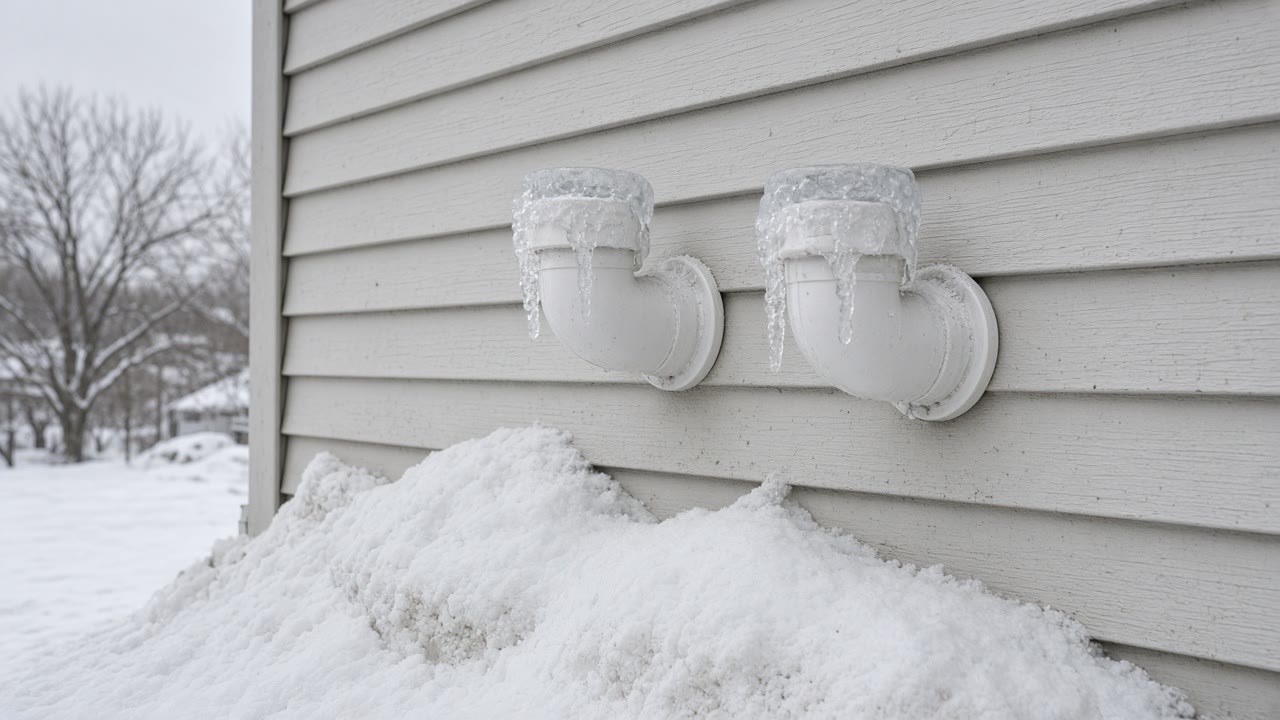
Utility gas heats 8,155 of DeWitt's 10,282 occupied units, 79.3 percent, and the figure climbs to 83.1 percent inside the DeWitt census designated place, among the highest shares in Onondaga County, with electricity down at 16.1 percent. Add 8,336 of the town's 10,996 housing units built before 1980 and the picture is clear: this is a town of fuel-burning appliances in venting that is generally older than they are. So the questions that get skipped elsewhere, what the vent connector looks like, whether the flue draws, whether there is working detection in the room, are simply part of a competent visit here.
What a thorough DeWitt furnace visit covers
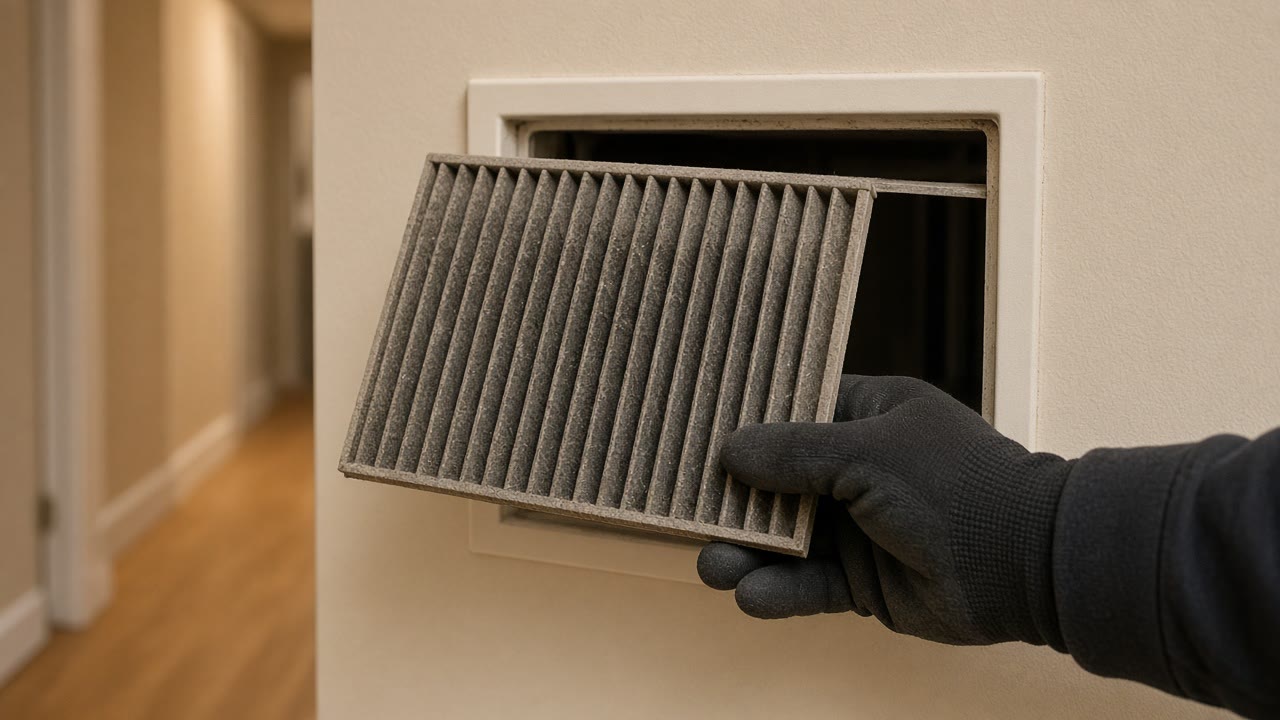
Beyond naming the failed part, three things deserve to be looked at and written down. The venting, because in stock that is three quarters pre-1980 it is frequently the oldest component in the chain. The heat exchanger, because that is the one failure where the consequence is not an inconvenience. And the detection, because New York's requirement reaches existing buildings rather than only new ones: the code agencies state that the Property Maintenance Code requires carbon monoxide alarms to be installed and maintained in accordance with Section 915 of the Fire Code, and that Section 915.1 provides that new and existing residential and commercial buildings shall be provided with carbon monoxide detection and notification. In a town where four in five homes burn something, that is not an upsell and a contractor who never raises it is not doing you a kindness.
Ask for the venting to be described, not just the part
75.8 percent of DeWitt's housing predates 1980. The flue and the vent connector have usually outlasted at least one appliance, and their condition changes what a repair is actually worth.
The detection rule reaches your house whatever its age
New York's code agencies state that Section 915.1 of the Fire Code requires new and existing residential buildings to be provided with carbon monoxide detection. Age of construction is not a way out of it, which is the whole point of how the rule was written.
83.1 percent gas in the DeWitt CDP
The census designated place has one of the highest utility gas shares in the county, with electricity at 14.2 percent of its 4,154 occupied units. If you live here, the odds are overwhelming that your no-heat call involves combustion.
Want the venting looked at while somebody is there?
Say so in your request. Send the DeWitt address and the fault and we will arrange a contractor who reports on both.
Other DeWitt systems we arrange work on
DeWitt questions about gas furnaces and detection
How do I know whether my DeWitt heat exchanger is cracked?
You do not, from the living room, and neither does anybody who has not looked. What you can do is recognize the reasons to have it examined: soot or staining around the appliance, a flame that moves or changes color when the blower starts, an unusual smell when the furnace runs, corrosion around the vent connector, or a carbon monoxide alarm that has sounded even once. Any of those justifies an inspection. What should not happen is a verdict delivered without an examination, because a heat exchanger is the one component where the consequence of being wrong is not financial. Ask what was done to reach the conclusion and ask for it in writing.
Does a carbon monoxide alarm rule apply to an older DeWitt house?
Yes, and that was deliberate. New York's code agencies state that the Property Maintenance Code requires carbon monoxide alarms to be installed and maintained in accordance with Section 915 of the Fire Code, and that Section 915.1 provides that new and existing residential and commercial buildings shall be provided with carbon monoxide detection and notification. The same guidance explains that carbon monoxide is created when fuels such as natural gas, propane, oil and wood burn incompletely, and that heating and cooking equipment burning fuel can be sources. In a town where 8,155 occupied units run on utility gas, that covers most of the street.
Tell us what the DeWitt furnace is doing
The fault, any smell or staining, and the ZIP code. Say if you are in Jamesville so we route it correctly. No obligation.