
Syracuse and the surrounding Onondaga County area
HVAC Repair in Syracuse: Furnaces, Boilers, Air Conditioning and Heat Pumps
Find out what has actually stopped your heat or your cooling, and what putting it right involves, before anybody starts talking about a new system. The cheap failures get named here first, by name, because a thermostat on dead batteries and a cracked heat exchanger arrive as the same phone call and are nothing like the same bill. Tell us what the system is doing and which town you are in, and we will put you in front of licensed, insured contractors who find the fault before they price the fix.
Request a Quote
Share a few details so we can confirm coverage and arrange the right next step.
Would you rather talk it through? Call (315) 640-3590, answered 24/7.
$100 off your first job
Credited by us on your first booked job.
- One credit per customer per property, on your first booked job.
- Valid through December 31, 2026.
Mention this offer when you book. Full terms.
Five calls, sorted by where your heat actually comes out
These split by which system is in the basement and by whether the answer can wait until morning, because those two things change the fault list and the urgency completely. Warm air out of vents is a furnace, and it fails at the filter, the igniter, the flame sensor, the pressure switch or the condensate drain. Heat out of radiators or baseboard is a boiler and has none of those parts, which matters more here than most places: the Energy Information Administration's 2020 survey puts 27.9 percent of homes across New York, New Jersey and Pennsylvania on steam or hot water against 7.5 percent nationally. Cooling is its own list, a heat pump sits on both, and the fifth card is for tonight, when the question is not what broke but whether it waits.
Furnace Repair
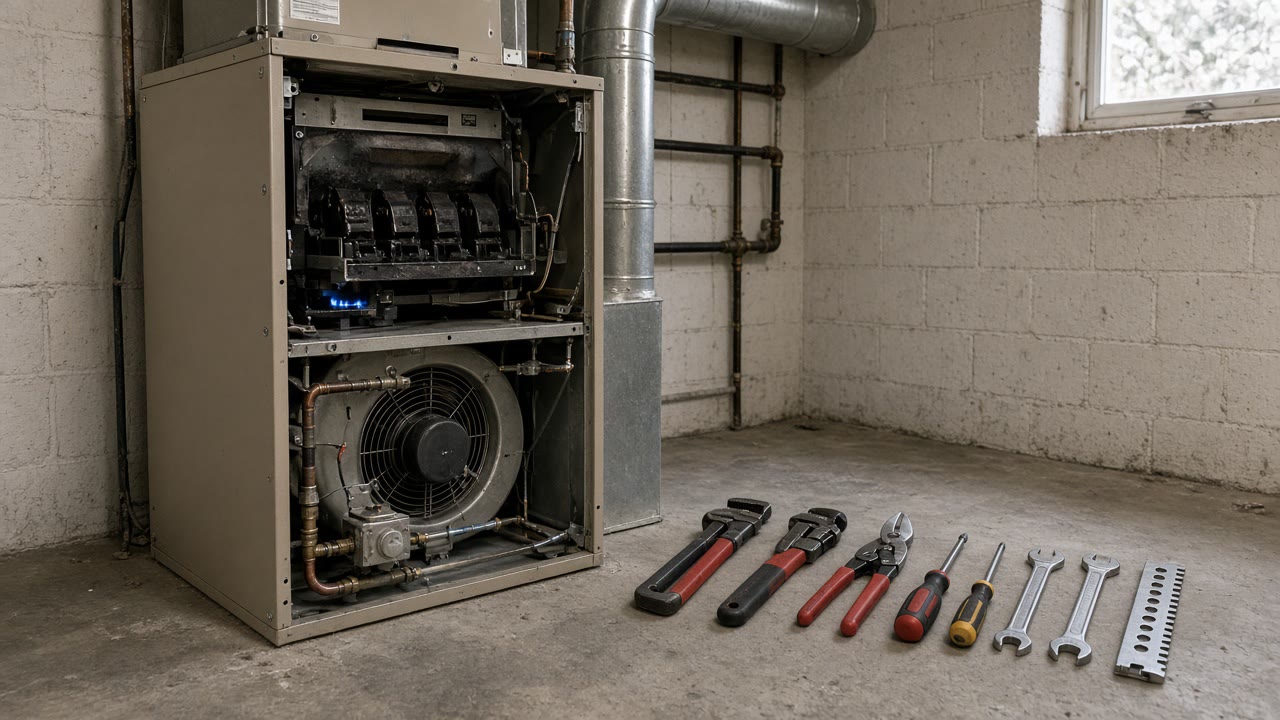
Find out why a forced air furnace has stopped making heat, starting with the cheap causes, before paying anyone to look at it.
Start here if your heat comes out of vents rather than radiators, and it is blowing without getting hot, kicking on for a minute and shutting off, or doing nothing at all.
About Furnace Repair →Boiler and Radiator Heat Repair
Work out why radiator, baseboard or steam heat has stopped warming the house, on a system that has no filter, no ducts and no blower.
Start here if your heat arrives through radiators or baseboard rather than vents, and one room has gone cold, the whole house has, or the boiler is firing and getting nowhere.
About Boiler Repair →Air Conditioning Repair
Find out why a central air conditioner has stopped cooling, and get a straight answer on whether a refrigerant problem really means the system is finished.
Start here if the system is running and the house will not come down, the outdoor unit is silent or humming without turning, or the pipe at the outdoor unit has iced over.
About AC Repair →Heat Pump Repair
Find out why a heat pump has stopped heating or cooling properly, and how long the backup heat has been quietly carrying the house.
Start here if your outdoor unit runs in winter as well as summer, and the house is not warming up, the backup or emergency heat is running constantly, or the outdoor unit is packed with ice.
About Heat Pump Repair →Emergency Repair and Diagnostics
Decide whether a heating or cooling failure needs somebody tonight, and get a contractor to the property when it does.
Start here if the heat or the cooling has failed and you are deciding whether this waits until morning, or somebody has shut your appliance down and left a tag on it.
About Emergency Repair →Not sure which one you need?
Describe what you are seeing and we will tell you what the job actually needs.
How a no heat call runs here
Three steps. The first is a two minute conversation, and the second happens before anybody is sent anywhere.
Tell us the symptom, and whether the heat arrives through vents or radiators
A house on radiators or baseboard has no filter, no ducts and no blower, so most of the standard no heat checklist is describing somebody else's basement. Say the rest the way you would say it out loud: blowing but never getting hot, starting and shutting down after a minute, dead with no noise at all, running constantly and losing ground anyway. Nobody needs you to know what the part is called.
We match on the property, because the rules change with the address
The town on the request decides more than travel time. New York does not license this trade at the state level: the Department of State's Division of Building Standards and Codes says licensing of contractors is not handled by that division and that every city, town, village and county administers the Uniform Code in its own jurisdiction, and New York Business Express lists nothing for an HVAC contractor beyond the federal Section 608 requirement. The City of Syracuse, by contrast, runs a Board of Mechanical Examiners that issues mechanical licenses by class. So a city address and an address three miles outside it are two different questions about who may lawfully pull the permit, and the match is made against the property rather than the person.
A contractor finds the fault, and then prices the fix
The diagnosis comes first, and it should come with the part in somebody's hand. Ask to be shown what failed and ask what the replacement is. If the finding is on the sealed refrigerant side, the person opening it has to hold Section 608 certification under 40 CFR 82.161, which attaches to the individual rather than to the company and is a fair thing to ask about before the gauges go on.
What makes this a local problem
The 1991-2020 normals for Syracuse give 7.1 nights a year on which the minimum temperature falls to 0F or below, 57.5 nights at or below 20F, and 129.5 nights at or below 32F. On 45.7 days a year the maximum temperature does not rise above 32F. The 7.1 sub-zero nights are distributed 4.0 in January, 1.7 in February, 1.0 in December and 0.4 in March. The normal December, January and February mean minimum temperature is 18.6F.
Source: NOAA National Centers for Environmental Information, 1991-2020 US Climate Normals, annual, seasonal and monthly, station USW00014771, Syracuse Hancock International Airport, accessed 2026-09-13
The 1991-2020 annual snowfall normal for Syracuse Hancock International Airport is 123.8 inches. The normals give 66.4 days a year with an inch or more of snow, 34.5 days with two inches or more, 13.4 days with three inches or more, 5.8 days with five inches or more and 1.1 days with ten inches or more. The December, January and February share is 92.0 inches of the annual total.
Source: NOAA National Centers for Environmental Information, 1991-2020 US Climate Normals, annual and seasonal, station USW00014771, Syracuse Hancock International Airport, accessed 2026-09-13
The American Community Survey 2020-2024 five-year estimates put the median year structure built in the city of Syracuse at 1948, with a margin of error of plus or minus 2 years. Of the city's 67,601 housing units, 29,152 were built in 1939 or earlier, which is 43.1 percent, 34,780 were built in 1949 or earlier, 51.4 percent, and 57,777 were built before 1980, 85.5 percent. Only 4,333 units, 6.4 percent, were built in 2000 or later. Of 59,816 occupied units, 24,889 are owner occupied, 41.6 percent.
Source: US Census Bureau, American Community Survey 2020-2024 5-year estimates, tables B25034, B25035 and B25003, Syracuse city, New York, accessed 2026-09-13
New York adds its own provision at G2431.2 of the Residential Code of New York State. It states that all fuel gas space heating appliances installed or used in a building occupied as a residence shall be equipped with an automatic flame safeguard device that shall shut off the fuel supply to the main burner or group of burners when the flame or pilot light is extinguished.
Source: Residential Code of New York State, Chapter 24 Fuel Gas, section G2431.2 (601.2), a New York amendment, via UpCodes, accessed 2026-09-13
Five things to check yourself when the heat stops
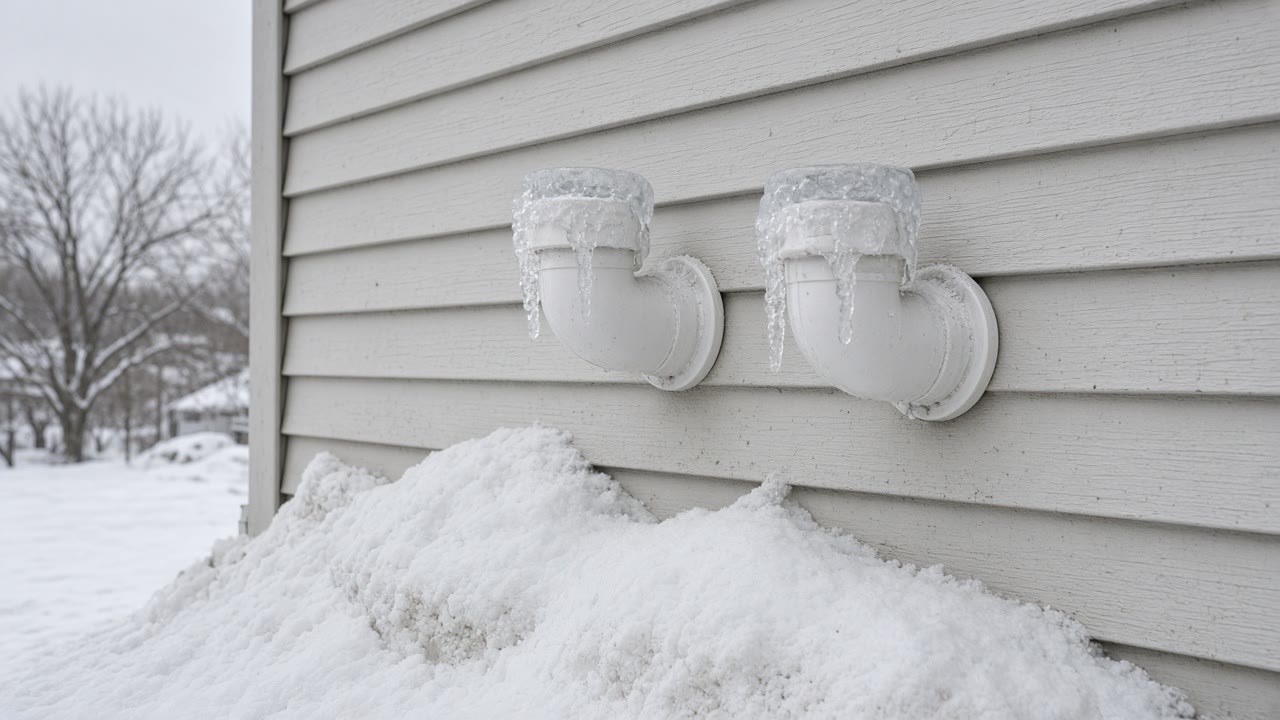
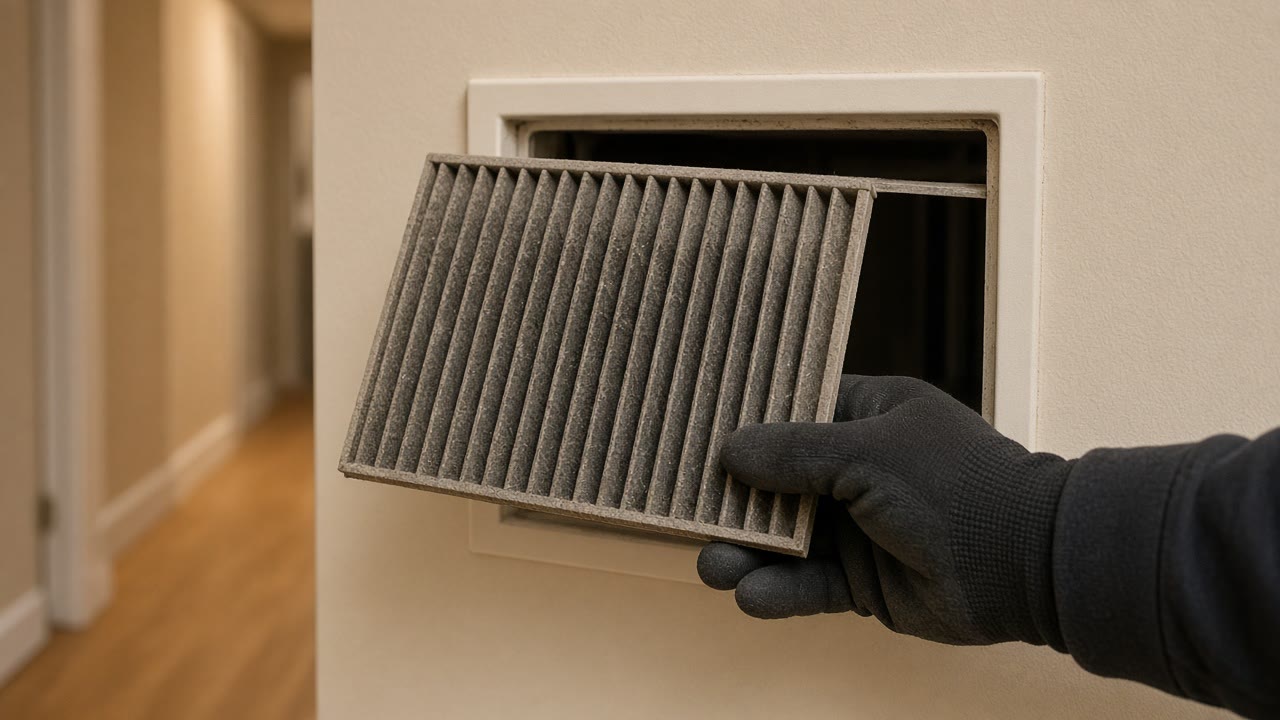
Start at the thermostat: the batteries, and that it is set to heat and above room temperature. Then the switch at the top of the basement stairs that looks like a light switch and is not. Then the breaker. Then the filter, which restricts airflow until the furnace shuts itself down on its own limit. Then, outside, the vent and intake pipes where they come through the wall. Five minutes, no tools, nothing to pay.
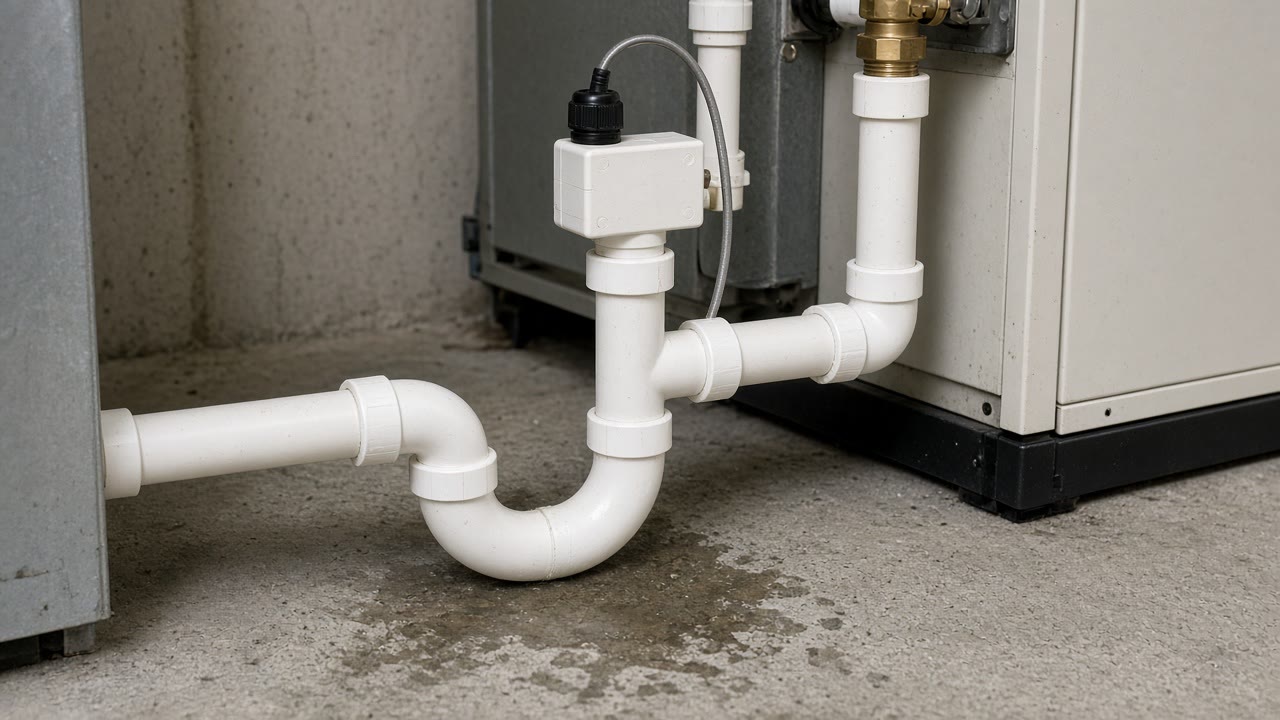
None of those are folk remedies. Section G2427.8 of the Residential Code of New York State puts the bottom of a vent terminal at not less than 12 inches above finished ground level, which is lawful and is also very close to the ground in a place where the 1991-2020 NOAA normal for annual snowfall is 123.8 inches, with 13.4 days a year dropping three inches or more at once. A high efficiency furnace also makes water while it runs, and the state code wires a blocked condensate drain into a shutdown rather than into a flooded basement, so an appliance that has gone quiet with no other symptom may have stopped itself on purpose.
We put this on the front page because saying it costs us nothing. This site is not paid for a service call. It is paid when a real job is booked and done, so a reader who finds dead thermostat batteries and puts the phone down has cost us nothing and saved themselves a visit. A company that sells the visit cannot write this paragraph, which is most of the reason nobody else in this metro has.
Stop checking and call tonight in three cases. If you smell gas, leave and call from outside. If a carbon monoxide alarm is sounding, the New York State Department of Health says to get everyone out into fresh air immediately and to contact the fire department and the gas company or a heating contractor, and it gives a pattern to watch rather than a symptom: more than one person in the area unwell at the same time, or people who feel better once they have left the building. And if the house is genuinely losing temperature on a cold night with an infant, an elderly person or somebody unwell in it, that is not a morning problem.
What this site does that the rest of this market does not
The cheap failures get named first, and the statistic nobody has does not get invented
You will find pages giving a precise share of no heat calls that turn out to be the thermostat, the breaker or the filter. No published source supports any such figure and this site prints none. What can be shown is why each of those faults is real. Section G2431.2 of the Residential Code of New York State requires every fuel gas space heating appliance in a home to shut the fuel off when the flame or pilot goes out, so a furnace that lights and then drops out seconds later is usually the safety device doing exactly what state code makes it do, with a dirty sensor in front of it. That is a cleaning, and the repair is never to defeat the device.
A straight answer on the 2025 refrigerant rule, which is what really decides repair or replace
What changed on January 1, 2025 is what may be built and sold. 40 CFR 84.54 restricts the manufacture, import, sale, distribution and installation of new residential and light commercial air conditioning and heat pump systems using a refrigerant with a global warming potential of 700 or greater. Writing about its own rule in 2026, the EPA says it classified condensing units as specified components so as to allow for the continued servicing and maintenance of existing equipment, and that such equipment can continue to be sold and used to service existing refrigeration equipment. Two honest caveats go with that. The newer refrigerants are listed for new equipment only and the EPA states that they are not listed as a conversion or retrofit refrigerant for existing systems, so there is no middle option. And the federal phasedown steps production down over the coming decade, which makes a system that leaks repeatedly a worse bet each year than the year before.
We say when somebody else may be paying for the repair
New York runs a Heating Equipment Repair or Replacement benefit inside the Home Energy Assistance Program, covering the furnace, boiler or other direct heating equipment that keeps a home's primary heat working for homeowners who qualify. In this county the Department of Social Services administers it from 421 Montgomery Street in Syracuse, on (315) 435-2700, and says that component cannot be applied for online. Eligibility, the age test and the benefit limits are set per program year, and the county says the season closes when the funding is exhausted, which can be as early as mid March, so ask that office for the current position rather than taking it from this page. A business paid for the service call has no reason to raise any of this.
The page stops at the decision instead of selling straight past it
Where a repair genuinely is not worth doing, that is where this site's job ends. There is no system on offer here and no seasonal promotion tied to the answer, so there is nothing to be gained by talking you past a repair that would have held. The EPA's 2026 final rule even removed the installation deadline a great deal of last year's urgency was built on: equipment manufactured in or imported into the United States before January 1, 2025 may still be installed. If somebody tells you to move fast because of a refrigerant date, ask which date.
Coverage across Syracuse and the surrounding Onondaga County area
What people ask at nine at night
My furnace has stopped. What should I check before I call anybody?
The thermostat first: dead batteries, and a setting knocked across to cool, are both common and both cost nothing to fix. Then the furnace switch at the top of the basement stairs, which looks like a light switch and gets turned off by people carrying laundry. Then the breaker. Then the filter, because a choked filter restricts airflow until the furnace shuts itself down on its own limit. Then the vent and intake pipes outside, especially after snow: the Residential Code of New York State allows a vent terminal as low as 12 inches above finished ground level, and the 1991-2020 NOAA snowfall normal here is 123.8 inches a year. If one of those is the answer, you do not need us tonight, and you would not be the first person to find that out.
It is late, the heat is off, and I am deciding whether to call now or wait. How do I tell?
Most no heat calls can wait for morning, and waiting usually costs less. Three things should not wait. A smell of gas: leave the house and call from outside. A carbon monoxide alarm sounding: the New York State Department of Health says to get everyone out into fresh air immediately and contact the fire department and the gas company or a heating contractor. And a house that is actually losing temperature on a cold night with an infant, an elderly person or somebody unwell in it. Short of those, shut the system down, keep the house closed up and call in the morning. Phones answered 24/7 means somebody will tell you which of those you are in, at whatever hour you ask.
Is my air conditioner obsolete because of the 2025 refrigerant change?
No. What changed on January 1, 2025 is which refrigerants may go into new equipment. 40 CFR 84.54 restricts the manufacture, import, sale and installation of new residential and light commercial air conditioning and heat pump systems using a refrigerant with a global warming potential of 700 or greater. Nothing in it speaks to a system already bolted to a basement floor, and writing about its own rule the EPA says it treated condensing units as specified components so as to allow for the continued servicing and maintenance of existing equipment, and that such equipment can continue to be sold and used to service existing refrigeration equipment. Two caveats are worth having. The newer refrigerants are listed for new equipment only, and the EPA states they are not listed as a conversion or retrofit refrigerant for existing systems, so there is no middle option between refilling this one and replacing the circuit. And the federal phasedown steps production down over the coming decade, so a system that leaks repeatedly is buying into a tightening supply.
A technician says the heat exchanger is cracked and wants to shut the furnace down. Is that a sales pitch?
It is the one finding in this trade that legitimately ends a repair, and it is also the one that has been leaned on often enough that homeowners assume the worst. Both of those are true at the same time. A cracked heat exchanger lets combustion gases into the air the furnace blows through the house, and a contractor who finds one will refuse to operate the appliance and will tag it. That tag is a refusal to run the equipment, not a municipal order: in the City of Syracuse the power to designate premises unfit and to placard them sits with the director under section 27-115 of the Property Conservation Code and runs through a written notice and order. So a second opinion is a reasonable next step, and it should mean a combustion test and an inspection of the exchanger rather than another quote. What you should not do is relight it yourself in the meantime.
Will I be charged just to be told what is wrong?
Usually yes, and this site publishes no prices because it is not the party that sets them. What is worth knowing is what the charge should buy: a named fault, the failed part identified and preferably shown to you, and what the repair involves, in that order, before any conversation about replacing the system. Ask what the diagnostic covers and whether it comes off the repair if you go ahead. Ask before the visit rather than after it. And work through the checks above first, because several of the things on that list are things you would otherwise be paying somebody to come and look at.
Is there any help with the cost of a heating repair?
There may be, and the trade has no commercial reason to tell you. New York's Home Energy Assistance Program includes a Heating Equipment Repair or Replacement benefit for eligible homeowners, covering the furnace, boiler or other direct heating equipment that keeps a home's primary heat working. In this county it is administered by the Onondaga County Department of Social Services at 421 Montgomery Street in Syracuse, on (315) 435-2700, and that component has to be applied for by telephone or in person rather than online. The eligibility rules, the age test and the benefit limits are set per program year, and the county says the season closes when the funding is exhausted, which can be as early as mid March. Ask them for the current position before you assume either way.
Tell us what you are seeing
Tell us what you have and we will tell you where you stand.