
Syracuse and the surrounding Onondaga County area
Air Conditioning Repair in Syracuse and Onondaga County
Find out why a central air conditioner has stopped cooling, and get a straight answer on whether a refrigerant problem really means the system is finished.
AC Repair quote
Tell us what the outdoor unit is doing and whether anything has iced up, and we will put you in front of licensed, insured contractors who check the electrical and airflow side before they reach for gauges.
Would you rather talk it through? Call (315) 640-3590, answered 24/7.
$100 off your first job
Credited by us on your first booked job.
- One credit per customer per property, on your first booked job.
- Valid through December 31, 2026.
Mention this offer when you book. Full terms.
Why the cheap fault and the expensive one look the same
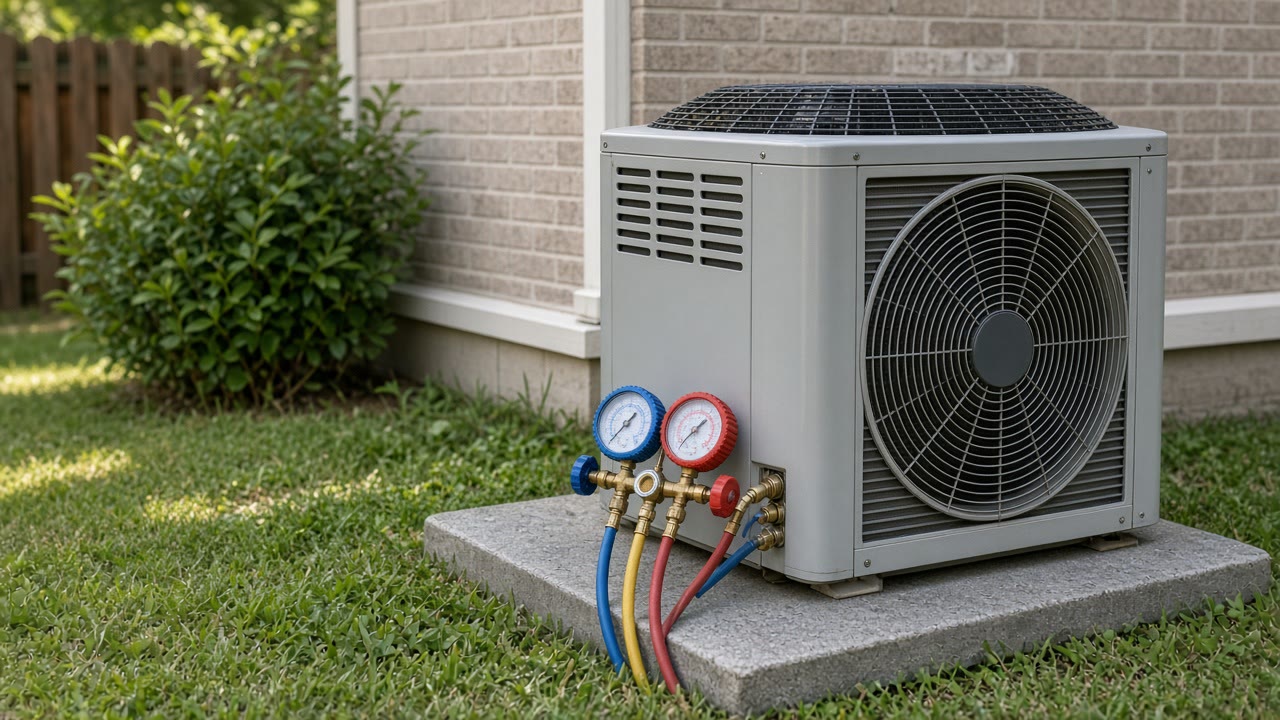
The expensive answer and the cheap answer look identical from the hallway. A blown run capacitor, a burned contactor, a float switch tripped by a blocked condensate drain and a genuine refrigerant leak all produce the same complaint: it is running and the house will not cool. Telling them apart is what a diagnosis is for, and the order matters, because only one of those requires opening the sealed side of the system. The second thing worth knowing is what the 2025 refrigerant change did and did not do, because a great deal of what homeowners have been told about it is wrong. Under 40 CFR 84.54 the restrictions that took effect on January 1, 2025 are on manufacturing, importing, selling and distributing residential air conditioning and heat pump products above a global warming potential of 700, and on installing new systems above it. Nothing in that section is about equipment already bolted to your slab. EPA has written that it classified condensing units as specified components precisely so they were not caught by those restrictions, and thus to allow for the continued servicing and maintenance of existing equipment. If a quote tells you your system cannot be repaired because of a federal refrigerant rule, the agency that wrote the rule says otherwise.
- Run capacitor and contactor faults, which is the classic outdoor unit that hums and will not start
- Condenser fan motor, fan blade and bearing faults
- Indoor blower and air handler faults, including a seized motor and a failed blower capacitor
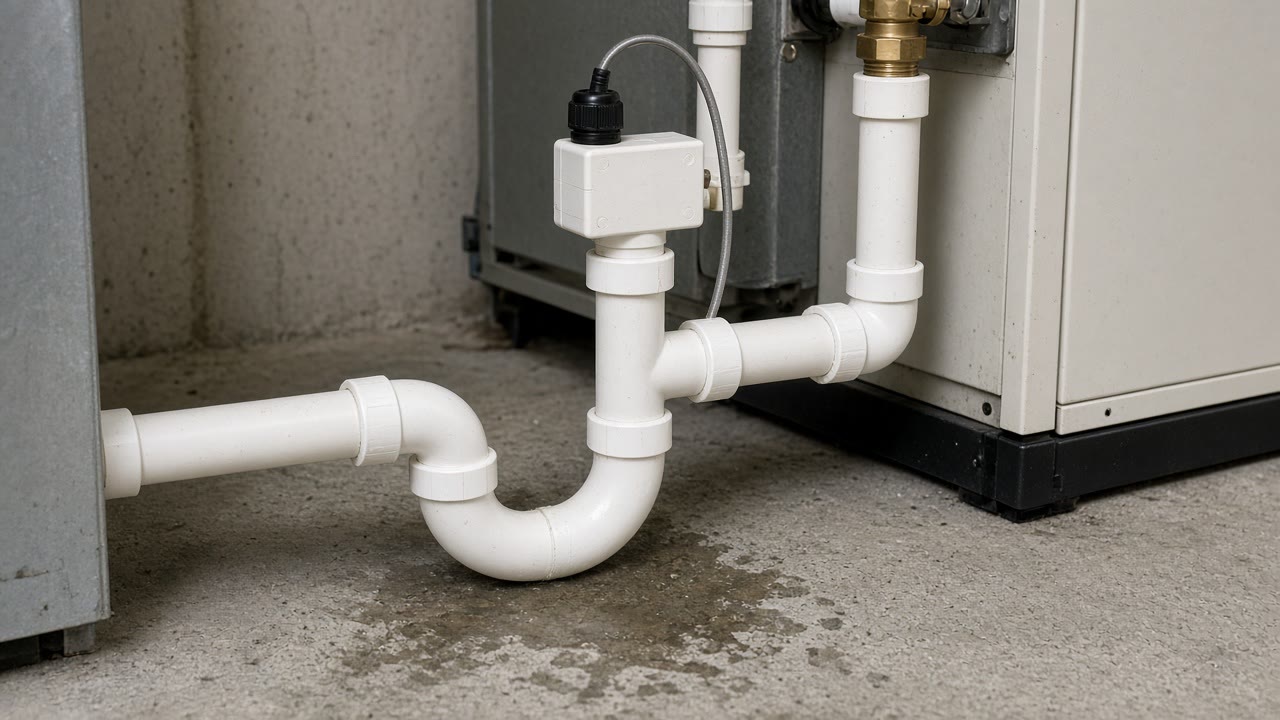
- Condensate drain, trap, pan and float switch work, including the safety switch that shuts the system down deliberately
- Frozen evaporator coil: establishing whether it is airflow or charge before anything is added to the system
- Leak location on the refrigerant circuit, with recovery equipment on site as federal rules require
- Charge checks and recharge on existing R-410A and R-22 systems, once the leak has been found and dealt with
- Compressor diagnosis, including hard starting, locked rotor and a compressor that cuts out on internal overload
- Thermostat, control board, transformer and low voltage faults, including a short in a wire the lawnmower found
- Disconnect, breaker, whip and outdoor unit electrical faults
- Airflow faults that imitate a refrigerant problem: choked filters, closed returns and a duct that has come apart in a crawl space
- A second opinion where a system has been condemned on refrigerant grounds
What decides an air conditioning diagnosis
Everything in this trade turns on one question: does the sealed side have to be opened. These are the things that answer it, and several of them can be settled before anybody arrives.
Whether the sealed refrigerant circuit has to be opened at all
It changes who may lawfully do the work. 40 CFR 82.161 requires anyone who could reasonably be expected to violate the integrity of a refrigerant circuit during maintenance, service, repair or disposal to pass a Section 608 certification exam from an approved program, in one of four types: Type I for small appliances, Type II for medium, high and very high pressure appliances, Type III for low pressure, or Universal. 40 CFR 82.152 defines a high pressure appliance by saturation pressure and gives R-410A among its examples, while a small appliance is one factory sealed with five pounds or less. A house with central air has the first category, not the second, so the certification that covers a window unit does not cover the system in the yard. Asking which one somebody holds is a real question and it is a fair one.
Whether this is the first leak or the third
A one off repair and a system that loses its charge every summer are different decisions, and the difference is sourced rather than invented. 40 CFR 84.7(a) sets the federal phasedown for regulated hydrofluorocarbons as a percentage of baseline production and consumption: 60 percent for 2024 through 2028, 30 percent for 2029 through 2033, 20 percent for 2034 and 2035 and 15 percent for 2036 onward. The allowance halves at the start of 2029. That schedule is sector wide rather than specific to one refrigerant, and this site publishes no figure for what any of it does to a price, because no primary source for that was found. The direction is sourced. The size of it is not, and a number that sounds authoritative and traces to nothing is worse than no number.
What the label on the outdoor unit actually says
There is a federally mandated label and you can read it yourself. EPA states that after January 1, 2025 all specified components designed to use a regulated substance above the limit must carry a label reading, in the rule's own words, For servicing existing equipment only. 40 CFR 84.52 defines specified components for this sector as condensing units, condensers, compressors, evaporator units and evaporators, which is to say the expensive half of a split system. So if a quote says the part cannot be obtained because of the refrigerant rule, the rule names that part as one it deliberately did not restrict, and confirming it takes about ten seconds at the box.
How long the system sat still before it was asked to start
Cooling equipment here does its whole year's work in about eight weeks. The 1991-2020 NOAA normals for Syracuse give 58.3 days a year reaching 80F, 6.8 reaching 90F and none reaching 100F, with 483 of the annual 570 cooling degree days falling in June, July and August. Equipment that sits still for nine months is equipment whose capacitor, contactor and condensate switch are all asked to wake up on the same hot afternoon, which is why the first genuinely warm day of the year produces a cluster of no cooling calls that has nothing whatever to do with refrigerant.
Whether the address sits inside the city line, because cooling is licensed in tons
The City of Syracuse Board of Mechanical Examiners grades mechanical licenses by equipment type and capacity, and the cooling side is measured in tons while the heating side is measured in MBH input. A Class C Residential HVAC Mechanical License covers air conditioning to a maximum of 5 tons in homes of not more than two families. A Class B Limited license runs to 30 ton air conditioning units. The city also runs separate M, R and S classes for refrigeration. New York issues no statewide license for this trade, so inside the city line the question has a specific answer and outside it the question is a different one. Ask which class, and for a city address the answer is checkable against a list the city publishes.
Where the condensate goes, and what happens when it cannot
The Residential Code of New York State requires a condensate pump in an uninhabitable space such as an attic or crawl space to be connected to the equipment it serves so that when the pump fails the equipment is prevented from operating, and requires an auxiliary drain pan where a stoppage would damage a building component unless the appliance shuts itself down. So an air handler in an attic that has simply stopped, with no other symptom, may be doing exactly what it was designed to do. That is a cheap thing to rule out and an expensive thing to misread.
Whether anyone has suggested converting the system to the new refrigerant
It cannot be done, and the reason is worth knowing because it closes off the middle option people hope for. EPA listed R-32, R-452B, R-454A, R-454B, R-454C and R-457A for this sector subject to use conditions, and the first condition is new equipment only. EPA writes that the listing does not allow these substitutes to be used as a conversion or retrofit refrigerant for existing equipment, and that no information was provided on how to address hazards if they were used in equipment designed for non flammable refrigerants. All six carry an ASHRAE Standard 34 safety classification of A2L, and EPA's use conditions require equipment meeting UL Standard 60335-2-40, Edition 3, with performance tests covering refrigerant leakage and ignition of switching components. Every contactor and relay in an older system was designed on the assumption that the refrigerant around it will not burn. That is a hardware difference running through the whole machine, not an adapter.
Been told your system is obsolete because of the refrigerant?
Worth a second look. The federal rule names your condensing unit as a part it deliberately left available.
How a no cooling call runs
Check the thermostat, the breaker and the filter
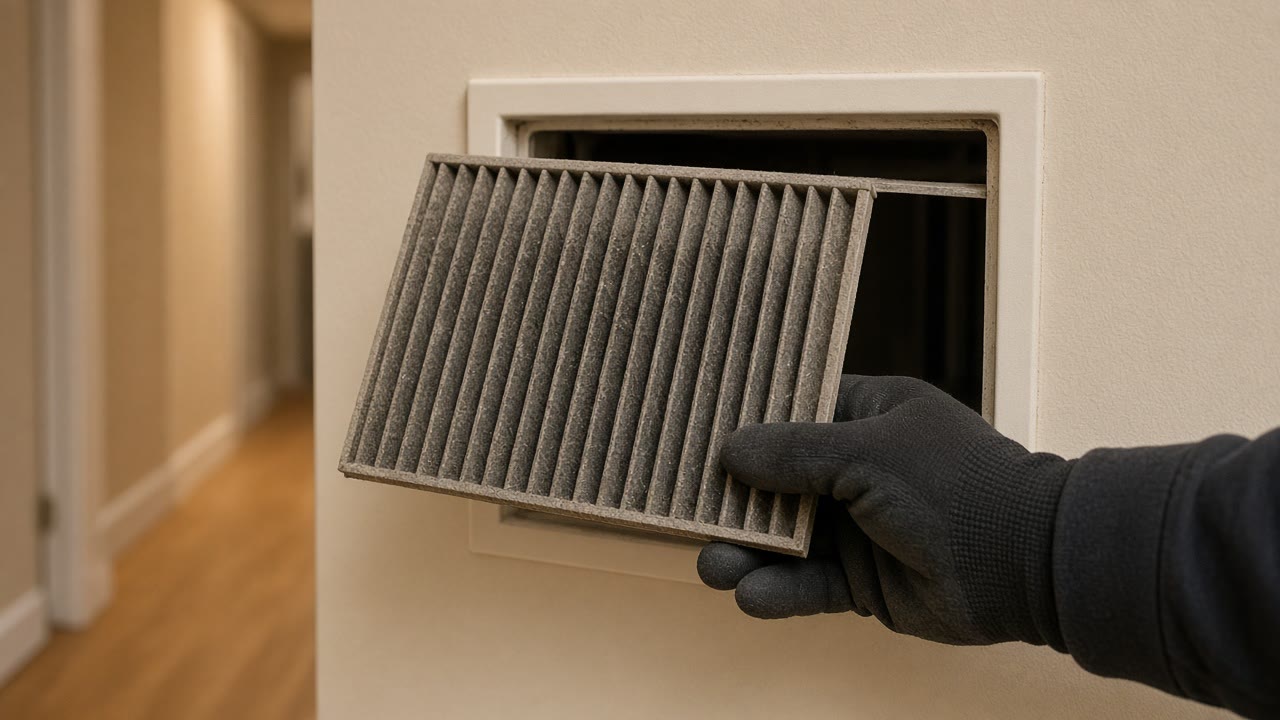
Thermostat set to COOL and below room temperature, fan on AUTO. Then the breakers, because a central system usually has two, one for the indoor air handler and one for the outdoor unit, and there is often a pull out disconnect in a box on the wall beside the condenser as well. Then the filter, because restricted airflow is a common way a healthy system stops cooling and then freezes solid. Three checks, no tools.
Go outside and say what the unit is doing
Silent, humming without the fan turning, fan turning with no compressor noise, or running normally while the house stays warm. Those four send the diagnosis in four different directions and you can supply the answer from the yard. While you are there, look at whether the coil fins are packed with grass clippings or cottonwood, because a condenser that cannot reject heat behaves like a system short of refrigerant.
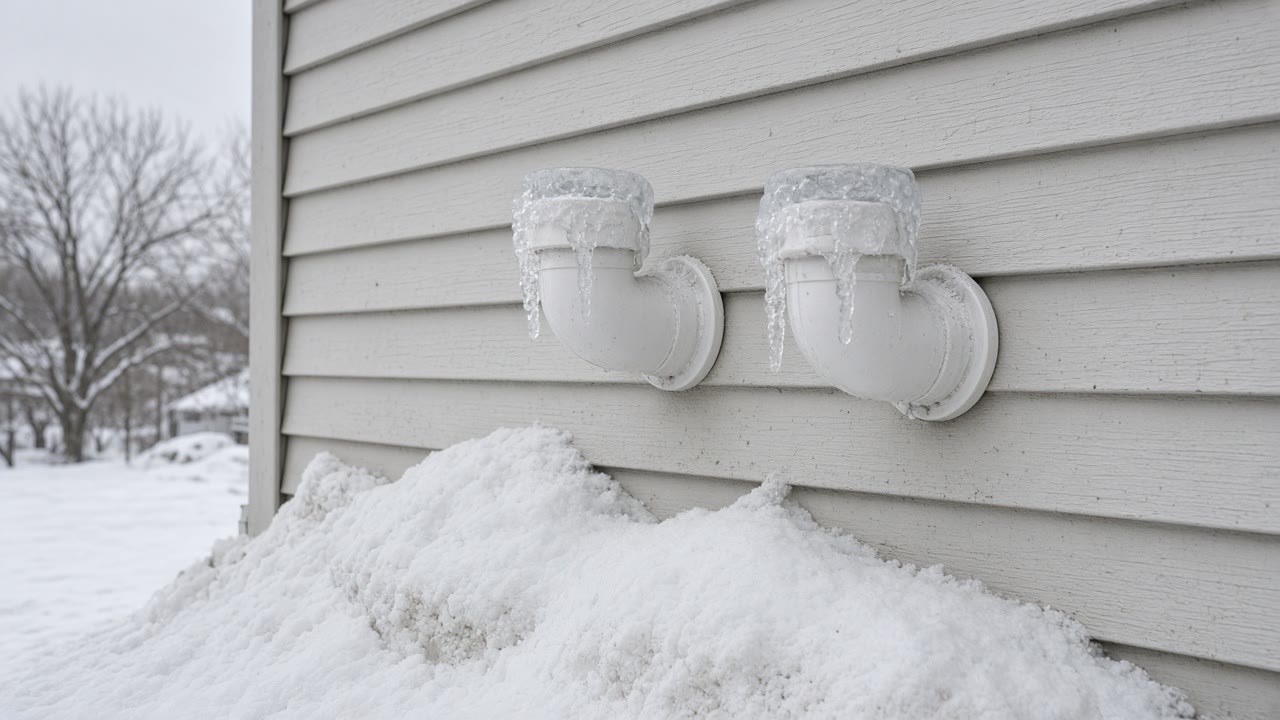
If the coil is iced, switch cooling off and leave the fan running
Ice on the indoor coil or the line at the outdoor unit means the system cannot be properly diagnosed until it has thawed, and running it iced risks the compressor. Turn the cooling off at the thermostat, set the fan to ON, and let it clear. Then note what you find underneath, because the answer is usually either airflow, which is cheap, or charge, which is not, and the thaw is what makes the two distinguishable.
The request is matched to a contractor who covers the address
They are licensed and insured. For a city of Syracuse address, ask which class of City mechanical license they hold, because the Board of Mechanical Examiners caps a Class C Residential license at 5 tons of air conditioning and the city publishes a list of HVAC contractors by license heading. The published copy is dated 2022, so a name missing from it is a reason to telephone the licensing department on (315) 448-8773 rather than a conclusion about anybody.
Electrical and airflow are checked before the gauges come out
This is the order that protects you. Capacitors, contactors, fan motors, float switches, filters and duct faults account for a great deal of what stops a system cooling, and none of them requires touching the refrigerant. A diagnosis that starts with gauges on the service ports has begun at the most expensive end of the system, which is a fair thing to say out loud on the day.
If the sealed side is opened, look for the recovery machine
40 CFR 82.154(a)(1) prohibits anyone maintaining, servicing, repairing or disposing of an appliance from knowingly venting or releasing refrigerant into the environment, and paragraph (b) requires approved recovery or recycling equipment for that refrigerant and appliance type. So refrigerant coming out of your system belongs in a machine, not in the yard. Its absence is one of the few corners in this trade that a homeowner can actually see being cut.
The leak is found before a charge is added, and you are told what goes in
Adding refrigerant without finding where the last charge went is buying the same repair again next summer. Ask what is being put in and whether it is virgin or reclaimed, because both are lawful and they are not the same thing: 40 CFR 84.104(a) prohibits selling or transferring recovered refrigerant unless it has been reclaimed by a reclaimer holding certification under 40 CFR 82.164 and reprocessed to the federal purity specification, verified by the prescribed analytical method. Recovered refrigerant that skipped that step is not a lawful product.
What ac repair looks like
Where air conditioning repair starts and stops
When you may not need this at all
- A central system usually has two breakers and an outdoor disconnect. People find the tripped one and stop there, then call about a system that is only half powered. Check all three before you telephone anybody.
- An iced coil is very often airflow, and airflow is very often the filter. Switch the cooling off, set the fan to ON, let it thaw, change the filter and try again. If it ices a second time you have learned something worth paying for. If it does not, you have fixed it for the price of a filter.
- If an attic or crawl space air handler has stopped dead with no other symptom, the Residential Code of New York State requires the condensate pump to be interlocked so the equipment cannot run when the pump fails. The system may have stopped itself on purpose, and that is a cheap fault rather than a dead system.
- There is no federal rule requiring you to chase a leak on a house system within any period. 40 CFR 84.106 applies the hydrofluorocarbon leak repair requirements to appliances with a full charge of 15 pounds or more, and then states that notwithstanding that criterion the section does not apply to residential and light commercial air conditioning and heat pump equipment. So the decision about a slow leak is an economic and safety one that you get to make, and anyone framing it as a legal obligation is adding pressure the regulation does not supply. That exemption is from the leak repair requirements only. It does not permit venting and it does not remove the certification requirement.
- You cannot buy refrigerant for a house system yourself, which is why the recharge kits sold for cars have no equivalent here. 40 CFR 82.154(c)(1) prohibits sale to anyone who does not hold Type I, Type II, Type III or Universal certification or employ someone who does. That is a reason to rule out the cheap causes properly before paying anyone to open the sealed side, because you cannot test the theory yourself.
- A window unit is a small appliance under 40 CFR 82.152, factory sealed with five pounds or less of refrigerant, and is rarely worth a service call. This service is for central systems.
- If cooling has failed and funding it is the obstacle, Onondaga County administers a HEAP Cooling Assistance benefit covering the purchase and installation of an air conditioner or a fan, one per eligible household, where the household has not had a HEAP funded air conditioner in the past five years. The number is (315) 435-2700. The benefit is seasonal and the county publishes the current dates.
- If your heat also runs through the outdoor unit in winter, this is a heat pump rather than an air conditioner, and the winter faults are different enough to be their own service.
What is out of scope
- Selecting, sizing and installing a new system. Where the diagnosis reaches the end of this one, it says so and stops there.
- Ductwork design, duct replacement, duct cleaning and indoor air quality equipment.
- Converting an existing system to one of the newer refrigerants. EPA has not listed them for conversion or retrofit use in existing equipment, so it is not something to arrange.
- Adding refrigerant repeatedly in place of finding the leak, as a standing arrangement.
- Window units, portable units, through the wall units and evaporative coolers.
- Commercial refrigeration, walk in coolers and ice machines, which the City of Syracuse licenses under separate refrigeration classes entirely.
- Electrical work beyond the equipment circuit, its disconnect and its low voltage controls.
- Concrete pads, decking and landscaping around an outdoor unit.
Towns where we arrange air conditioning repair
- AC Repair in Syracuse
- AC Repair in North Syracuse
- AC Repair in East Syracuse
- AC Repair in Liverpool
- AC Repair in Cicero
- AC Repair in Clay
- AC Repair in Salina
- AC Repair in DeWitt
- AC Repair in Fayetteville
- AC Repair in Camillus
- AC Repair in Baldwinsville
- AC Repair in Marcellus
- AC Repair in Skaneateles
- AC Repair in Solvay
What people ask about air conditioning and refrigerant
Is R-410A banned?
No, and the confusion is understandable because the date is real. What 40 CFR 84.54 restricts from January 1, 2025 is manufacturing, importing, selling, distributing and exporting residential and light commercial air conditioning and heat pump products that use a refrigerant with a global warming potential of 700 or greater, and installing new systems above that limit. R-410A sits at 2,090 on EPA's own SNAP listing, three times over the line, which is why new equipment now uses refrigerants listed at 470 and 675. None of that reaches equipment already installed. EPA states that it classified condensing units as specified components to make clear they were not subject to the restrictions on manufacture, import, sale, distribution or export, and thus to allow for the continued servicing and maintenance of existing equipment, adding that such equipment can continue to be sold and used to service existing refrigeration equipment. There is also no longer an installation deadline for pre 2025 stock: a final rule effective July 27, 2026 removed it, and the regulation as it now reads permits installation where all specified components were manufactured or imported before January 1, 2025, with no end date on the sentence.
My system needs refrigerant. Should I just replace the whole thing?
That is your decision and it deserves the real inputs rather than a scare. The honest case for repairing: your system is lawful to service and refill, EPA has said in writing that hydrofluorocarbons will continue to be available including to service existing equipment, and the phasedown at 40 CFR 84.7(a) bottoms out at 15 percent of baseline in 2036 and continues indefinitely, so there is no year in which refilling becomes impossible. The honest case against repeating it: that same schedule cuts the allowance from 60 percent of baseline to 30 at the start of 2029, so a system that leaks every year is buying into a supply that is scheduled to shrink. And there is no middle option, because EPA has not listed the newer refrigerants for conversion or retrofit into existing equipment, so it really is refill this one or replace the refrigeration circuit. This site will not price either of those for you and does not sell the second one. What it will do is make sure the question you are answering is the real one.
The outside unit hums but the fan does not turn. What is that?
That symptom points at the electrical side rather than at refrigerant, and the usual suspects are the run capacitor, the contactor and the condenser fan motor itself. A capacitor is a small part that fails quietly after sitting idle, which is exactly what equipment in this metro does for about forty four weeks of the year. Do not spin the fan with a stick to help it start, and do not leave the system trying: a compressor drawing current with no condenser airflow is the one part of this you genuinely do not want to damage while waiting. Switch the cooling off at the thermostat and describe the noise when you call.
The coil is iced over. Can I chip it off?
No, and there is no need to. Ice on an evaporator coil or on the line at the outdoor unit means the coil is running below freezing, and the two things that cause it are restricted airflow and low refrigerant charge. Chipping at aluminum fins damages the coil and tells you nothing. Switch the cooling off, set the fan to ON so warm house air moves across the coil, and let it thaw, which can take several hours. Then change the filter, open every supply register and make sure returns are not blocked by furniture, and try again. If it freezes again with clean airflow, the charge is the likely answer and that requires somebody holding Section 608 certification, because the sealed side has to be opened.
Who is actually allowed to open the refrigerant side of my system?
Somebody who has passed the right Section 608 exam, or an apprentice under their close and continual supervision. 40 CFR 82.161(a)(1) applies the requirement to anyone who could reasonably be expected to violate the integrity of the refrigerant circuit during maintenance, service, repair or disposal, and sets four types: Type I for small appliances, Type II for medium, high and very high pressure appliances, Type III for low pressure and Universal for all of them. 40 CFR 82.152 gives R-410A as an example of a high pressure appliance refrigerant. The same certification is what allows refrigerant to be purchased at all, under the sales restriction at 40 CFR 82.154(c). It attaches to the individual rather than to the company, so it is a fair thing to ask about on the day, and it is the one credential that is identical in every town in this county.
Is a fifteen year old air conditioner worth repairing here?
More often than a national rule of thumb suggests, and the reason is the climate. The 1991-2020 NOAA normals for Syracuse give 6,651 annual heating degree days against 570 cooling degree days, close to twelve to one. Cooling equipment in this metro accumulates run time at a small fraction of the rate assumed by advice written for the country as a whole, so the same fifteen year old condenser has done far less work here than it would have done almost anywhere else. That cuts the opposite way from the heating side, where the same climate means a furnace of the same age has done far more. Age on its own is not a diagnosis either way. What is worth asking is which part failed, whether it is one of the five specified components the refrigerant rule deliberately left available, and whether the system has lost charge before.
What should be on the invoice after a recharge?
The refrigerant type and the amount added, what leak search was done and what was found, and whether the refrigerant was virgin or reclaimed. That last one is worth asking because both are lawful and they are different products: 40 CFR 84.104(a) prohibits selling or transferring recovered refrigerant to a new owner unless a reclaimer holding certification under 40 CFR 82.164 has reprocessed it to the federal purity specification and verified it by the prescribed method. Reclaimed refrigerant is a real product with a standard behind it. Recovered refrigerant that has not been through that step is not one. If a part was replaced, the label EPA requires on specified components since January 1, 2025 reads For servicing existing equipment only, and you are entitled to look at it.
Tell us what the air conditioner is doing
Silent, humming, iced up, or running while the house stays warm. Those are four different faults.