
Air Conditioning Repair in North Syracuse
In a village where almost nothing is new, the cooling is bolted to the heating, and that is where a no-cooling call usually gets answered.
AC Repair quote in North Syracuse
Share a few details so we can confirm coverage and arrange the right next step.
Would you rather talk it through? Call (315) 640-3590, answered 24/7.
$100 off your first job
Credited by us on your first booked job.
- One credit per customer per property, on your first booked job.
- Valid through December 31, 2026.
Mention this offer when you book. Full terms.
Why a village cooling fault is often found indoors
Central cooling in a North Syracuse house almost never has equipment of its own indoors. It borrows the furnace's blower and the furnace's ducts, with a coil sitting on top of the cabinet, and only the condenser outside belongs to the cooling side alone. That matters here because of the village's age profile: just 144 of 3,072 housing units were built in 2000 or later and 86.6 percent went up before 1980, so the air distribution a modern condenser is working through was laid out for a house from another era. A system that runs all afternoon without bringing the house down is as likely to be an airflow problem indoors as a refrigerant problem outdoors.
What ac repair involves
Outdoors or indoors: narrowing it before the visit
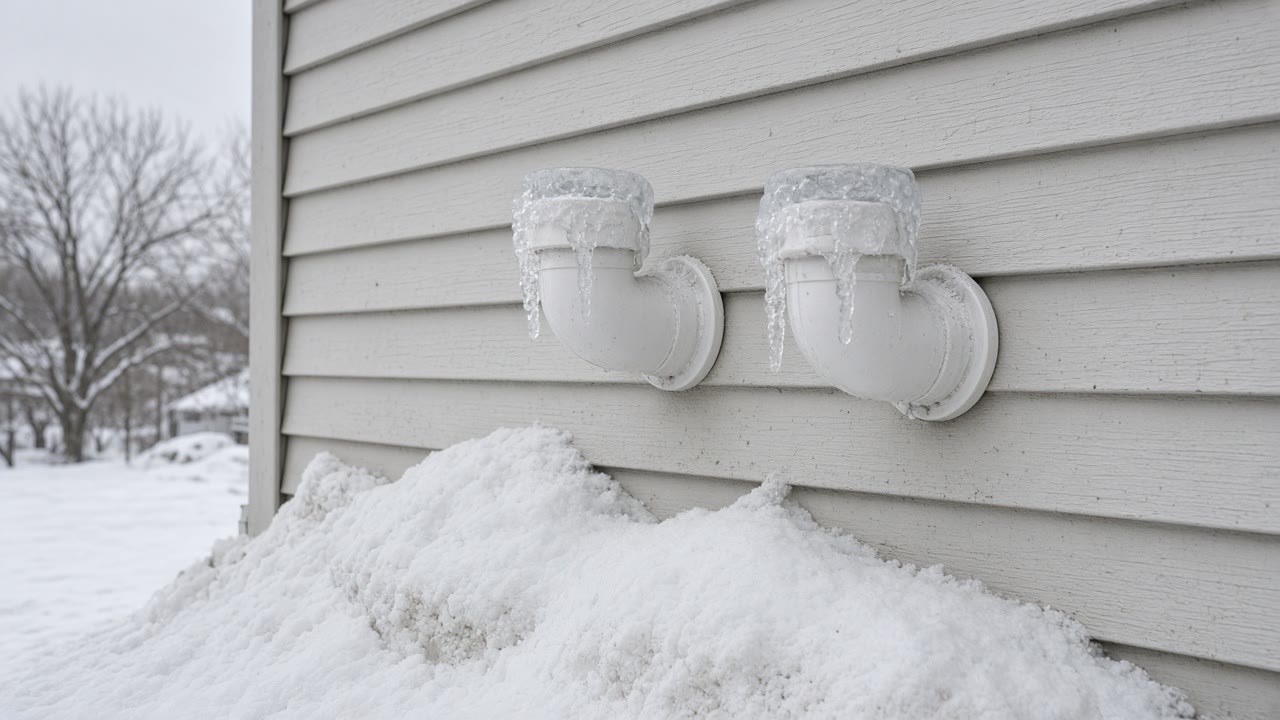
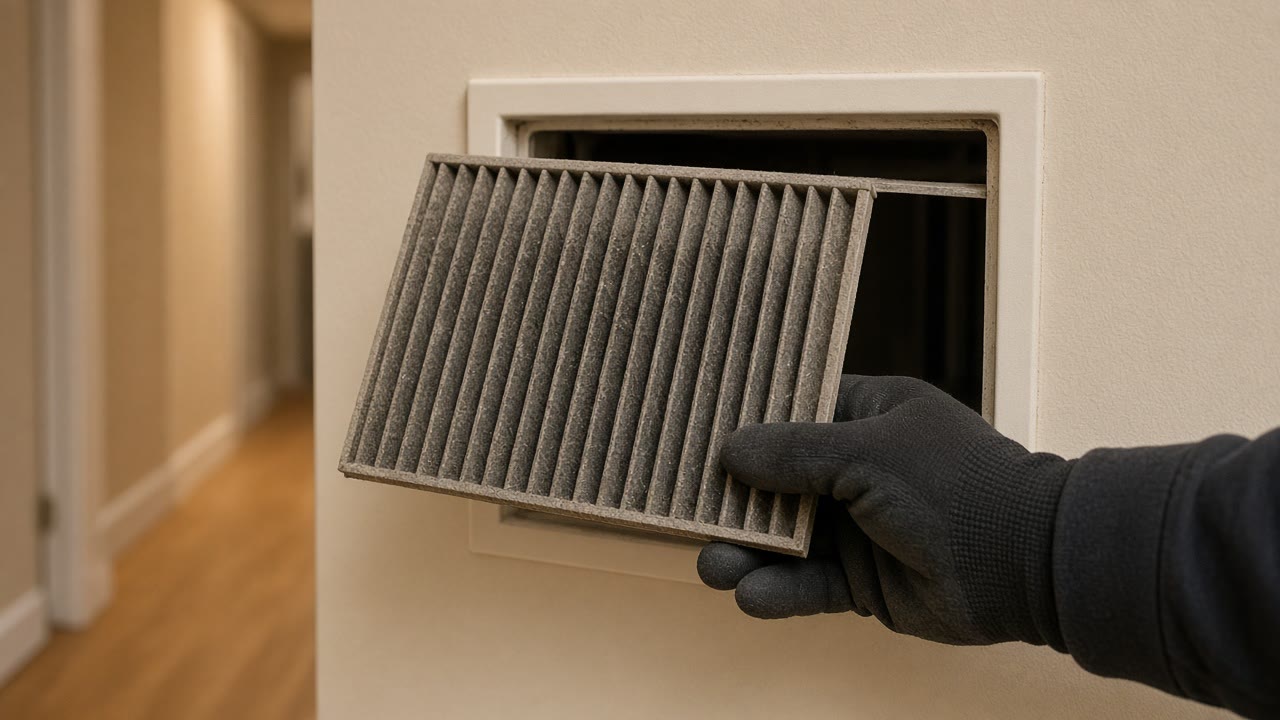
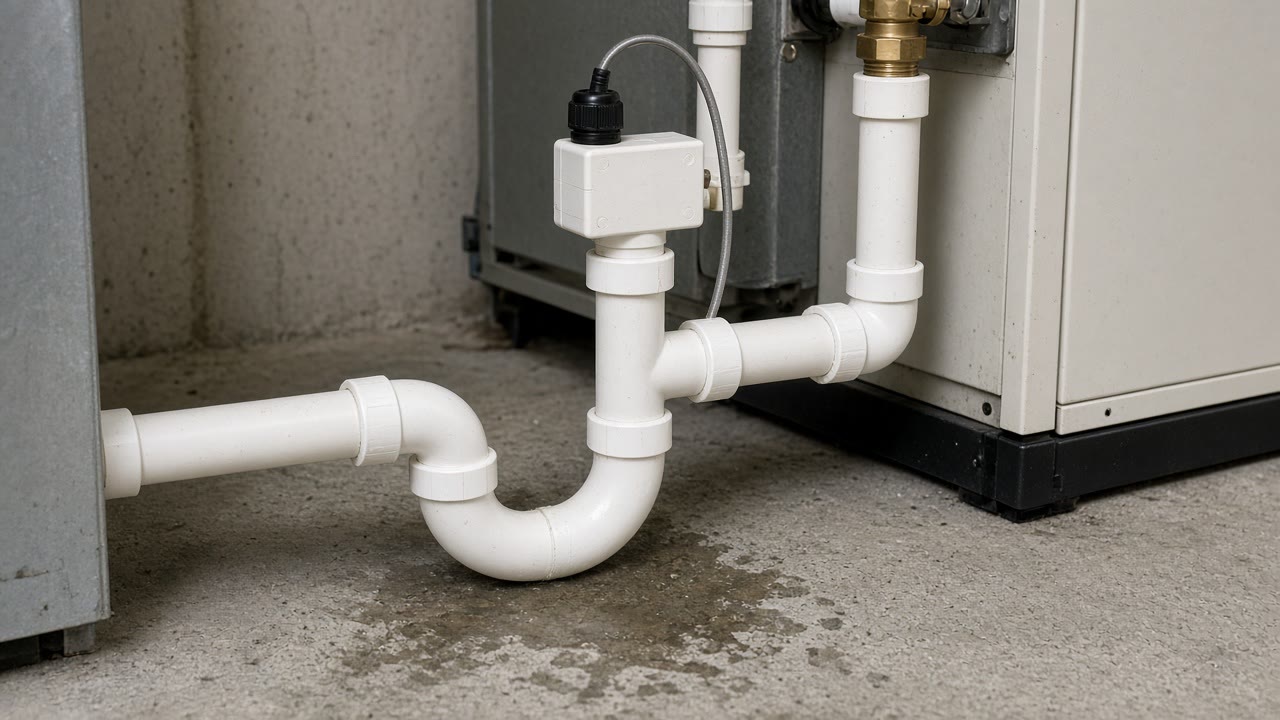
You can get most of the way there from the driveway and the hall. If the outdoor unit is silent, start with power, the disconnect beside it and the breaker. If it hums but the fan does not turn, that is a capacitor or a motor and it is an ordinary part. If the outdoor unit runs happily and the air from the grilles is barely moving, the problem is on the heating side of the cabinet: a filter, a blower, a closed damper or duct that has come apart in a crawl space. If the copper line at the outdoor unit has iced over, turn the cooling off, leave the fan running and let it thaw before anybody arrives, because nothing can be measured through ice. Regionally 31.1 percent of main heating equipment is twenty years or older, and in a village this age the blower that cooling depends on is frequently part of that.
Feel the air at the grille before blaming the refrigerant
Weak airflow with a happily running outdoor unit is an indoor fault almost every time. On a shared system that means the furnace blower, the filter or the ducts, which in a village that is 86.6 percent pre-1980 are the oldest components in the chain.
Ice means stop, not push harder
A frozen suction line usually comes from restricted airflow or low charge. Running it on makes the ice worse and hides the reading a contractor needs. Switch the cooling off, leave the fan on, and tell us how long it took to clear.
One system, two seasons, one set of ducts
Because the cooling borrows the heating equipment's blower and distribution, a fault found in July can be the same fault that shows up in January. It is worth having both checked while somebody is already at the cabinet.
144 units built this century, and what shares the blower
The American Community Survey 2020-2024 five-year estimates put the median year structure built in North Syracuse village at 1959, plus or minus 2 years. Of 3,072 housing units, 459 were built in 1939 or earlier, 14.9 percent, and 2,661 before 1980, 86.6 percent, with 144 units, 4.7 percent, built in 2000 or later.
Source: US Census Bureau, American Community Survey 2020-2024 5-year estimates, tables B25034, B25035, B25040 and B25003, North Syracuse village, New York, accessed 2026-09-13
The Energy Information Administration reports main heating equipment age in the Middle Atlantic census division as 0.95 million homes under 2 years, 1.86 million at 2 to 4 years, 2.95 million at 5 to 9 years, 3.04 million at 10 to 14 years, 2.14 million at 15 to 19 years and 4.99 million at 20 or more years, out of 16.04 million homes. That puts 31.1 percent of main heating equipment at 20 years or older and 44.5 percent at 15 years or older. The national figure for 20 or more years is 23.54 million of 123.53 million, 19.1 percent.
Source: US Energy Information Administration, 2020 Residential Energy Consumption Survey, Table HC6.7, main heating equipment age, final data release March 2023, accessed 2026-09-13
Of 2,990 occupied housing units in North Syracuse village, the American Community Survey 2020-2024 five-year estimates report 2,186 heated with utility gas, 73.1 percent, 624 with electricity, 20.9 percent, 66 with bottled, tank or LP gas, 2.2 percent, and 29 with coal. Of the occupied units, 2,010, 67.2 percent, are owner occupied.
Source: US Census Bureau, American Community Survey 2020-2024 5-year estimates, tables B25040 House Heating Fuel and B25003 Tenure, North Syracuse village, New York, accessed 2026-09-13
Outdoor unit running, nothing coming out of the grilles?
That is an indoor fault. Send the village address and describe the airflow and we will get somebody to the cabinet.
Other village work we can arrange in the same visit
North Syracuse questions about weak cooling and old ducts
The unit outside runs all day and the house stays warm. What is that?
Usually airflow rather than refrigerant, and in this village that points indoors. Central cooling here shares the furnace's blower and ducts, so a clogged filter, a tired blower motor, a duct that has separated in a crawl space or closed dampers from the winter will all produce exactly what you are describing while the condenser outside looks perfectly healthy. Check the filter and open everything, then feel the air at the grille furthest from the cabinet. If that room gets almost nothing, tell us, because it changes what the contractor brings.
Is it worth repairing cooling equipment that only runs a few weeks a year?
Usually, because the run hours are genuinely low here and the parts that fail on a lightly used system are mostly inexpensive: capacitors, contactors, fan motors and control boards. The counterweight is that equipment which sits still for ten months does not fail gracefully. A contactor that has been closed on corroded contacts since last September will not care that it was barely used. Ask what failed and why, and ask specifically whether the fault sits on the cooling side or on the furnace the cooling depends on.
Tell us what the cooling is doing
Silent outside, humming, iced or simply weak, plus the ZIP code. There is no obligation and we will say if it is a filter.