
Air Conditioning Repair in Cicero
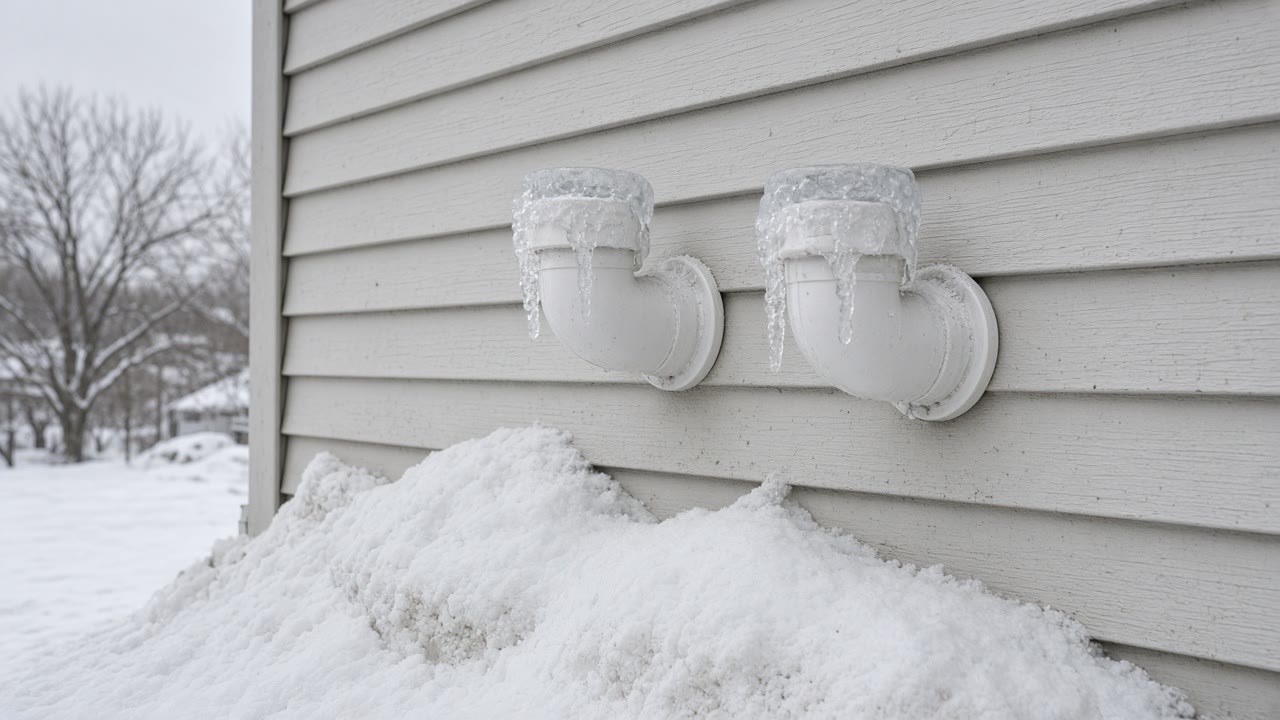
A high efficiency system that dies in July with no obvious fault is very often a blocked drain that stopped itself on purpose.
AC Repair quote in Cicero
Share a few details so we can confirm coverage and arrange the right next step.
Would you rather talk it through? Call (315) 640-3590, answered 24/7.
$100 off your first job
Credited by us on your first booked job.
- One credit per customer per property, on your first booked job.
- Valid through December 31, 2026.
Mention this offer when you book. Full terms.
A 1980 median, a shared drain, and one interlock rule
The American Community Survey 2020-2024 five-year estimates put the median year structure built in the town of Cicero at 1980, plus or minus 2 years, the newest median of any municipality in Onondaga County. Of 13,584 housing units, 932 were built in 1939 or earlier, 6.9 percent, 6,734 before 1980, 49.6 percent, and 2,594, 19.1 percent, were built in 2000 or later.
Source: US Census Bureau, American Community Survey 2020-2024 5-year estimates, tables B25034, B25035, B25040 and B25003, Cicero town, Onondaga County, New York, accessed 2026-09-13
Of 12,932 occupied housing units in the town of Cicero, the American Community Survey 2020-2024 five-year estimates report 9,890 heated with utility gas, 76.5 percent, 2,281 with electricity, 17.6 percent, 282 with bottled, tank or LP gas, 2.2 percent, and 248 with fuel oil or kerosene, 1.9 percent. Of the occupied units, 10,426, 80.6 percent, are owner occupied.
Source: US Census Bureau, American Community Survey 2020-2024 5-year estimates, tables B25040 House Heating Fuel and B25003 Tenure, Cicero town, Onondaga County, New York, accessed 2026-09-13
The Residential Code of New York State requires Category IV condensing appliances to be provided with an auxiliary drain pan where damage to any building component would occur from a stoppage in the condensate drainage system, with an exception for appliances that automatically shut down operation in the event of such a stoppage. It also requires condensate pumps located in uninhabitable spaces such as attics and crawl spaces to be connected to the appliance or equipment served so that when the pump fails the appliance is prevented from operating.
Source: Residential Code of New York State, Chapter 24 Fuel Gas, sections G2404.10 (307.5) and G2404.11 (307.6), via UpCodes, accessed 2026-09-13
Why a Cicero cooling failure is often about water
Cooling makes water, and in the county's newest housing that water has somewhere specific to go. 9,890 of Cicero's 12,932 occupied units heat with utility gas, and with a median year built of 1980 the indoor coil usually sits on top of a condensing furnace that produces condensate of its own, so both share a drain and often a pump. The residential code ties that drainage directly to whether the appliance may run: a condensate pump in an uninhabitable space such as an attic or crawl space must be connected to the equipment it serves so that when the pump fails the appliance is prevented from operating. A system that shuts down on a hot afternoon with nothing obviously wrong has frequently done exactly that, deliberately.
Follow the water before you follow the refrigerant
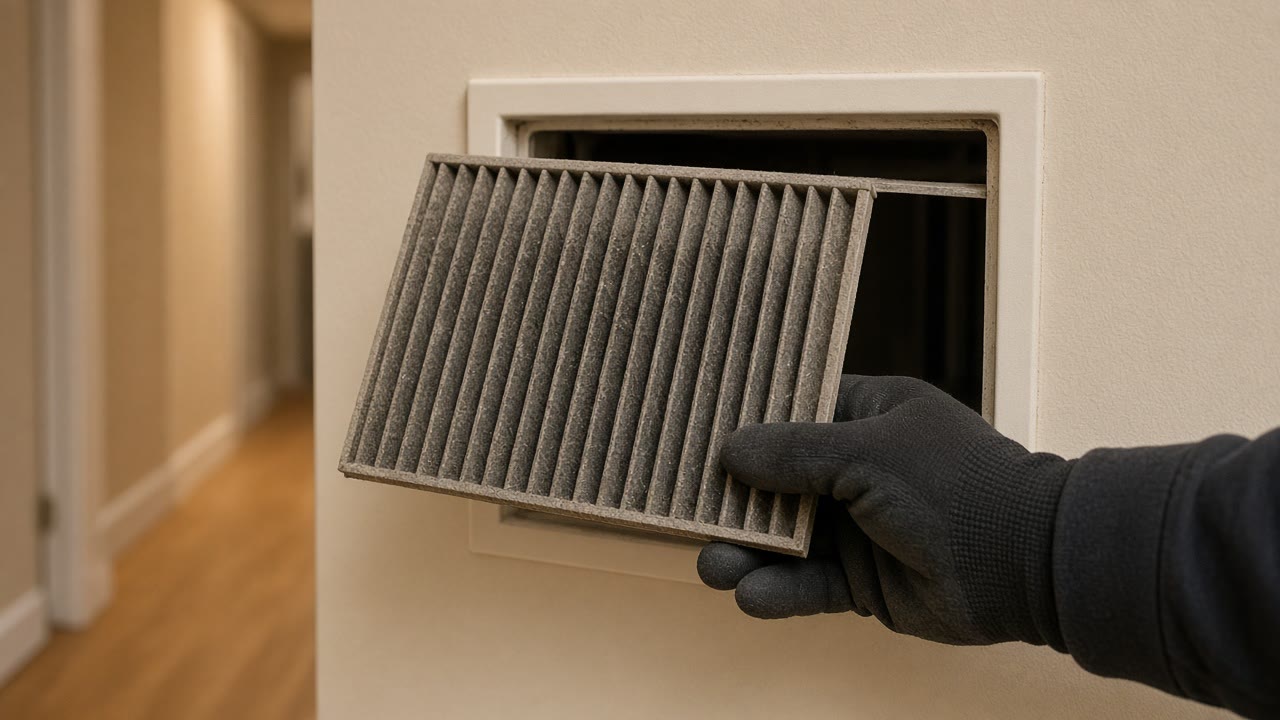
Three checks, in order, and none of them costs anything. Find the drain: a white plastic pipe leaving the indoor cabinet, sometimes into a small pump with a float switch. Is the pan under the coil holding water, is the pump full, is there a wet patch or a stain below. If the answer is yes, you have probably found it, and a blocked condensate path is a genuinely inexpensive fault. Second, the filter and the airflow, because a starved coil gets cold enough to freeze and then floods when it thaws, which looks like a drainage problem and is not one. Third, only then the outdoor unit. That order matters in a town where sealed, condensing equipment is the norm rather than the exception, because these systems are designed to stop themselves rather than to run in a state they should not.
A shutdown with no symptom is usually a safety interlock
The code requires a condensate pump in an uninhabitable space to be wired so the appliance cannot operate when the pump fails. Equipment that stopped itself cleanly, with no noise and no smell, has often done so on purpose and the fix is at the drain.
Check the pan and the pump before you call it a refrigerant problem
Standing water in the pan under the coil, or a condensate pump that is full, is visible from where you are standing and points at a cheap fault. Refrigerant work requires certification and equipment; a blocked drain does not.
Ice now means stop now
A frozen coil floods when it melts and hides every measurement a contractor needs. Turn the cooling off, leave the fan running, and tell us how long it took to clear. That interval is useful information rather than a delay.
System stopped with no warning and nothing tripped?
Check the condensate pan and pump, then send us the Cicero address. That interlock exists to stop exactly this kind of damage.
Other Cicero repairs we arrange
Cicero questions about condensate, drains and shutdowns
My Cicero system just stopped on the hottest day. Nothing tripped. Why?
Look at the drain first. On the sealed, condensing equipment that is typical of this town, the residential code requires a condensate pump located in an uninhabitable space to be connected to the appliance so that the appliance is prevented from operating when the pump fails. It also requires an auxiliary drain pan where a stoppage would damage the building, unless the appliance shuts itself down instead. So a clean, silent stop with no burning smell and no tripped breaker is very often the system protecting your ceiling. Check for water in the pan or a full pump, then send us the address.
There is water on the floor near the furnace in summer. Is the furnace leaking?
In July it is far more likely to be the cooling coil sitting on top of it. The coil pulls moisture out of the air all afternoon and that water has to run away through a drain line, often into a small pump. When the line blocks with algae or the pump fails, the water backs up into the pan and then onto the floor. It is a common fault and an inexpensive one, and it is worth dealing with promptly because the same water can reach the furnace's own controls. Turn the cooling off so it stops making more, and tell us what you can see.
Tell us what your Cicero cooling is doing
Stopped, iced, leaking or simply weak, plus the ZIP code. If it is a blocked drain we will say so, with no obligation.