
Furnace Repair in the Town of Cicero
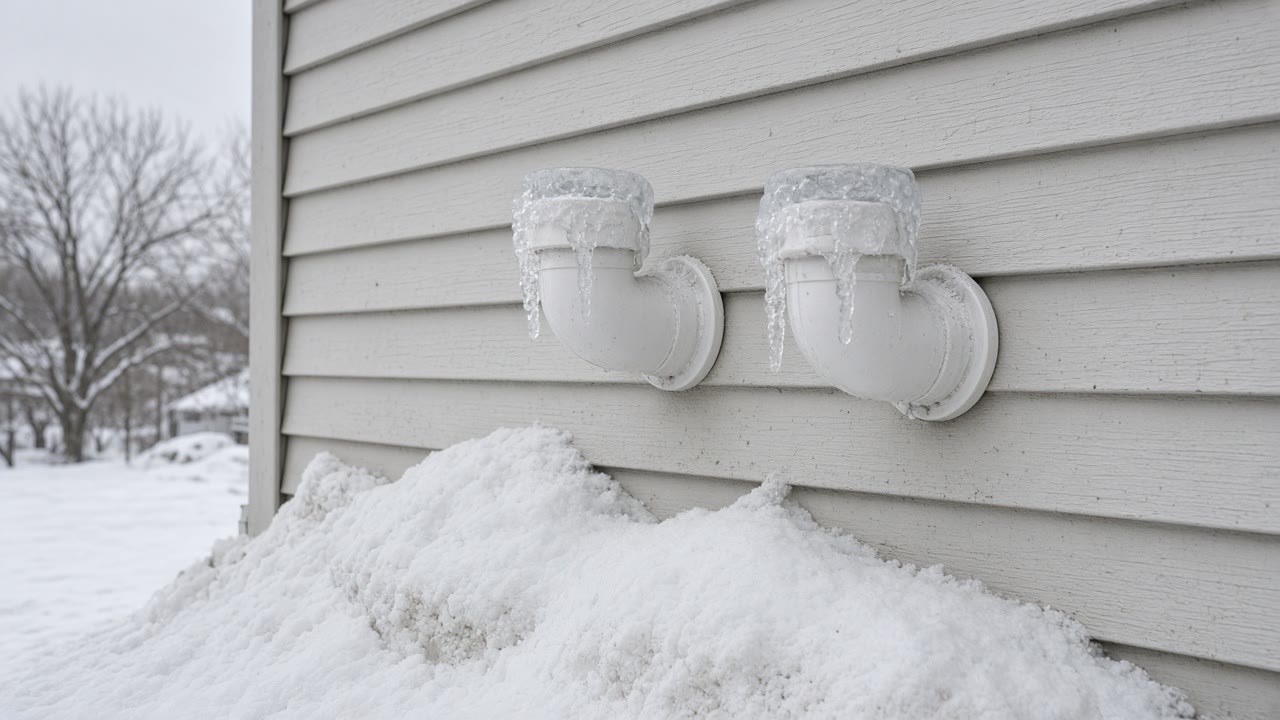
Before you book anybody, walk round to the pipes on the outside wall. In the county's newest housing that check ends a surprising number of calls.
Furnace Repair quote in Cicero
Share a few details so we can confirm coverage and arrange the right next step.
Would you rather talk it through? Call (315) 640-3590, answered 24/7.
$100 off your first job
Credited by us on your first booked job.
- One credit per customer per property, on your first booked job.
- Valid through December 31, 2026.
Mention this offer when you book. Full terms.
The two minute check that comes before a Cicero furnace call
Cicero is the newest housing stock in Onondaga County, with a median year built of 1980 plus or minus two years, 2,594 of its 13,584 units put up in 2000 or later and only 6.9 percent predating 1940. Newer houses vent differently. Instead of an atmospheric appliance on a masonry chimney, the typical system here breathes through a pair of plastic pipes on an outside wall, and the residential code puts the bottom of a vent terminal at not less than 12 inches above finished ground level. That is entirely lawful in a metro whose snowfall normal is 123.8 inches a year, with 13.4 days that drop three inches or more at once. A drifted intake is a lockout, not a breakdown, and clearing it takes two minutes.
What furnace repair involves
Lockout or failure, and how to tell before paying anybody
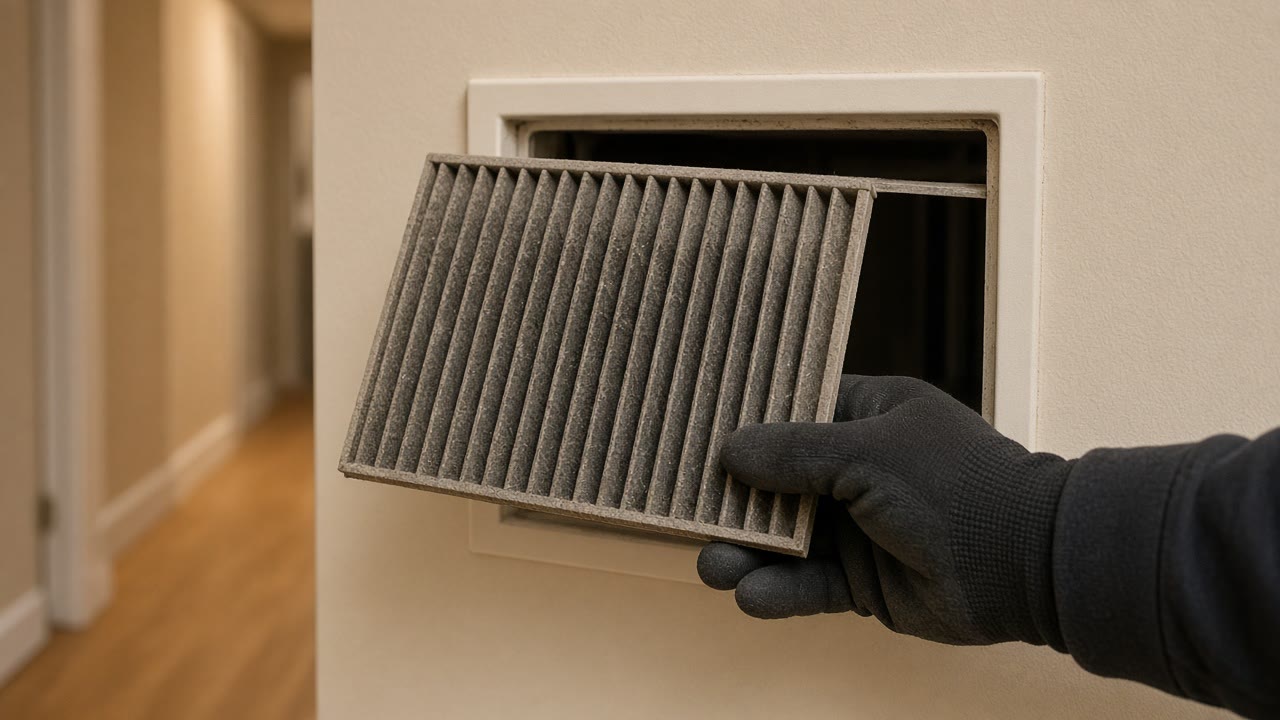
Ask when it stopped as carefully as you ask what it is doing. A furnace that quit during or just after a snowfall, or on a windy day with drifting, has a cheap explanation waiting outside: snow packed against the intake or exhaust, or an ice cap formed where warm exhaust met cold air. Clear it by hand, gently, and never with anything sharp near the plastic. A furnace that quit on a dry day with no weather in the story is a different question and the fault list runs through the igniter, the flame sensor, the pressure switch and the control board. Either way, describe the weather at the time in your first message. In a town where almost one home in five was built this century, weather-related lockouts are a normal part of the picture rather than an oddity.
Go and look at the pipes on the wall
The code sets the bottom of a vent terminal at not less than 12 inches above finished ground level. In a metro that averages 123.8 inches of snow a year with 5.8 days dropping five inches or more, that height and a drift are not a comfortable combination.
Tell us the weather, not just the symptom
A furnace that stopped the morning after a storm and a furnace that stopped on a clear Tuesday are two different diagnoses. The weather at the time of failure is genuinely diagnostic information and it costs nothing to include.
Sealed combustion means the fault list moved
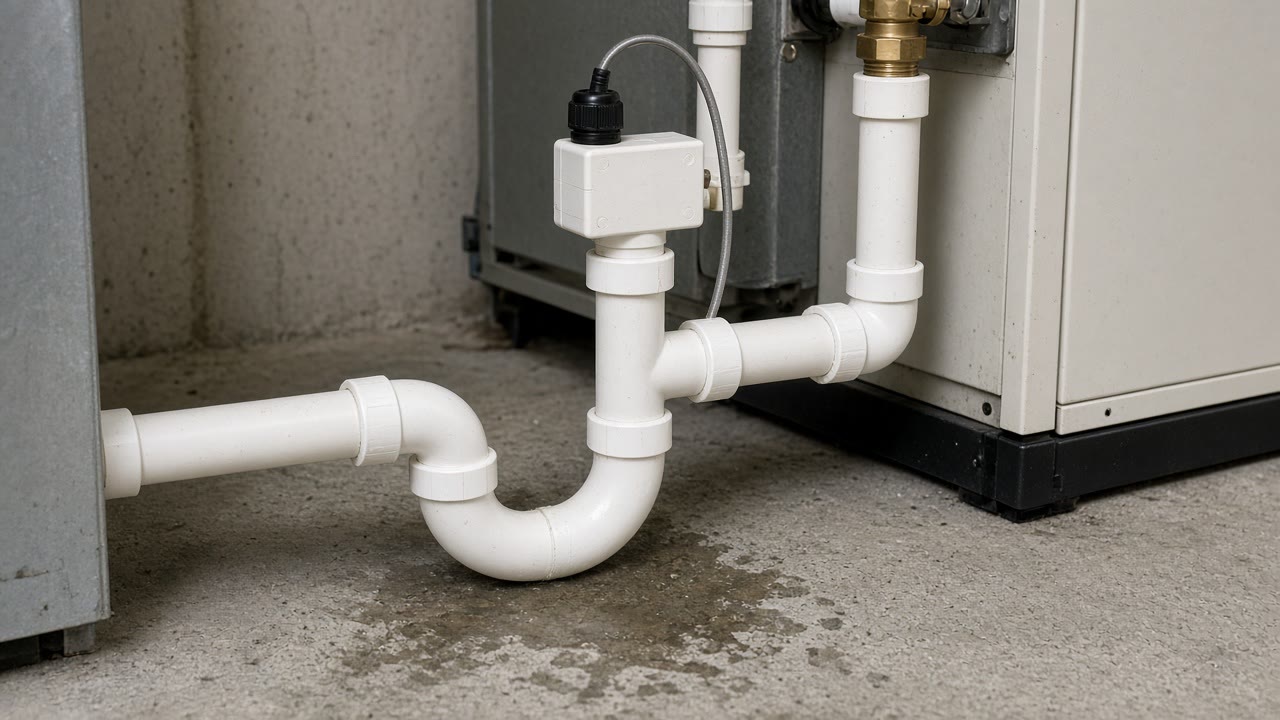
With a median build year of 1980, most Cicero systems are not atmospheric appliances on masonry chimneys. Pressure switches, condensate paths and sidewall terminations replace the draft and chimney questions that dominate the older villages.
123.8 inches of snow against a 12 inch vent height
The American Community Survey 2020-2024 five-year estimates put the median year structure built in the town of Cicero at 1980, plus or minus 2 years, the newest median of any municipality in Onondaga County. Of 13,584 housing units, 932 were built in 1939 or earlier, 6.9 percent, 6,734 before 1980, 49.6 percent, and 2,594, 19.1 percent, were built in 2000 or later.
Source: US Census Bureau, American Community Survey 2020-2024 5-year estimates, tables B25034, B25035, B25040 and B25003, Cicero town, Onondaga County, New York, accessed 2026-09-13
Section G2427.8 of the Residential Code of New York State requires that the bottom of a vent terminal be located not less than 12 inches above finished ground level. A mechanical draft venting system, other than a direct-vent appliance, must terminate not less than 4 feet below, 4 feet horizontally from, or 1 foot above any door, operable window or gravity air inlet, and not less than 3 feet above any forced-air inlet within 10 feet. Table G2427.8 sets through-the-wall direct-vent terminal clearance from any air opening into the building at 6 inches below 10,000 Btu per hour, 9 inches from 10,000 up to 50,000, and 12 inches above 50,000 up to 150,000.
Source: Residential Code of New York State, Chapter 24 Fuel Gas, section G2427.8 (503.8), Venting system termination location, and Table G2427.8, via UpCodes, accessed 2026-09-13
The 1991-2020 annual snowfall normal for Syracuse Hancock International Airport is 123.8 inches. The normals give 66.4 days a year with an inch or more of snow, 34.5 days with two inches or more, 13.4 days with three inches or more, 5.8 days with five inches or more and 1.1 days with ten inches or more. The December, January and February share is 92.0 inches of the annual total.
Source: NOAA National Centers for Environmental Information, 1991-2020 US Climate Normals, annual and seasonal, station USW00014771, Syracuse Hancock International Airport, accessed 2026-09-13
Of 12,932 occupied housing units in the town of Cicero, the American Community Survey 2020-2024 five-year estimates report 9,890 heated with utility gas, 76.5 percent, 2,281 with electricity, 17.6 percent, 282 with bottled, tank or LP gas, 2.2 percent, and 248 with fuel oil or kerosene, 1.9 percent. Of the occupied units, 10,426, 80.6 percent, are owner occupied.
Source: US Census Bureau, American Community Survey 2020-2024 5-year estimates, tables B25040 House Heating Fuel and B25003 Tenure, Cicero town, Onondaga County, New York, accessed 2026-09-13
Did it stop the morning after a storm?
Check the vent pipes on the outside wall first. If they are clear, send us the Cicero address and we will get somebody to it.
Other Cicero equipment we arrange repairs on
Cicero questions about buried vents and winter lockouts
My Cicero furnace stopped the morning after a heavy snow. What do I check?
The two plastic pipes on the outside wall, before anything else. The residential code requires the bottom of a vent terminal to be not less than 12 inches above finished ground level, which is fine in most weather and marginal in this one: the local snowfall normal is 123.8 inches a year with 13.4 days that bring three inches or more at once and 5.8 that bring five or more. Snow banked against the intake or exhaust, or ice that has formed on the termination, will make a sealed combustion furnace lock itself out rather than run unsafely. Clear it carefully by hand, keep sharp tools away from the plastic, then reset once. If it runs, you are done.
Why do so many newer Cicero homes have the same problem in the same week?
Because the town was built in waves and the weather arrives all at once. Cicero has the newest median build year in the county at 1980, with 19.1 percent of its units put up in 2000 or later, so a great many houses have similar equipment of similar age vented in similar ways. When a storm buries sidewall terminations across a subdivision, the same lockout happens on the same night at a lot of addresses. That is also why the honest advice is to check the pipes yourself first. On the days when everyone calls at once, two minutes outside may be worth more than a place in the queue.
Tell us what the Cicero furnace is doing
What happened, when, and what the weather was doing, plus the ZIP code. If it is a two minute fix, that is what you will be told.