
Furnace Repair in North Syracuse Village
If your furnace lights, runs for a few seconds and quits, the most likely answer is a cheap part doing its job correctly.
Furnace Repair quote in North Syracuse
Share a few details so we can confirm coverage and arrange the right next step.
Would you rather talk it through? Call (315) 640-3590, answered 24/7.
$100 off your first job
Credited by us on your first booked job.
- One credit per customer per property, on your first booked job.
- Valid through December 31, 2026.
Mention this offer when you book. Full terms.
73.1 percent on gas, and one code section that explains it
Of 2,990 occupied housing units in North Syracuse village, the American Community Survey 2020-2024 five-year estimates report 2,186 heated with utility gas, 73.1 percent, 624 with electricity, 20.9 percent, 66 with bottled, tank or LP gas, 2.2 percent, and 29 with coal. Of the occupied units, 2,010, 67.2 percent, are owner occupied.
Source: US Census Bureau, American Community Survey 2020-2024 5-year estimates, tables B25040 House Heating Fuel and B25003 Tenure, North Syracuse village, New York, accessed 2026-09-13
New York adds its own provision at G2431.2 of the Residential Code of New York State. It states that all fuel gas space heating appliances installed or used in a building occupied as a residence shall be equipped with an automatic flame safeguard device that shall shut off the fuel supply to the main burner or group of burners when the flame or pilot light is extinguished.
Source: Residential Code of New York State, Chapter 24 Fuel Gas, section G2431.2 (601.2), a New York amendment, via UpCodes, accessed 2026-09-13
This ledger carries no sourced distribution of residential heating or cooling failure causes. No figure was located from the Department of Energy, the Energy Information Administration or a manufacturer's published reliability data giving the share of no-heat calls attributable to thermostats, breakers, filters or any other single cause. What this ledger does carry is the mechanism behind several individual cheap failures, each of which the New York codes describe directly: the flame safeguard requirement that shuts a gas appliance down when the flame is lost, the condensate drainage interlock that stops a condensing appliance when the drain or pump blocks, and the twelve inch vent terminal height that a heavy snowfall can bury.
Source: Ledger finding on 2026-09-13, recorded against the sourced code and regulatory material in this file, accessed 2026-09-13
The Energy Information Administration reports main heating equipment age in the Middle Atlantic census division as 0.95 million homes under 2 years, 1.86 million at 2 to 4 years, 2.95 million at 5 to 9 years, 3.04 million at 10 to 14 years, 2.14 million at 15 to 19 years and 4.99 million at 20 or more years, out of 16.04 million homes. That puts 31.1 percent of main heating equipment at 20 years or older and 44.5 percent at 15 years or older. The national figure for 20 or more years is 23.54 million of 123.53 million, 19.1 percent.
Source: US Energy Information Administration, 2020 Residential Energy Consumption Survey, Table HC6.7, main heating equipment age, final data release March 2023, accessed 2026-09-13
The safety device that looks exactly like a dead furnace
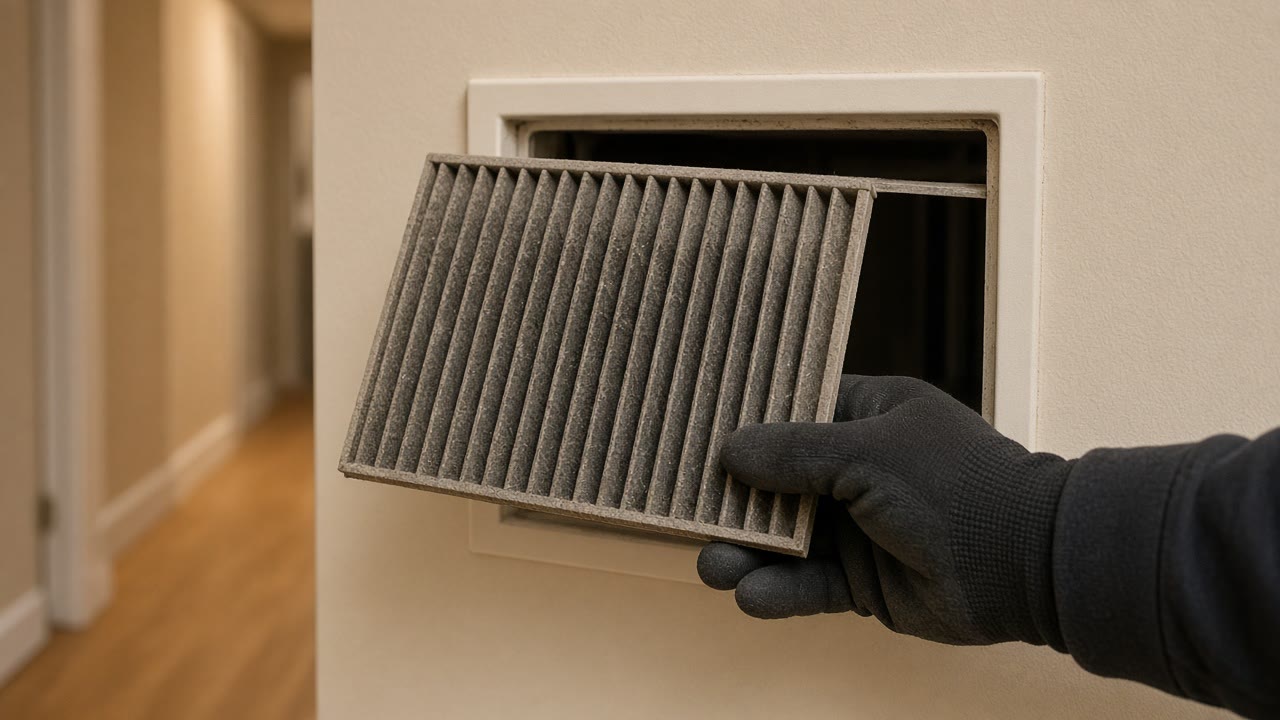
Most no-heat calls in this village land on a gas appliance: 2,186 of North Syracuse's 2,990 occupied units heat with utility gas, 73.1 percent, with another 624 on electricity and 66 on a bottled tank. On the gas houses there is one failure pattern worth recognizing before you pay anybody, because it imitates a dead furnace perfectly. New York requires every fuel gas space heating appliance in a residence to carry an automatic flame safeguard that shuts off the fuel to the main burner when the flame or pilot is lost. A furnace that lights, runs a few seconds and shuts down is usually that device working exactly as written, and the part it is complaining about is often only dirty.
Where a North Syracuse no-heat call should start
Work the cheap end first, and describe the pattern rather than the outcome. Nothing at all happening points at power, the switch on the furnace casing, or the thermostat. A blower that runs continuously with cold air points at the fan setting or a limit. Lighting and dropping out after a few seconds points at the flame safeguard, and that is where a cleaning frequently ends the job. We have no sourced figure for how often any one of these is the culprit and will not invent one, but the code mechanisms behind them are written down and they cost very little to check. Age alone is not the argument either: across this part of the country 31.1 percent of main heating equipment is twenty years old or more, so an older furnace in this village is ordinary rather than condemned.
Time it and tell us the seconds
Ten seconds of flame then silence is a different fault from a furnace that never lights, and both are different from one that runs and blows cold. The interval is the single most useful thing you can put in the first sentence of a request.
Nobody here can tell you the odds, and nobody should
There is no authoritative published breakdown of what causes residential no-heat calls, so any percentage you are quoted is marketing. What is documented is the mechanism: the flame safeguard shuts the fuel off when the flame is lost, and that is a fact about your furnace rather than a statistic.
Twenty years old is not a diagnosis
Regionally, 31.1 percent of main heating equipment is at least twenty years old and 44.5 percent is at least fifteen. Age tells you what is likely to need attention next. It does not tell you what failed tonight.
Lights, runs, then stops?
Time it and tell us the seconds along with your North Syracuse address. Most of the causes behind that pattern are inexpensive.
Other North Syracuse systems we arrange work on
Village questions about furnaces that start and stop
Is a furnace that keeps shutting itself off dangerous?
The shutting off is the safe part. New York's residential code requires a fuel gas space heating appliance in a home to be fitted with an automatic flame safeguard that cuts the fuel to the main burner when the flame or pilot goes out, and an appliance that locks out is doing precisely that. What deserves attention is why the flame is being lost or not sensed. Common answers are a dirty flame sensor, a weak igniter, a marginal gas valve or restricted combustion air. What you should not do is keep pressing reset through the evening, because each reset asks the appliance to try again at something it has already refused.
Should I replace a twenty year old North Syracuse furnace instead of repairing it?
Not on age alone. In this part of the country 31.1 percent of main heating equipment is twenty years or older, which makes that entirely normal rather than a scandal, and the regional figure is not a statement about your particular machine. The questions that actually decide it are what failed, what the part costs, whether the heat exchanger is sound, and what is likely to need attention next. Ask for those four answers in writing. If a cleaning and a sensor put it back into service for the winter, that is a legitimate outcome and we will tell you so.
Tell us what the village furnace is doing
Describe the sequence rather than the outcome, and give the ZIP code. If the fix is a cleaning, that is what you will be told.