
Syracuse and the surrounding Onondaga County area
No Heat Tonight: Emergency Repair and Diagnostics in Onondaga County
Decide whether a heating or cooling failure needs somebody tonight, and get a contractor to the property when it does.
Emergency Repair quote
Tell us the property address, what the system burns and what it is doing right now. Phones answered 24/7, and the request goes to licensed, insured contractors who cover that address. If your answer is that this waits until morning, we would rather say so.
Would you rather talk it through? Call (315) 640-3590, answered 24/7.
$100 off your first job
Credited by us on your first booked job.
- One credit per customer per property, on your first booked job.
- Valid through December 31, 2026.
Mention this offer when you book. Full terms.
What counts as tonight, and what honestly does not
When the heat fails at nine at night the useful question is not who is cheapest, it is what to do in the next ten minutes and whether this genuinely waits until morning. A great deal of it does. A house holds heat for hours, the checks that cost nothing take five minutes, and the calmest thing anyone can tell you at that hour is that you have time. Some of it does not wait, and the clearest case is carbon monoxide. The New York State Department of Health says to suspect it where symptoms start or worsen soon after a fuel burning device is turned on, where more than one person in the area becomes ill at the same time, or where those who are ill feel better after leaving, and its instruction in that case is to get everyone out into fresh air immediately and contact the fire department and the gas company or a heating contractor. That is a pattern test rather than a symptom test, and it is the sharpest tool you have for deciding what tonight actually is. This service exists for the calls that are genuinely tonight, and for the honest answer when yours is not.
- No heat calls outside normal hours, on any fuel and on any system type
- No cooling calls in a heat wave where somebody in the house is elderly, very young, or unwell
- Combustion testing on an appliance after a carbon monoxide alarm has sounded and the fire department has cleared the building
- A second opinion on an appliance another contractor has shut down and tagged
- Water reaching the building from a boiler, an air handler, a condensate line or a relief valve
- Burning or gas smells at an appliance, where the gas utility has already been called
- A system locking out and restarting repeatedly through the night
- Frozen pipe risk in a house that has been without heat while the outside temperature is below freezing
- Diagnosis only, written down, where the repair is going to be a daylight decision
- Heat complaints in rented property inside the City of Syracuse, where the code sets both a temperature and a season
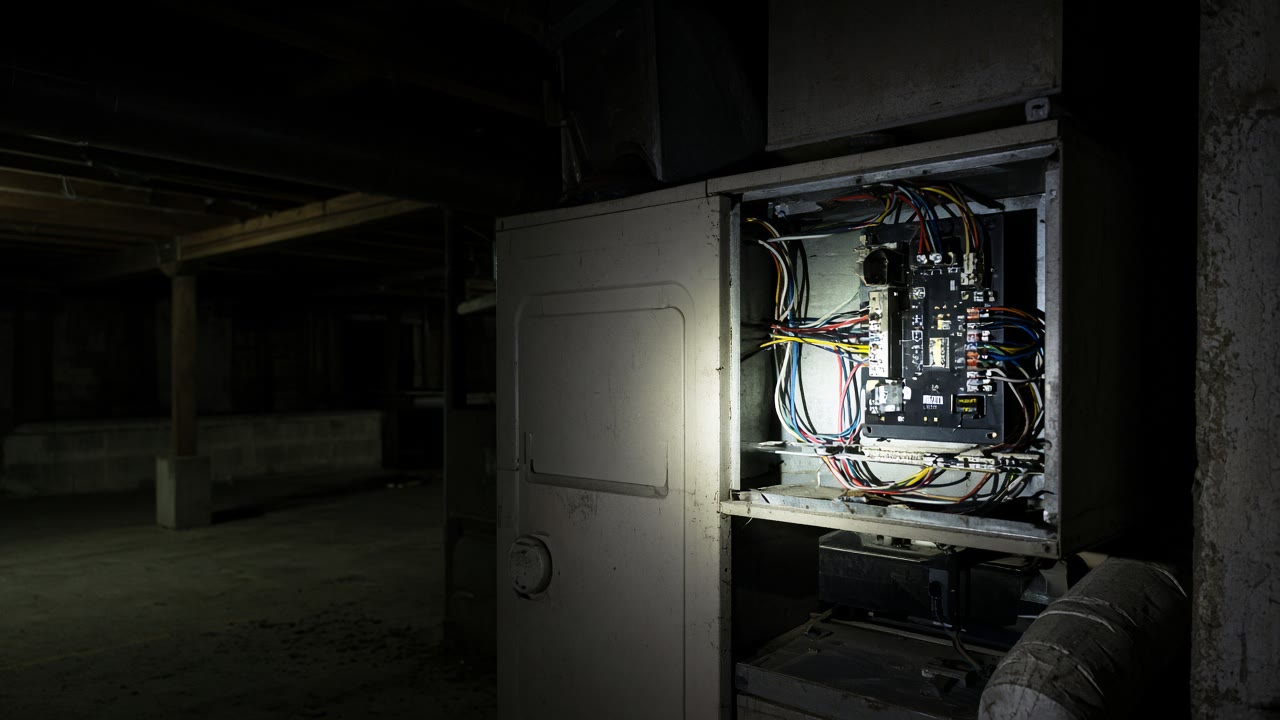
What makes a failure tonight rather than tomorrow
Four things decide this, and you can answer all four from your kitchen before anybody quotes you anything.
Whether anyone in the house is at risk
This outranks every other consideration on the page and it is the reason the question is asked first. An infant, somebody elderly, somebody unwell, somebody who cannot leave the building unaided: any of those turns a cold house into a different problem. The New York State Department of Health records that carbon monoxide exposure is the leading cause of death due to poisoning in the United States, which is why the alarm, rather than the thermostat, is the instrument that decides how the rest of this evening goes.
What the outside temperature is doing tonight
The same fault is a different call at 30F and at minus 2F. The 1991-2020 NOAA normals for Syracuse give 129.5 nights a year at or below 32F but only 7.1 at or below 0F, and 5.7 of those fall in January and February. So the genuinely dangerous cold in a Syracuse winter amounts to about seven nights, and a marginal system survives the ordinary ones and fails on those. If tonight is one of them, the arithmetic changes. If it is a normal cold night and the house is holding, morning is often the right answer.
Whether the failure involves combustion
It decides whether this is a comfort problem or a safety one. The American Community Survey 2020-2024 estimates report 69.3 percent of occupied homes in the city of Syracuse heated with utility gas and 25.2 percent with electricity. An electric system has no flue, no combustion and produces no carbon monoxide from the heating, so a fault on one is a cold house. A gas or oil appliance behaving strangely, smelling wrong or setting off an alarm is a different category of event, and which of those two houses you live in is the first thing worth saying on the telephone.
Whether somebody has already shut the appliance down
A contractor's tag on a furnace is that contractor refusing to operate the appliance and declining to relight it. It is a safety judgment made by a person. It is not a municipal order, and the two get confused constantly. In the City of Syracuse the authority to designate premises unfit for human habitation and placard them belongs to the director under section 27-115 of the Property Conservation Code, and it runs through a written notice and order that states the finding and gives a chance to comply before any placard goes up. Knowing which of those two things is actually in front of you decides whether the next call is to a second contractor or to the city.
Whether the property is rented, and whether it is inside the city line
It changes who is responsible before it changes what gets fixed. Section 27-54(a)(1) of the City of Syracuse Property Conservation Code requires adequate heat to maintain 68 degrees Fahrenheit in habitable, occupied and assembly spaces, kitchens, bathrooms and toilet rooms, measured two feet from exterior walls and five feet above the floor, from September fifteenth to May thirty first whenever the outside temperature falls below 55 degrees. Section 27-14 separately says no owner, occupant or responsible person may cause a required service, facility, equipment or utility to be removed, shut off or discontinued for an occupied dwelling unit except for necessary repairs, alterations or emergencies. Those are city provisions and they apply to city addresses.
Whether it is the appliance or the fuel
There is one cause of no heat that is complete, free and invisible on a gas system. The American Community Survey 2020-2024 estimates put the combined bottled gas and fuel oil share at 20.3 percent of occupied homes in the town of Skaneateles, the highest in Onondaga County, and 9.1 percent in Marcellus, against 1.0 percent on fuel oil in the city of Syracuse. One home in five in Skaneateles heats from a tank on the property. Checking the tank gauge before making the call is thirty seconds that occasionally ends the whole evening.
Which municipality the address sits in
It decides which credential is the right one to ask about at midnight. New York issues no statewide license for this trade: the Department of State says contractor licensing is not its function and that each city, town and village administers the Uniform Code in its own jurisdiction, while New York Business Express lists only the federal Section 608 requirement for an HVAC contractor. Inside the City of Syracuse there is a Board of Mechanical Examiners and a graded mechanical license behind that. Three miles outside the city line, there is not.
Deciding between tonight and the morning?
Who is in the house, what it is doing outside, and whether anything burns. Those three answer it.
The first ten minutes, and then ours
If an alarm is sounding or anybody feels unwell, leave and call from outside
That is the New York State Department of Health's own instruction: get everyone out into fresh air immediately and contact the fire department and the gas company or a heating contractor. Do it in that order. Nothing on this page is more important than that sentence, and nobody should be diagnosing an appliance from inside a building where an alarm is going off.
If nobody is at risk, run the checks that cost nothing
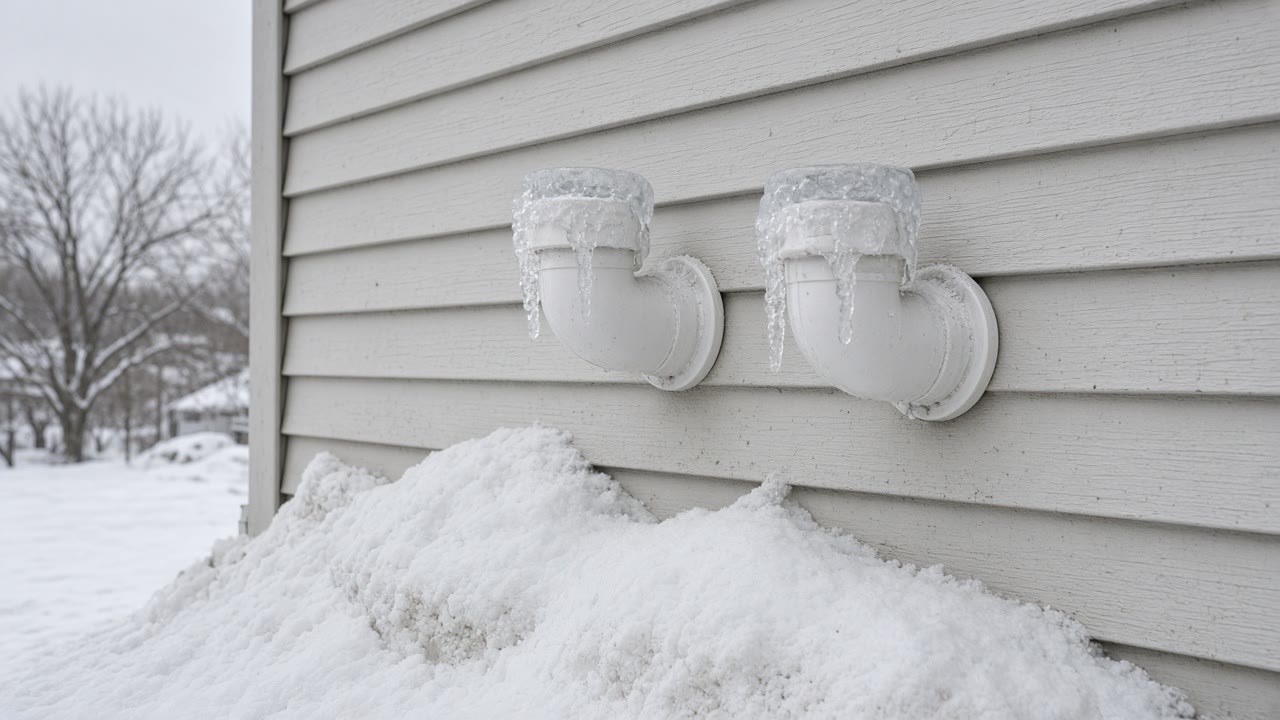
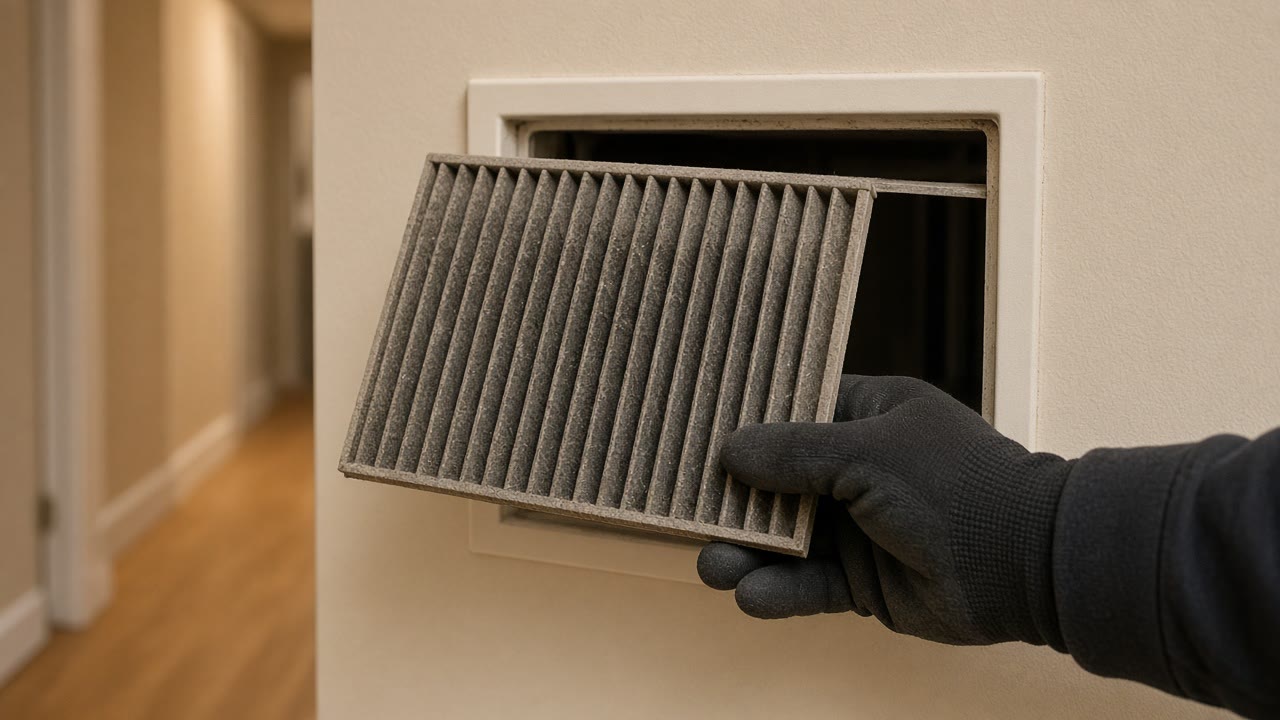
Thermostat set to HEAT, above room temperature, fan on AUTO, batteries changed. The switch at the top of the basement stairs that looks like a light switch. The breaker. The filter. The vent terminations outside, especially after snow, because the Residential Code of New York State sets the minimum terminal height at 12 inches above finished ground level and this metro's snowfall normal is 123.8 inches a year. If the heating is delivered fuel, the tank gauge. Five minutes, no tools, and any one of them can end the evening.
Protect the house while you decide
Close off rooms you are not using, open the cabinet doors under sinks on outside walls, and keep everyone in one room with the doors shut. The 1991-2020 normals give Syracuse 45.7 days a year on which the maximum temperature never rises above freezing, so a house without heat in January is losing ground rather than holding, and the point of these steps is to buy the hours you need rather than to fix anything.
Tell us the address, the fuel and what the system is doing
The property address is what routes the request, because contractor matching here is by property rather than by person. Add what the appliance burns, whether the heat arrives through vents or radiators, and what it is actually doing: silent, short cycling, blowing cold, locking out. Four sentences is enough and it is far more useful at midnight than a paragraph.
Phones answered 24/7, and the request goes to a contractor who covers the address
That is the only speed claim on this site and it is stated narrowly on purpose, because every competitor in this market makes the same promise and the promise has stopped carrying information. It means somebody takes the details at any hour. It does not mean a vehicle is dispatched within a stated time, and anybody telling you otherwise at eleven at night in February is telling you what you want to hear. Contractors are licensed and insured.
The diagnosis runs in the order safety requires
On anything that burns, combustion and venting come before comfort. That is the one part of an out of hours call that is not negotiable, and it is also the part that either clears the appliance to run or takes it out of service. Where an appliance is taken out of service, you should be told precisely what was found and how, because that finding is the thing a second opinion will examine.
The finding is written down, whatever time it is
A verbal condemnation at one in the morning is worth very little the next day, and a written one is worth a great deal. Ask for the finding in writing before anybody leaves. If the next step is a replacement decision, that decision is not made at one in the morning either. This site arranges repair and diagnosis, and a system bought at midnight is a system chosen badly.
What emergency repair looks like
Where an emergency call starts and stops
When you may not need this at all
- A cold house is usually not an emergency, and saying so costs this site nothing. The 1991-2020 NOAA normals give Syracuse about seven nights a year at or below 0F out of 129.5 nights below freezing. If nobody in the house is vulnerable, the house is holding a reasonable temperature and tonight is an ordinary cold night, the morning is usually the better call and usually the cheaper one.
- Run the checks first. A thermostat knocked off HEAT, dead thermostat batteries, the furnace switch at the top of the basement stairs, a tripped breaker and a choked filter between them account for calls that did not need to be made. None of them needs a tool.
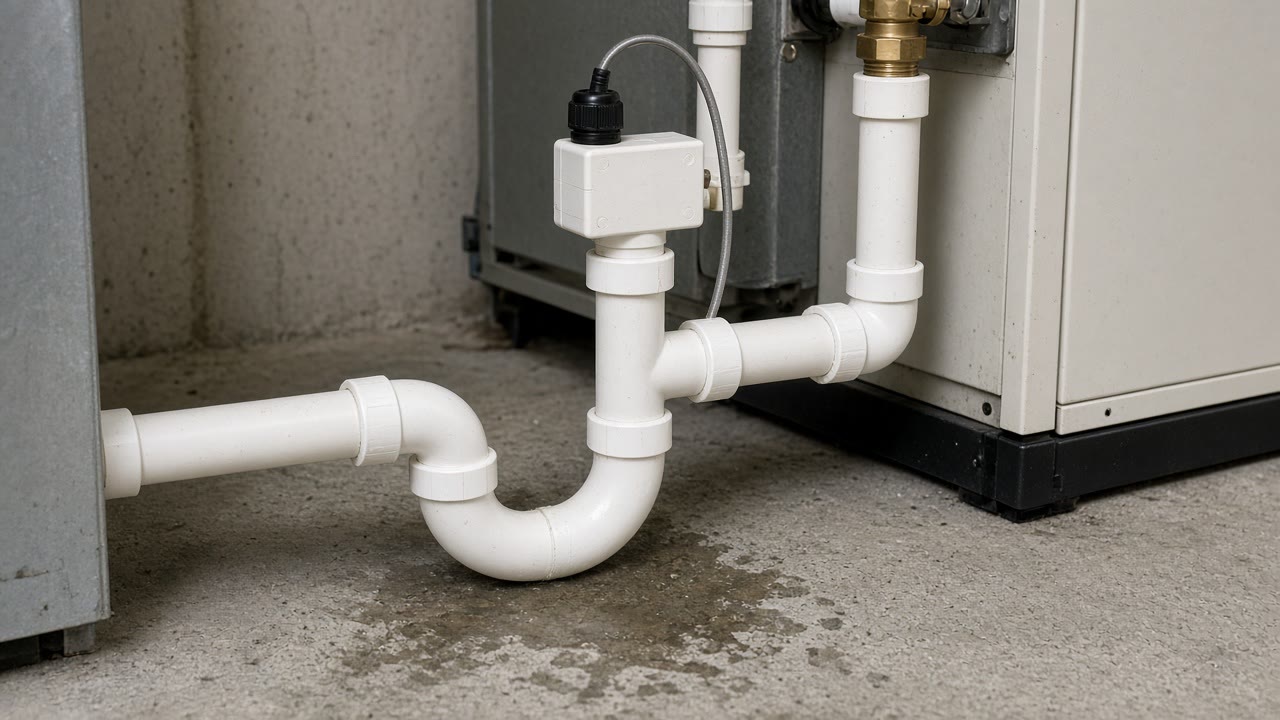
- On a high efficiency furnace, a blocked condensate drain or a failed pump shuts the appliance down on purpose, because the Residential Code of New York State requires that interlock. A furnace that has died with no other symptom may have stopped itself, and that is a small job rather than a catastrophe.
- After heavy snow, check the vent terminations outside before calling. The code minimum terminal height is 12 inches above finished ground level and the snowfall normal here is 123.8 inches a year, with 13.4 days dropping three inches or more.
- If the heating is oil or propane, check the tank gauge. That is a complete explanation for no heat and it does not exist on a gas system.
- If the system is electric, there is no combustion and no carbon monoxide from the heating, so a burning smell from it is an electrical question rather than a flue question. Say which one you have.
- There is after hours help in this county that has nothing to do with contractors. Onondaga County publishes 211CNY for after hours heating emergencies, reachable by dialing 211 or 1-844-245-1922, and states that where HEAP cannot assist a household may be eligible for Emergency Temporary Assistance on (315) 435-2700. Both are worth writing down before the night you need them.
- If you rent inside the City of Syracuse, section 27-54(a)(1) of the Property Conservation Code sets 68 degrees Fahrenheit from September fifteenth to May thirty first whenever it is below 55 degrees outside, and section 27-14 says a required service may not be shut off for an occupied dwelling unit except for necessary repairs, alterations or emergencies. That is a standard your landlord has to meet and the repair is not yours to arrange.
- If the gas utility or the fire department has already shut something off or is on the way, that takes priority over everything on this page and over anything we could arrange.
What is out of scope
- Anything the fire department or the gas utility is currently dealing with. Nobody is sent into a building being evacuated or investigated.
- Overriding another contractor's safety shutdown. A second opinion is arranged; putting a tagged appliance back into service over the telephone is not.
- Plumbing emergencies, burst pipes, water mains and sewer backups.
- Electrical emergencies, downed lines, service faults and meter problems. Note that the Village of Solvay runs its own municipal electric utility, so a power or meter question there goes to the village rather than to the regional utility.
- Generators, generator hookup and temporary power during an outage.
- Hiring out temporary heaters or portable air conditioning.
- Buying and installing a new system as an emergency purchase. A system chosen at midnight is a system chosen badly, and the decision keeps until daylight.
- Commercial and industrial mechanical plant, chillers and rooftop units.
- Medical advice of any kind. Where somebody is unwell, that is the fire department and a doctor, not a heating contractor.
Towns where we take out of hours calls
- Emergency Repair in Syracuse
- Emergency Repair in North Syracuse
- Emergency Repair in East Syracuse
- Emergency Repair in Liverpool
- Emergency Repair in Cicero
- Emergency Repair in Clay
- Emergency Repair in Salina
- Emergency Repair in DeWitt
- Emergency Repair in Fayetteville
- Emergency Repair in Camillus
- Emergency Repair in Baldwinsville
- Emergency Repair in Marcellus
- Emergency Repair in Skaneateles
- Emergency Repair in Solvay
What people ask at nine at night
Is this an emergency, or can it wait until morning?
Three things decide it and you can answer all three yourself. First, who is in the house: an infant, somebody elderly, somebody unwell or anybody who cannot leave unaided moves this into tonight regardless of the temperature. Second, what tonight is doing outside. The 1991-2020 NOAA normals give Syracuse 129.5 nights a year at or below 32F but only 7.1 at or below 0F, four of them in January, so the genuinely dangerous nights here are a handful rather than a season. Third, whether anything burns. A cold house on an ordinary January night, with nobody vulnerable in it, is usually a morning job, and a heating contractor who tells you that at ten at night has just saved you money at their own expense. A gas smell, a sounding carbon monoxide alarm or anybody feeling unwell is not a morning job under any circumstances.
My carbon monoxide alarm is sounding. What do I do first?
Get everyone out into fresh air immediately and call the fire department and the gas company or a heating contractor from outside. That is the New York State Department of Health's own instruction and there is nothing to add to it. The state also publishes a pattern test worth knowing: suspect carbon monoxide where symptoms occur or worsen soon after a fuel burning device is turned on, where more than one person in the area becomes ill at the same time, or where those who are ill feel better after leaving the area. Notice that all three are patterns rather than particular symptoms. No page, including this one, should tell you that a given symptom means the gas is present, and nobody should be diagnosing an appliance while an alarm is going off in the building.
A technician condemned my furnace and left a tag on it. Can I turn it back on?
We cannot tell you that, and anyone who answers that question quickly on a website should be treated carefully. What can be said is what the tag is and what it is not. A contractor's tag is that contractor refusing to operate the appliance and declining to relight it, on their own safety judgment. It is not a municipal order. In the City of Syracuse the power to designate premises unfit for human habitation and to placard them belongs to the director under section 27-115 of the Property Conservation Code, and it runs through a written notice and order that states the finding and gives an opportunity to comply before a placard goes up; premises ordered placarded must be vacated and may not be reoccupied without written approval. Those are different processes with different consequences. The practical next step is a second opinion, with the original finding described precisely enough to be examined: what was seen, where, and with what instrument.
I rent and my landlord will not fix the heat. What is the standard?
Inside the City of Syracuse there is a number and a season, and both are in the Property Conservation Code. Section 27-54(a)(1) requires adequate heat to maintain 68 degrees Fahrenheit in habitable, occupied and assembly spaces, kitchens, bathrooms and toilet rooms, measured two feet from an exterior wall and five feet above the floor, from September fifteenth to May thirty first whenever the outside temperature falls below 55 degrees. Note how it is measured: two feet from the wall and five feet up, not wherever the thermostat happens to hang. Section 27-14 adds that no owner, occupant or responsible person may cause a required service, facility, equipment or utility to be removed, shut off or discontinued for an occupied dwelling unit except for necessary repairs, alterations or emergencies. Those provisions are the City's and apply to city addresses. Outside the city line the rules come from that town or village, and the code office for your municipality is the right place to ask.
Does somebody really answer the phone at night?
Phones answered 24/7 is the only speed claim this site makes, and it is stated narrowly because the market has worn the phrase out. It means the details of your request are taken at any hour, on any night of the year. It does not mean a vehicle is on its way within a set number of minutes, and this site will not tell you it does, because contractors are independent businesses with their own out of hours arrangements and the honest version of that sentence is the useful one. What you get from calling at midnight rather than waiting is that the request is in front of somebody first thing, with the property address and the symptom already on it.
What is a diagnostic fee actually buying?
It is buying somebody's time, their instruments and a finding you can act on, which is why the useful question is not what it costs but what comes out of it. A diagnosis on an appliance that burns should include the sequence of operation watched end to end, the electrical side tested rather than guessed at, the venting and combustion air looked at, and combustion checked with an instrument rather than by eye. What you should come away with is the failed component named, the reason it failed where that is knowable, and the finding in writing. Ask to be shown the part. That single request is the most repeated theme in reviews of this trade and it is the cheapest protection available to you. This site publishes no prices and quotes none, because it does not set them.
I cannot afford this tonight. Is there any help?
There may be, and the trade has no commercial reason to tell you about it. Onondaga County Department of Social Services administers the Home Energy Assistance Program locally, from 421 Montgomery Street, 2nd floor, Syracuse, on (315) 435-2700. It runs four components, and the Heating Equipment Repair and Replacement benefit covers a furnace, boiler and other direct heating equipment needed to keep a home's primary heating source working, for eligible homeowners. The county states that the Emergency, repair and cooling components must be applied for by telephone or in person rather than online, and that the program year generally begins in November and closes when funding is exhausted, which can be as early as mid March. Where HEAP cannot assist, the county points to Emergency Temporary Assistance on the same number, and for after hours heating emergencies it gives 211CNY, reachable by dialing 211 or 1-844-245-1922. Eligibility rules change by program year, so check with the county rather than with us.
Tell us what has happened
The address, the fuel and the symptom. Four sentences is plenty at this hour.