
Syracuse and the surrounding Onondaga County area
Heat Pump Repair for Ducted and Ductless Systems in Onondaga County
Find out why a heat pump has stopped heating or cooling properly, and how long the backup heat has been quietly carrying the house.
Heat Pump Repair quote
Tell us which mode is failing, whether the backup heat has been running and what the outdoor unit looks like right now. We will put you in front of licensed, insured contractors who work on heat pumps rather than treating one as an air conditioner that got confused.
Would you rather talk it through? Call (315) 640-3590, answered 24/7.
$100 off your first job
Credited by us on your first booked job.
- One credit per customer per property, on your first booked job.
- Valid through December 31, 2026.
Mention this offer when you book. Full terms.
The winter failure nobody notices until the bill
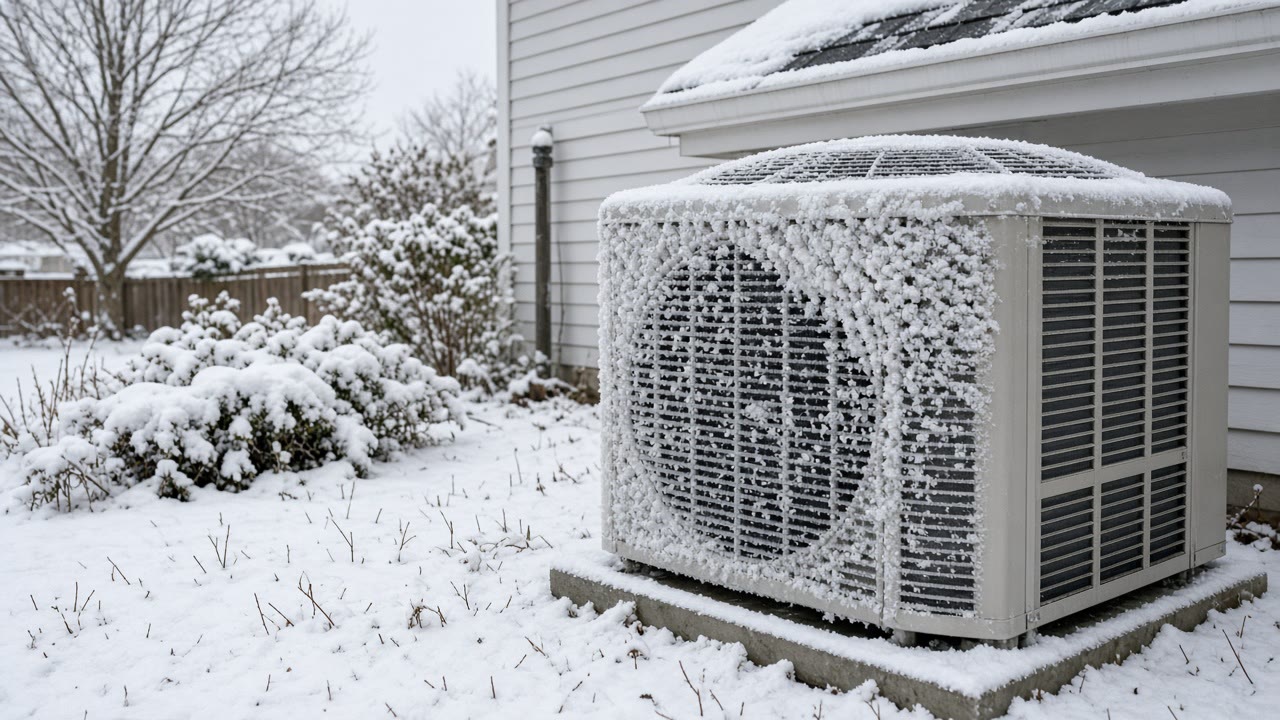
A heat pump is the only machine in the house that can fail in July and in January for two entirely different reasons, and the January failure is the one that costs people money quietly. When a heat pump stops making heat, the backup heating element usually keeps the house warm enough that nothing looks broken until the bill arrives, so the useful diagnosis here is not only what failed but how long it has been failing. The parts that decide it belong to this machine and to no other: a reversing valve that swaps the direction of the refrigerant, a defrost board and its sensor, an outdoor thermostat that decides when backup heat is allowed to come on, and a coil that is supposed to ice up and then clear itself on a schedule. That last one matters here more than almost anywhere. The 1991-2020 NOAA normals give Syracuse an annual snowfall normal of 123.8 inches, with 13.4 days a year dropping three inches or more, and a heat pump's outdoor unit sits at ground level in all of it. A unit buried in a drift or standing in meltwater that refreezes has a defrost problem the machine itself never had.
- Reversing valve and reversing valve solenoid faults, which is why a heat pump can blow cool air while calling for heat
- Defrost control board, defrost sensor and defrost cycle faults, including a unit that never defrosts and one that defrosts constantly
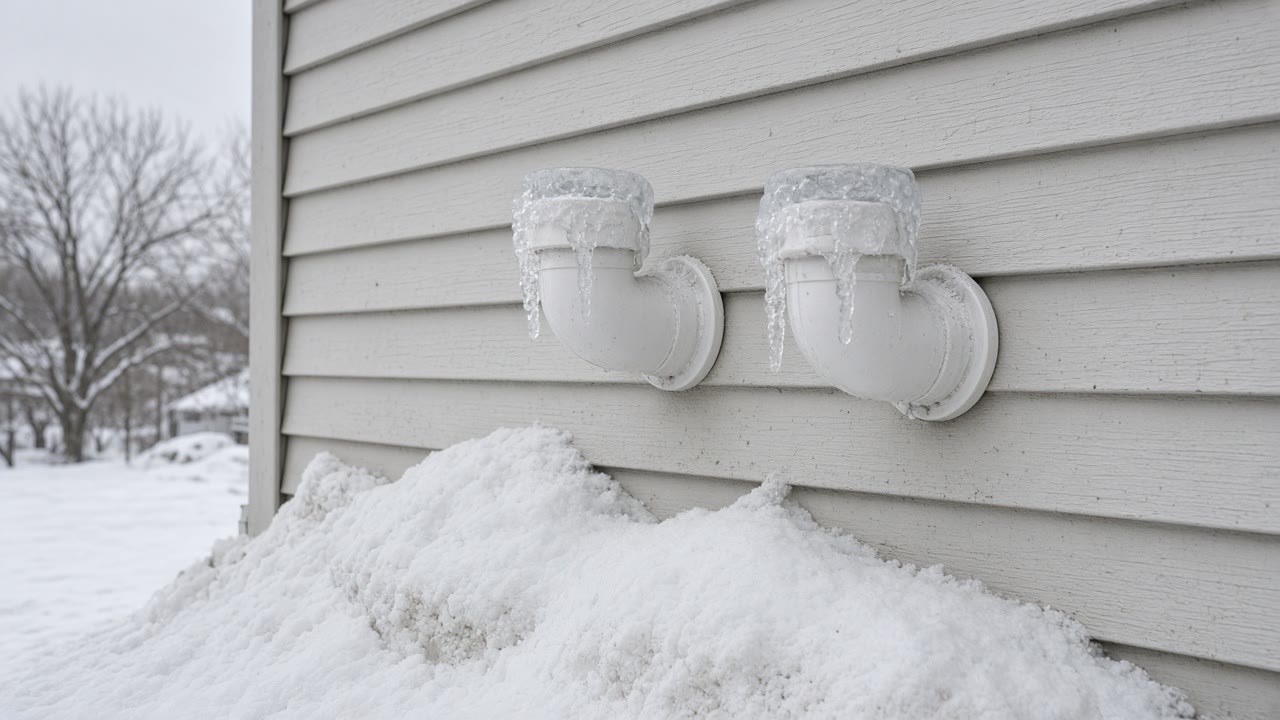
- Outdoor units iced up, buried in snow, or standing in water that refreezes at the base
- Auxiliary and emergency heat: electric heat strips, sequencers, contactors, limits and the outdoor thermostat that governs when they run
- Backup heat running continuously when the compressor should be carrying the load
- Run capacitor, contactor and compressor starting faults at the outdoor unit
- Refrigerant circuit diagnosis, leak location and charge checks on heat pump systems
- Air handler blower, control board, transformer and low voltage faults
- Thermostat faults specific to heat pumps, including a replacement thermostat wired or configured for the wrong system type
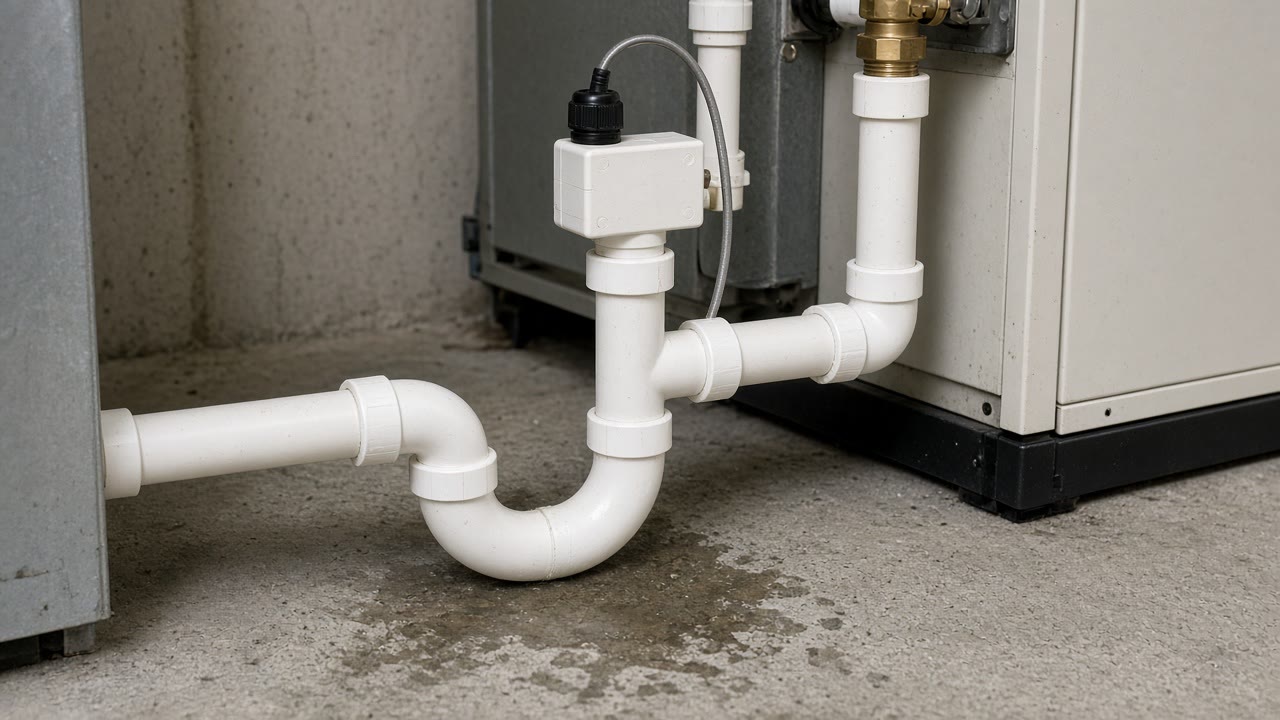
- Ductless mini split faults: indoor head, communication wiring, condensate pump, drain line and line set
- Condensate and defrost drainage at the base of the outdoor unit, including a pad that has heaved
- Dual fuel and hybrid systems where a heat pump and a furnace are meant to hand over to each other and have stopped doing it
What decides a heat pump diagnosis
A heat pump gives you two machines to diagnose and a set of parts no furnace has. These are the things that decide which of them you are looking at.
Which mode it fails in
It is the fastest way to halve the fault list. A system that cools normally and will not heat points at the reversing valve, the defrost circuit or the controls that switch between modes, because those are the only parts that behave differently in heating. A system that fails in both modes points at something common to both: the compressor, the charge, the outdoor fan, the indoor blower or the power feed. Noticing which one you have costs nothing and it changes the first thing a technician looks at.
Whether the backup heat has been carrying the house, and for how long
This is the fault that hides. Electric backup heat will keep a house comfortable while the compressor does nothing, so the first symptom is a bill rather than a cold room. Electric heating is not a niche here: the American Community Survey 2020-2024 estimates report 32.7 percent of occupied units in Baldwinsville village heated with electricity, the second highest share in Onondaga County, 27.2 percent in East Syracuse, 26.5 percent in Liverpool and 25.2 percent in the city of Syracuse. The survey counts baseboard and heat pumps together, so the electric share is not a heat pump count, but it does mean a lot of households in this metro are one hidden fault away from paying resistance heat prices all winter.
How cold it was when it stopped keeping up
A heat pump loses capacity as the outdoor temperature falls, so the difference between not coping and being broken is a temperature question. The 1991-2020 NOAA normals give Syracuse 57.5 nights a year at or below 20F, 7.1 at or below 0F and 45.7 days on which the maximum never rises above freezing. For a city of Syracuse address there is also a published local yardstick: section 27-54(a)(2) of the City Property Conservation Code says heating equipment capability is judged against an outside temperature of minus ten degrees Fahrenheit. Outside the city there is no single New York number to quote. Table R301.2(1) of the Residential Code of New York State is published with its columns blank and each jurisdiction fills in its own, so the governing figure for an address comes from that municipality rather than from the state.
What the outdoor unit is standing in
Ground level equipment in this metro deals with 123.8 inches of snow in a normal year, with 66.4 days carrying an inch or more, 13.4 days with three inches or more and 1.1 days with ten or more. A unit that cannot clear its own defrost meltwater, or that has been drifted over or buried by a plow, produces symptoms identical to a control fault. Clearing snow away from the unit is a two minute job that has ended more than one service call before it started.
Whether the refrigerant circuit has to be opened
The same federal and city rules apply as on an air conditioner, because it is the same kind of machine. 40 CFR 82.161 requires Section 608 certification of anyone who could reasonably be expected to violate the integrity of the refrigerant circuit, with Type II covering high pressure appliances. The City of Syracuse measures this side of the trade in tons: a Class C Residential HVAC Mechanical License covers air conditioning to a maximum of 5 tons, while the heating side of the same license is measured in MBH input. So a heat pump is licensed by its cooling capacity inside the city even when the problem you have is that it will not heat.
Ducted system or ductless mini split
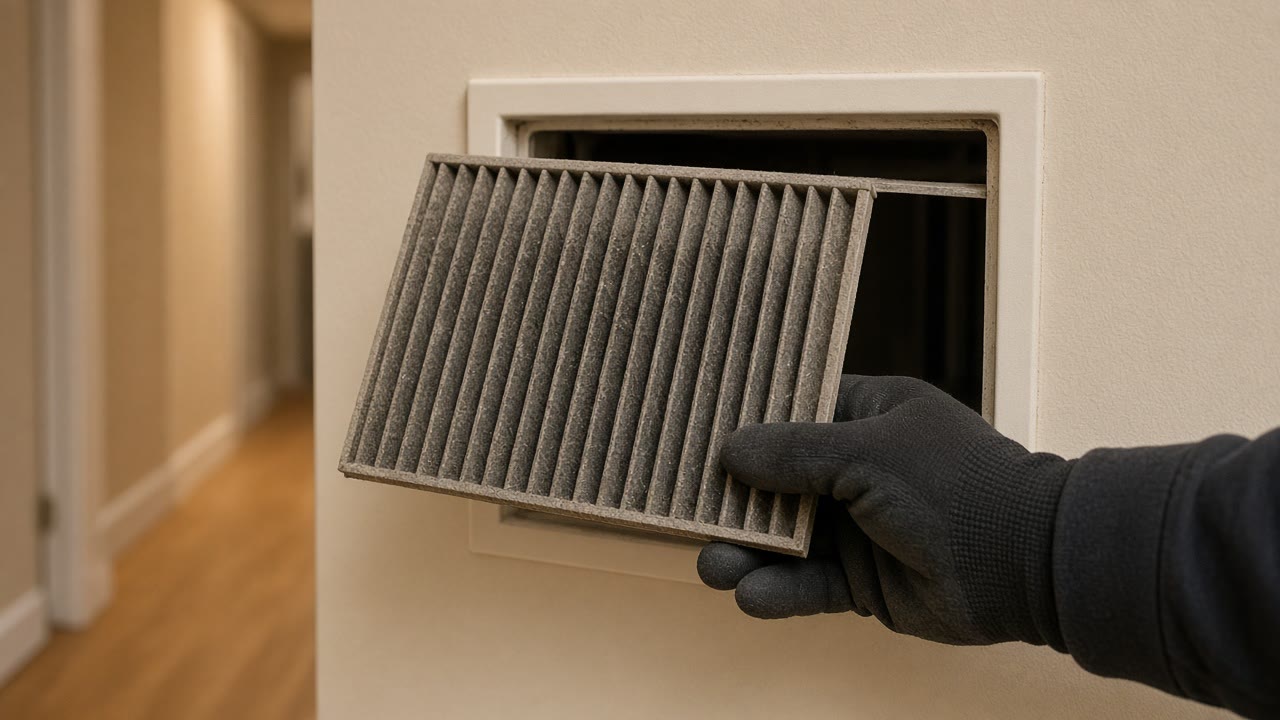
They share a principle and almost no parts. A ducted heat pump has an indoor air handler with a blower, a filter and electric heat strips, and it fails in ways that overlap with a furnace. A mini split has one or more wall or ceiling heads, communication wiring between the head and the outdoor unit, a condensate pump or a gravity drain through the wall, and a line set. Plenty of mini split calls turn out to be drainage or communication rather than refrigeration.
Whether the heat pump is the only heat in the house
It decides how urgent this is and what a failure actually means. The Energy Information Administration's 2020 survey reports heat pumps as the main heating equipment in 0.68 million Middle Atlantic homes, 4.2 percent, against 13.1 percent nationally, so this equipment is a smaller share of the heating stock in this part of the country than in most of it. That cuts two ways worth knowing: a house running on a heat pump alone has no fallback if it fails, and it is worth asking a contractor directly how much heat pump work they do rather than assuming.
Backup heat running and nobody noticed?
That is the failure this machine hides, and the electric bill is usually the first thing that says so.
How a heat pump call runs
Check whether the thermostat has been left on emergency heat
A thermostat set to EM HEAT or EMERGENCY HEAT locks the compressor out and heats the house entirely on the backup element, which is the expensive way to do it. People switch it on during a cold snap and never switch it back. Set it to HEAT, wait, and see whether the outdoor unit starts. If it does, you have found the problem and it cost nothing.
Clear the snow away from the outdoor unit
Before anything else, and by hand or with a broom rather than with a shovel against the fins. The unit needs air through the coil and it needs somewhere for defrost water to go. Pouring hot water over an iced coil is not the answer either, because it refreezes at the base and makes the next defrost worse. Clear the sides, clear the top and clear a space underneath.
Note what the backup heat has been doing, and roughly since when
If you can tell us that the auxiliary heat light has been on for two weeks, or that the bill jumped in December, you have given the diagnosis a timeline that the equipment itself will not supply. A compressor that has not run since a cold snap in January is a different conversation from one that stopped yesterday.
The request is matched to a contractor who covers the address
They are licensed and insured. For a city of Syracuse address, the mechanical license that covers this work is issued by the City Board of Mechanical Examiners and graded by capacity, with Class C Residential capped at 5 tons of air conditioning. Ask which class and, for a city address, the city's own licensing department answers on (315) 448-8773.
The mode that fails sets the order of the diagnosis
A heating only failure sends the technician to the reversing valve, the defrost board and the changeover controls first. A failure in both modes sends them to the compressor, the charge and the power side. That is why the question of which mode was asked at the start rather than at the end.
Defrost is watched rather than assumed
The defrost cycle is the most misread thing on this machine, because a healthy one looks alarming. The outdoor unit steams, the fan stops, the indoor air goes cool for a few minutes and then everything returns to normal. A diagnosis that does not include watching a full cycle, or forcing one, has not tested the circuit that most often causes the complaint you called about.
If the sealed side is opened, the same federal rules apply as on any other system
Recovery equipment on site rather than venting, under 40 CFR 82.154, and Section 608 certification held by whoever does the work. If your heat pump is an R-410A system, it is also lawful to service and refill, and the same specified components the refrigerant rule left available apply to it: the rule at 40 CFR 84.54 is written for residential air conditioning and heat pump products together.
What heat pump repair looks like
The limits on heat pump work
When you may not need this at all
- Steam pouring off the outdoor unit in winter, the fan stopping and a few minutes of cool air indoors is a normal defrost cycle and not a fault. It is supposed to look like that, several times on a damp cold day.
- Ice on the outdoor coil that clears within a cycle is normal. Ice that never clears, or a solid block that reaches the fan, is not.
- If the thermostat is on EM HEAT or EMERGENCY HEAT, the compressor is locked out by the thermostat and the house is being heated the expensive way. Switching it back to HEAT costs nothing and is worth trying before you call anyone.
- A heat pump blows air that feels cool against the hand even when it is working correctly, because its supply air is cooler than a furnace's. If the house is holding temperature, that is the machine behaving normally rather than failing.
- Snow banked around the unit, or a plow drift against it, is a free fix and a common one in a metro whose snowfall normal is 123.8 inches a year. Clear it and give the unit a cycle before deciding anything.
- If the house also has a furnace or a boiler and only some rooms are cold, the failure may be the other system entirely. Say what else is in the house.
- If the heating is electric baseboard along the walls and there is no outdoor unit at all, this is not a heat pump and this is not the right service. That is electrical work rather than heating and cooling work.
- New York's Home Energy Assistance Program carries a Heating Equipment Repair and Replacement benefit toward a home's primary heating equipment for eligible homeowners, administered in this county by Onondaga County Department of Social Services on (315) 435-2700, applied for by telephone or in person rather than online. If a heat pump is the primary heat in the house, it is worth asking the county rather than assuming the program is only about furnaces.
What is out of scope
- Selecting, sizing and installing a new heat pump, and converting a house from another fuel to a heat pump.
- Rebate and incentive applications for new equipment, which belong with whoever supplies and installs it.
- Electrical service upgrades and new circuits for backup heat.
- Ground source and geothermal loops, wells and buried piping.
- Pool heat pumps, commercial equipment and variable refrigerant flow systems.
- Window and through the wall heat pump units.
- Converting an existing system to one of the newer refrigerants, which EPA has not listed for retrofit use.
- Electric baseboard and resistance heaters with no outdoor unit.
- Ductwork design and duct replacement.
Towns where we arrange heat pump repair
- Heat Pump Repair in Syracuse
- Heat Pump Repair in North Syracuse
- Heat Pump Repair in East Syracuse
- Heat Pump Repair in Liverpool
- Heat Pump Repair in Cicero
- Heat Pump Repair in Clay
- Heat Pump Repair in Salina
- Heat Pump Repair in DeWitt
- Heat Pump Repair in Fayetteville
- Heat Pump Repair in Camillus
- Heat Pump Repair in Baldwinsville
- Heat Pump Repair in Marcellus
- Heat Pump Repair in Skaneateles
- Heat Pump Repair in Solvay
What people ask about heat pumps in winter
The heat pump is blowing cool air in winter. Is it broken?
Not necessarily, and the timing tells you which it is. If the cool air lasts a few minutes, the outdoor unit is steaming and the fan out there has stopped, that is a defrost cycle and it is the machine working as designed. If the air is cool for the whole run and the outdoor unit is running normally, that points at the reversing valve or its solenoid, which is the part that swaps the system between heating and cooling and is the one component a furnace has no equivalent of. Also worth checking before anything: a heat pump's supply air is cooler than a furnace's even when it is right, so if the house is holding temperature the machine may simply not feel the way you expect.
My backup heat runs all the time. Is that normal?
Some of it is normal on the coldest days and none of it is normal in November. Every heat pump loses capacity as the outdoor temperature falls and hands over to backup heat below a point set by the controls, often through an outdoor thermostat. In this metro that handover should be a cold weather event rather than a daily one: the 1991-2020 normals give Syracuse 57.5 nights a year at or below 20F and only 7.1 at or below 0F, four of those in January. So backup heat running through a mild spell, or running while the outdoor unit sits silent, is a fault rather than a design feature. The usual causes are a compressor that is not running, a thermostat left on emergency heat, a defrost circuit stuck, a low charge, or a thermostat configured for the wrong system type after a replacement.
The outdoor unit is a solid block of ice. What should I do?
Switch the system off at the thermostat and clear the snow from around it so air and meltwater have somewhere to go. Do not chip at it, and do not pour hot water over it: the water refreezes at the base and turns a defrost problem into a bigger one. Some frost on the coil in cold damp weather is normal and the machine is built to melt it off periodically. A block of ice that reaches the fan blade means the defrost cycle is not happening or is not finishing, and the causes are usually the defrost board, the defrost sensor, the reversing valve or drainage at the base of the unit. In a metro that averages 123.8 inches of snow a year, the drainage answer is a good deal more common than people expect.
Does the 2025 refrigerant rule apply to heat pumps too?
Yes, and in the same way it applies to air conditioners, which is less dramatically than most people have been told. 40 CFR 84.54 is written for residential and light commercial air conditioning and heat pump products and systems together, and what it restricts from January 1, 2025 is manufacturing, importing, selling and distributing products above a global warming potential of 700, and installing new systems above that limit. Servicing existing equipment was deliberately left outside those restrictions: EPA states it classified condensing units as specified components to make clear they were not subject to them, and thus to allow for the continued servicing and maintenance of existing equipment. What you cannot do is have one of the newer refrigerants put into your existing heat pump, because EPA listed those for new equipment only and specifically not as conversion or retrofit refrigerants.
Do heat pumps really work in a Syracuse winter?
The honest repair answer is that it depends whether yours used to and has stopped, or never did. Those are two different conversations and only one of them is a repair. A system that held the house last winter and cannot this winter has a fault, and the fault list is short: compressor, charge, defrost, reversing valve, controls. A system that has never coped on cold nights is a sizing and selection question, and that is a decision nobody should make on the back of a service call at the worst moment of the year. For context on what the equipment is being asked for here, the 1991-2020 normals give Syracuse 6,651 annual heating degree days and 45.7 days a year when the maximum never rises above freezing, and inside the city section 27-54(a)(2) of the Property Conservation Code judges heating equipment capability against an outside temperature of minus ten degrees Fahrenheit. This site arranges repair and diagnosis, so where the answer is that the system was never right for the house, it will say that and stop there.
The mini split head is dripping water down the wall.
That is drainage rather than refrigeration, and it is one of the calls this equipment generates most reliably. An indoor head produces condensate whenever it is cooling, and that water leaves either by gravity through a line sloping out through the wall or by a small pump. Water down the wall means the drain is blocked, the line has lost its fall, the pump has failed, or the wall penetration has been sealed in a way that traps water. It is usually a cheap fix and it is worth dealing with promptly, because the water is landing on drywall and eventually on whatever is under it.
Who can work on a heat pump around here?
Two credentials matter and they answer different questions. Federally, anyone who could reasonably be expected to open the refrigerant circuit must hold Section 608 certification under 40 CFR 82.161, with Type II covering high pressure appliances, and that requirement is identical in every town in this county. Locally, New York issues no statewide license for the trade, so the licensing question depends on the address. Inside the City of Syracuse the Board of Mechanical Examiners issues mechanical licenses graded by equipment and capacity, earned on documented experience, a qualification review and a written examination passed at 70 percent. Outside the city line that particular credential does not apply, and the useful questions become insurance, the municipality's permit rules and how much of this specific equipment the contractor actually works on.
Tell us what the heat pump is doing
Which mode fails, what the outdoor unit looks like, and whether the emergency heat light is on.