
Air Conditioning Repair in the Village of East Syracuse
In a village where a lot of houses have no ductwork, cooling arrived as its own machine, and that decides who should look at it.
AC Repair quote in East Syracuse
Share a few details so we can confirm coverage and arrange the right next step.
Would you rather talk it through? Call (315) 640-3590, answered 24/7.
$100 off your first job
Credited by us on your first booked job.
- One credit per customer per property, on your first booked job.
- Valid through December 31, 2026.
Mention this offer when you book. Full terms.
What cooling equipment in a prewar village usually is
Before anybody prices a cooling repair here, establish what the equipment actually is, because East Syracuse does not have one answer. The village's median year built is 1939 or earlier and its housing includes a substantial share heated without any ducted air at all, so cooling was frequently added later as a system in its own right: a ductless wall unit with a line set through the wall, a condenser feeding a small air handler, or window equipment. That is not the same repair as a coil sitting on top of a furnace. It has its own controls, its own drain and its own outdoor unit, and it usually has no relationship whatsoever to whatever heats the house.
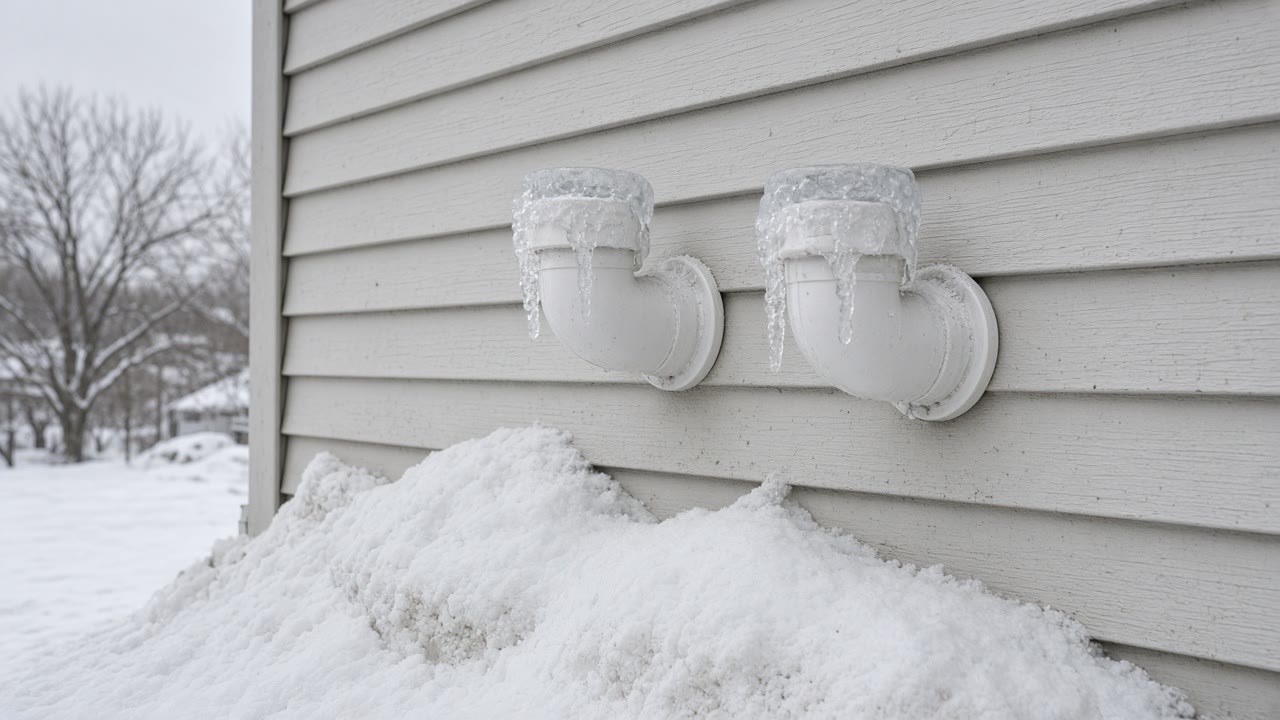
What ac repair involves
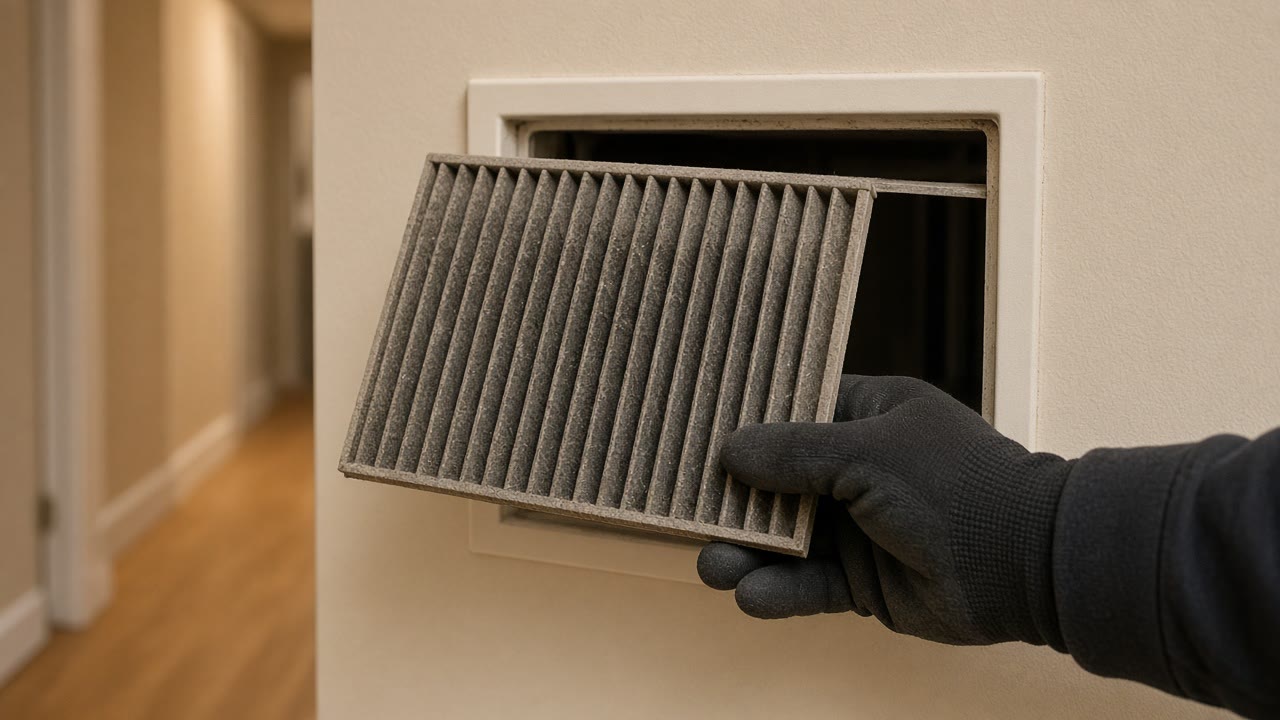
Say what you have before you describe what it is doing
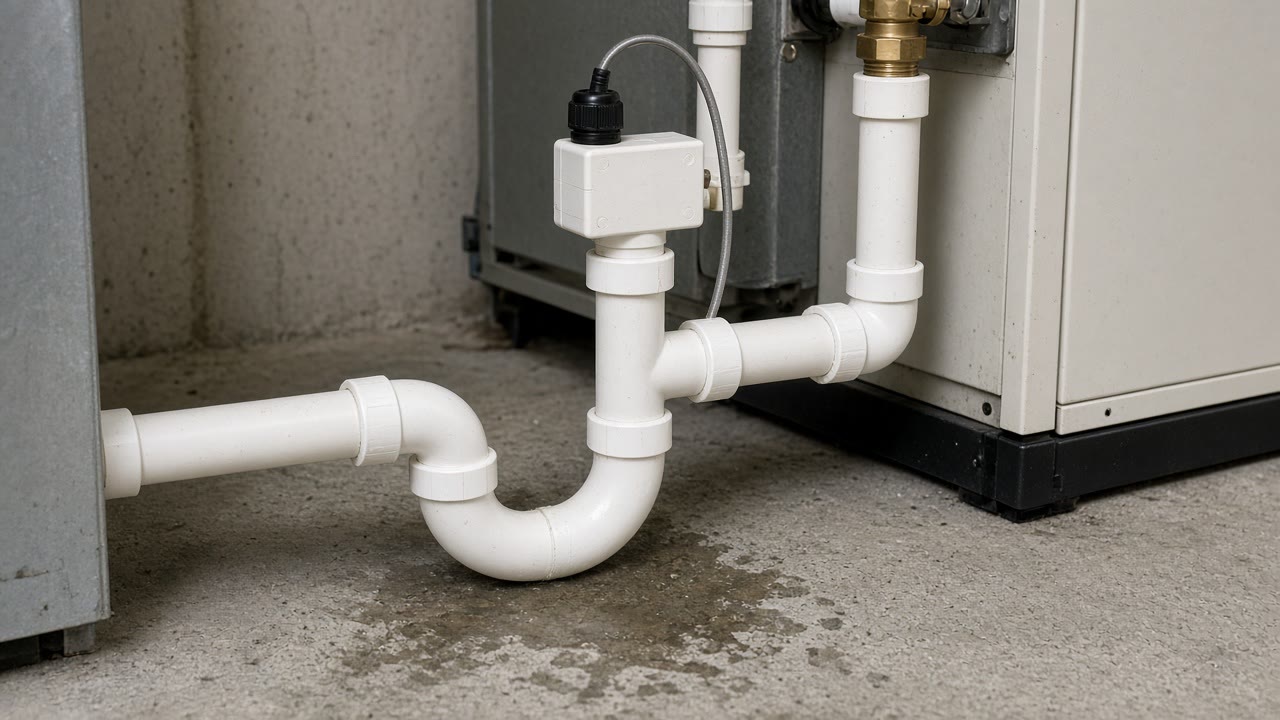
Three sentences save a wasted visit. What is the indoor unit: a grille in the ceiling or floor fed by ducts, a box mounted high on a wall, or a machine in a window. Where does the water go, because a wall unit drains through a small pipe that blocks easily and a ducted coil drains into the house's plumbing. And what is outside, because a single condenser serving several indoor heads is a different diagnosis from one condenser serving one coil. After that the fault list is ordinary: capacitors, contactors, fan motors, control boards, blocked drains and dirty coils. The refrigerant circuit is the one part a homeowner cannot touch, because anyone who could reasonably be expected to open it has to hold a Section 608 technician certification, Type II for the high pressure appliances in most homes, and that belongs to the individual rather than to the firm.
Photograph the indoor unit, not the thermostat
A wall-mounted head, a ceiling grille and a window unit are three different jobs with three different parts lists. One photograph settles it faster than any amount of description and it makes the first visit the right visit.
Find the drain before you call it a leak
Water dripping from an indoor unit is very often a blocked condensate path rather than a failed machine. On ductless equipment that is a small flexible pipe running out through the wall and it is a common, inexpensive fault.
The sealed circuit is not a homeowner job anywhere
Federal regulation requires certification for anyone who could reasonably be expected to violate the integrity of the refrigerant circuit during service or repair, and it prohibits selling refrigerant to anybody who does not hold it. There is no version of this you can do from a store.
A 1939-or-earlier median, and what that means for cooling
The American Community Survey 2020-2024 five-year estimates report the median year structure built in East Syracuse village as 1939 or earlier, the bottom category the table publishes. Of 1,464 housing units, 791 were built in 1939 or earlier, 54.0 percent, 1,314 were built before 1980, 89.8 percent, and the estimate for units built in 2000 or later is zero.
Source: US Census Bureau, American Community Survey 2020-2024 5-year estimates, tables B25034, B25035 and B25040, East Syracuse village, New York, accessed 2026-09-13
Of 1,350 occupied housing units in East Syracuse village, the American Community Survey 2020-2024 five-year estimates report 905 heated with utility gas, 67.0 percent, 367 with electricity, 27.2 percent, 58 with bottled, tank or LP gas, 4.3 percent, and 20 with wood. No units are recorded on fuel oil. Of the occupied units, 711, 52.7 percent, are owner occupied.
Source: US Census Bureau, American Community Survey 2020-2024 5-year estimates, tables B25040 House Heating Fuel and B25003 Tenure, East Syracuse village, New York, accessed 2026-09-13
40 CFR 82.161(a)(1) provides that any person who could be reasonably expected to violate the integrity of the refrigerant circuit during the maintenance, service, repair, or disposal of appliances containing a class I or class II refrigerant or a non-exempt substitute refrigerant must pass a certification exam offered by an approved technician certification program. The section sets four types. Type I covers small appliances. Type II covers medium, high and very high pressure appliances other than small appliances and vehicle air conditioners. Type III covers low pressure appliances. Universal covers all of them. Apprentices are exempt while closely and continually supervised by a technician who holds the certification.
Source: 40 CFR 82.161, Technician certification, Subpart F of Part 82, Clean Air Act Section 608, via the Electronic Code of Federal Regulations, accessed 2026-09-13
40 CFR 82.154(c)(1) prohibits selling, distributing or offering for sale any class I or class II substance and, since January 1, 2018, any non-exempt substitute for use as a refrigerant, unless the buyer holds Type I, Type II, Type III or Universal certification under 40 CFR 82.161, or employs at least one person who does and proves it to the seller, or one of a short list of other exceptions applies. One exception is that the refrigerant is charged into an appliance by a technician holding that certification, or by a supervised apprentice, during maintenance, service or repair.
Source: 40 CFR 82.154(c), Sales restriction, Subpart F of Part 82, via the Electronic Code of Federal Regulations, accessed 2026-09-13
Not sure what kind of cooling you have?
Send one photograph of the indoor unit with your East Syracuse address. That is faster than any description and it gets the right trade out.
Other East Syracuse repairs we arrange
East Syracuse questions about ductless and added cooling
My village house has radiators. How is it air conditioned at all?
Usually by equipment that was added long after the house, and that is very common in a village with a median year built of 1939 or earlier. The three normal answers are a ductless system with one or more wall-mounted heads and an outdoor condenser, a small air handler installed in an attic or closet with short duct runs, or window units. Each has its own controls and its own drain, and none of them shares anything with your boiler. Tell us which you have when you write, because it decides which contractor is the right one and what they need to bring.
Water is dripping from the wall unit. Is that refrigerant?
Almost certainly not. Refrigerant is a gas at room conditions and a leak does not produce puddles; what you are seeing is condensate, the water the unit pulls out of the air, which normally runs out through a small drain line. When that line blocks with dust or algae the water backs up and finds the easiest way out, which is the front of the indoor unit. It is one of the most common and least expensive faults on this kind of equipment. Turn the unit off so it stops making more water, put something under it, and send us the address.
Tell us what your cooling is doing
Dripping, not cooling, or silent outside, plus the ZIP code. There is no obligation and we will say if it is a blocked drain.