
Furnace Repair at a City of Syracuse Address
Find out whether your furnace has a fixable fault or has stopped meeting the standard the city itself uses to judge heating equipment.
Furnace Repair quote in Syracuse
Share a few details so we can confirm coverage and arrange the right next step.
Would you rather talk it through? Call (315) 640-3590, answered 24/7.
$100 off your first job
Credited by us on your first booked job.
- One credit per customer per property, on your first booked job.
- Valid through December 31, 2026.
Mention this offer when you book. Full terms.
Minus ten degrees, 68F, and a median build year of 1948
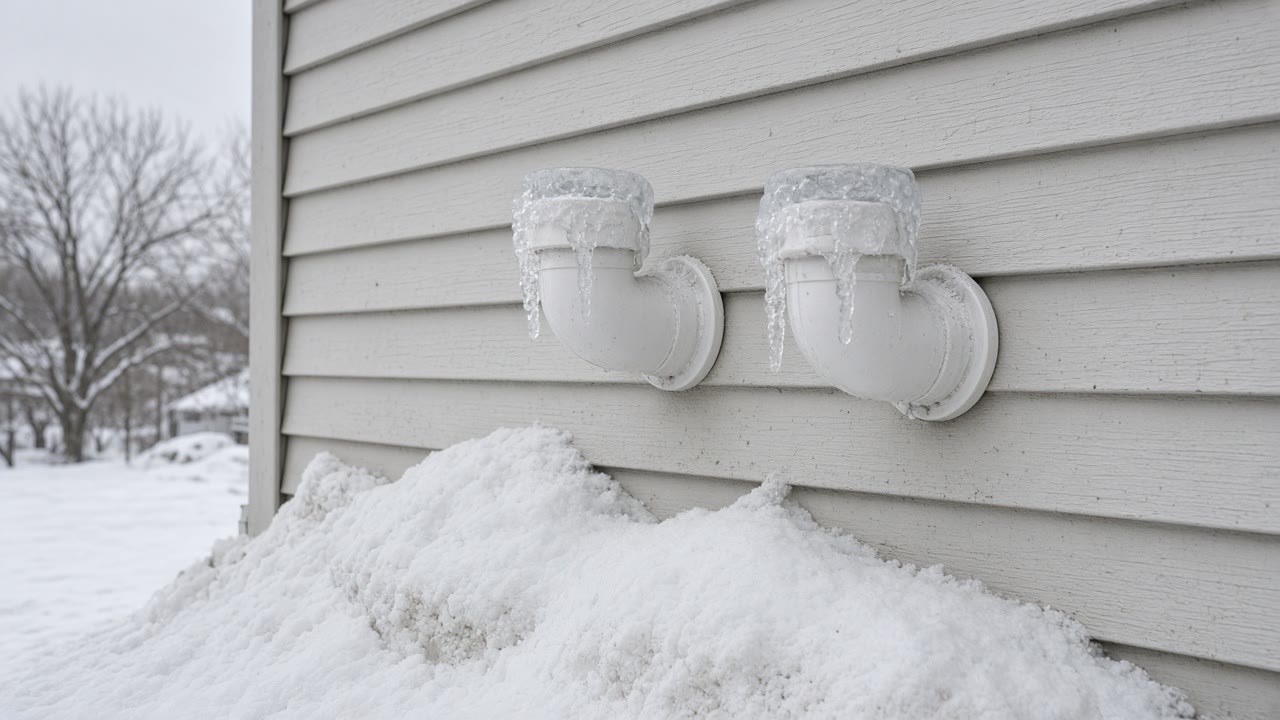
Section 27-54(a)(1) of the City of Syracuse Property Conservation Code requires that in all occupied buildings adequate heat be provided to maintain the indoor temperature in habitable, occupied and assembly spaces, kitchenettes, bathrooms and toilet rooms at 68 degrees Fahrenheit, measured two feet from exterior walls and five feet above the floor, from September fifteenth to May thirty-first of the following year, whenever the outside temperature falls below 55 degrees Fahrenheit.
Source: City of Syracuse Property Conservation Code, section 27-54(a)(1), Heating, general requirements, 2020 compilation published by the City of Syracuse, accessed 2026-09-13
Section 27-54(a)(2) of the City of Syracuse Property Conservation Code states that the capability of the heating equipment to maintain the required indoor temperatures shall be based on an outside temperature of minus ten degrees Fahrenheit.
Source: City of Syracuse Property Conservation Code, section 27-54(a)(2), Heating, general requirements, 2020 compilation published by the City of Syracuse, accessed 2026-09-13
The American Community Survey 2020-2024 five-year estimates put the median year structure built in the city of Syracuse at 1948, with a margin of error of plus or minus 2 years. Of the city's 67,601 housing units, 29,152 were built in 1939 or earlier, which is 43.1 percent, 34,780 were built in 1949 or earlier, 51.4 percent, and 57,777 were built before 1980, 85.5 percent. Only 4,333 units, 6.4 percent, were built in 2000 or later. Of 59,816 occupied units, 24,889 are owner occupied, 41.6 percent.
Source: US Census Bureau, American Community Survey 2020-2024 5-year estimates, tables B25034, B25035 and B25003, Syracuse city, New York, accessed 2026-09-13
The City of Syracuse operates a Board of Mechanical Examiners that issues mechanical licenses, and the application defines what each class permits. A Class A Master HVAC Mechanical License entitles the holder to engage in the business of, and to secure permits for, the installation, alteration, maintenance and repair of any heating, ventilating or air conditioning systems and equipment. A Class B Limited HVAC Mechanical License covers the same work in new or existing residential structures including one and two family and multiple dwellings, and medium sized commercial buildings using a maximum of 30 ton air conditioning units, boilers up to 2,000 MBH input, furnaces up to 500 MBH input, and chillers, cooling towers or evaporative coolers up to 100 tons, with maintenance and repair of larger equipment also permitted. A Class C Residential HVAC Mechanical License covers structures used only as the home of not more than two distinct families, and small commercial buildings up to 2,500 square feet, with air conditioning up to a maximum of 5 tons, furnaces up to 200 MBH input and boilers up to 399 MBH input. Separate classes M, R and S cover refrigeration, T and W cover fire suppression, V covers flammable and combustible liquid piping and tanks, and 4 covers commercial kitchen hood exhaust.
Source: City of Syracuse, Board of Mechanical Examiners, Mechanical License Application, published by the City of Syracuse Division of Code Enforcement, accessed 2026-09-13
The City of Syracuse Central Permit Office lists its residential construction permit categories as addition or conversion, change of occupancy, deck, porch, gazebo and pergola for new work and for repairs, driveway, fence, fenestration, interior remodel and renovation, miscellaneous residential project, new build, pool and hot tub, ramp, retaining wall, roof, shed and garage, sheetrock and temporary structure. The page states that all trade and fire prevention permits, giving HVAC, electrical, fire alarm and sprinkler as its examples, must be obtained separately. The office is at One Park Place, 300 South State Street, 1st Floor, Syracuse, NY 13202.
Source: City of Syracuse, Central Permit Office, Residential Construction Permits, accessed 2026-09-13
What a city furnace diagnosis actually buys you
A diagnosis on a city furnace buys two things: the name of the part that failed, and an honest read on whether the machine can still hold the house. The second question has a yardstick here that most towns never publish. The City of Syracuse Property Conservation Code measures heating equipment by whether it holds 68 degrees Fahrenheit in habitable rooms, taken two feet from an exterior wall, and section 27-54(a)(2) says that capability is judged against an outside temperature of minus ten degrees Fahrenheit. So a furnace that is fine in November and loses the house in January is not having a bad week. It is failing a test the city wrote down.
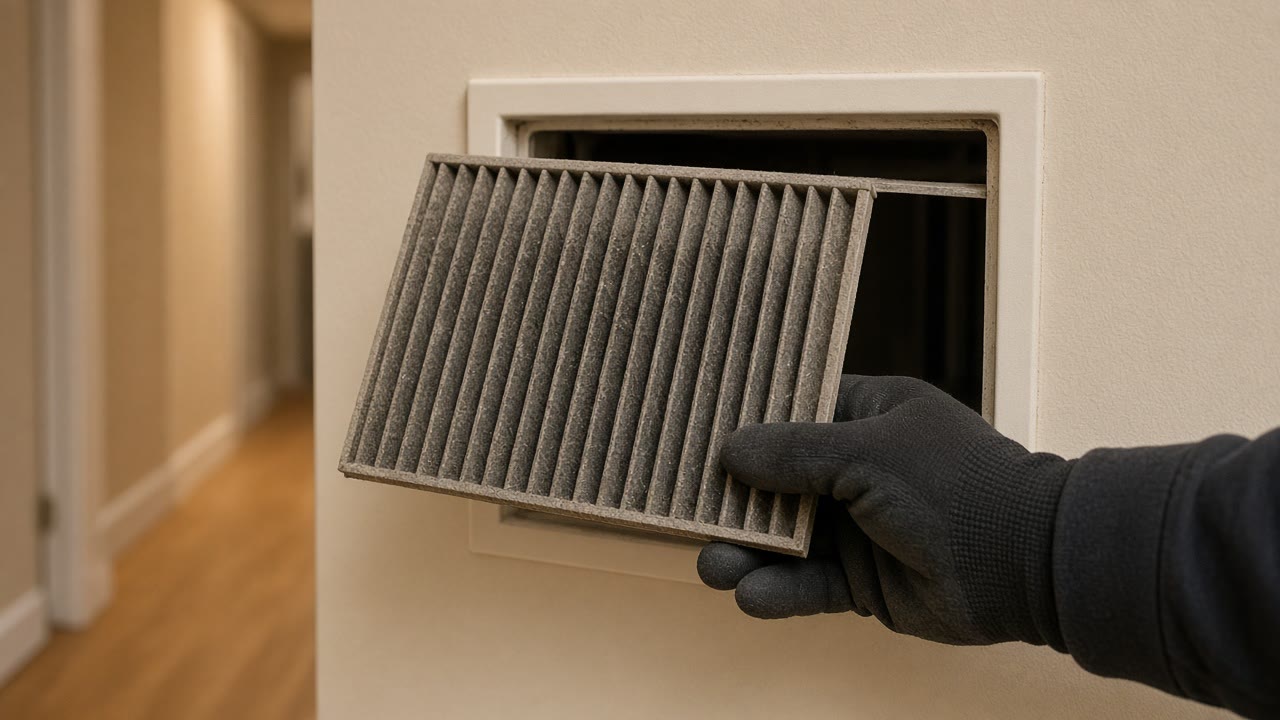
A repairable part, or a furnace that no longer holds the house
These are two questions and they get mixed together constantly. The first is what broke: an igniter, a flame sensor, a pressure switch, a control board. Those are parts, and a part is usually worth fitting. The second is capability, and the ordinance gives you a way to ask it that no sales pitch can argue with. If the house held 68F all last winter and the unit simply stopped one morning, you have a repair. If it has been losing ground on the coldest nights for two seasons running, that is a different conversation and you should have the temperature readings before you have the quote. City housing runs old, a median build year of 1948 plus or minus two years, so the duct and the flue are usually older than the appliance bolted to them.
Describe the coldest night, not an average one
The city judges heating capability against an outside temperature of minus ten degrees Fahrenheit. That is an ordinance test for equipment rather than an engineering design figure, and it is still the clearest way to describe a furnace that keeps up in the fall and gives up in January.
Ask which class of city license the work needs
Syracuse issues mechanical licenses by class through its Board of Mechanical Examiners. Class C covers one and two family homes with furnaces up to 200 MBH input, and Class B goes to 500 MBH. Inside the city line, asking which class somebody holds is a fair question rather than a rude one.
The furnace is rarely the oldest part of the system
29,152 of the city's 67,601 housing units were built in 1939 or earlier and 85.5 percent went up before 1980. Whatever is in the basement now was almost certainly not the first appliance there, so the venting it was connected to belongs in the diagnosis.
Keeping up in November, losing the house in January?
That pattern has a short list of causes. Send the city address and what the thermostat reads on a cold night, and we will get it looked at properly.
Other city systems we arrange repairs on
Furnace questions from inside the Syracuse city line
My Syracuse furnace runs but the house never reaches 68. Is that a repair?
Usually, and it is worth separating from a total failure. A furnace that runs and undershoots is normally short of air, short of fuel or short of heat transfer: a clogged filter, a partly blocked flue, a failing gas valve, a blower turning slowly. Those are parts. What makes the question sharper at a city address is that 68F is not an opinion here. The Property Conservation Code sets it for habitable rooms from September fifteenth to May thirty-first whenever it is below 55F outside, measured two feet from an exterior wall and five feet up. Give us that reading and where you took it, and it is a far more useful opening line than warm or cold.
Does a furnace repair need a city permit?
The city keeps trade work separate from construction work, which is the part most people do not expect. The Central Permit Office at One Park Place, 300 South State Street, lists its residential construction categories and then states that all trade and fire prevention permits, naming HVAC among them, must be obtained separately. A heating job therefore does not ride along on somebody else's building permit here. Ask which permit is being pulled and under which license class, and if you want to check a firm the licensing department number printed on the city's own application is (315) 448-8773.
Tell us what your city furnace is doing
The noise, the smell, the room that stays cold, plus the ZIP code. If it is a flame sensor rather than a furnace, that is what you will hear, with no obligation.