
Boiler Repair in Marcellus, Where the Pipes Went Wherever They Fit
On a retrofitted heating system, finding the problem is usually most of the job, and the pipe runs in these houses were never meant to be looked at.
Boiler Repair quote in Marcellus
Share a few details so we can confirm coverage and arrange the right next step.
Would you rather talk it through? Call (315) 640-3590, answered 24/7.
$100 off your first job
Credited by us on your first booked job.
- One credit per customer per property, on your first booked job.
- Valid through December 31, 2026.
Mention this offer when you book. Full terms.
Help the search, because the search is the cost
There are four things a household knows that a contractor cannot see, and each of them shortens the work. Where pipes have been seen before, in a basement ceiling, under a stair, behind a panel that somebody once cut. Which sections of the system have been worked on, and roughly when. Whether anything has been finished over since, because a boxed-in run is a search area rather than a pipe. And what you have been doing to keep it going: how often you bleed a radiator, top up the pressure or reset the boiler, because the frequency is the diagnosis. Write those down before anybody arrives. On a system that was retrofitted into a 1939 building, that information is worth more than any tool on the van, and it is the difference between a visit that finds the fault and a visit that maps the house.
Tell us where you have seen pipes
Basement ceilings, closets, stair voids and old access panels. In housing that is roughly a third prewar, the run that matters is frequently the one nobody has looked at since it was covered up.
Frequency is information nobody else has
How often you bleed a radiator, add water or press reset separates a one-off from a system that is losing something. Count it and put the number in your first message.
If the appliance is being disconnected, the flue comes with it
The residential code requires an existing chimney or vent to be resized as necessary when an appliance is disconnected from it or connected to it, with NFPA 31 governing oil-fired appliances vented to masonry. 151 Marcellus households heat with oil.
A 1952 village median, and heating added afterwards
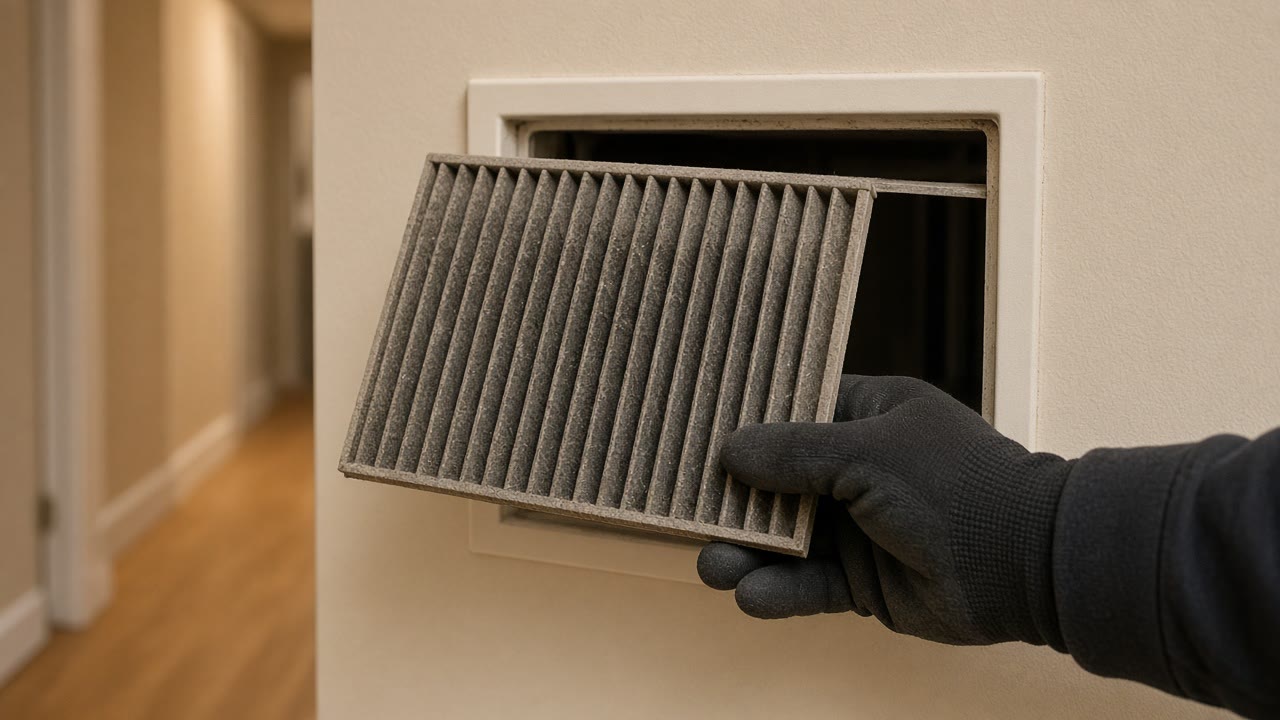
The American Community Survey 2020-2024 five-year estimates put the median year structure built in Marcellus village at 1952, plus or minus 10 years, and in the town of Marcellus at 1963, plus or minus 5 years. 38.4 percent of the village's 1,031 housing units were built in 1939 or earlier and 31.8 percent of the town's 2,789.
Source: US Census Bureau, American Community Survey 2020-2024 5-year estimates, tables B25034, B25035 and B25040, Marcellus town and Marcellus village, Onondaga County, New York, accessed 2026-09-13
Of 2,711 occupied housing units in the town of Marcellus, the American Community Survey 2020-2024 five-year estimates report 1,971 heated with utility gas, 72.7 percent, 151 with fuel oil or kerosene, 5.6 percent, 96 with bottled, tank or LP gas, 3.5 percent, 370 with electricity, 13.6 percent, and 28 with wood. The combined fuel oil and bottled gas share of 9.1 percent is the second highest in Onondaga County. Of the occupied units, 2,126, 78.4 percent, are owner occupied.
Source: US Census Bureau, American Community Survey 2020-2024 5-year estimates, tables B25040 House Heating Fuel and B25003 Tenure, Marcellus town, Onondaga County, New York, accessed 2026-09-13
Section M1801.3 of the Residential Code of New York State applies where an appliance is permanently disconnected from an existing chimney or vent, or connected to an existing chimney or vent during a new installation. M1801.3.1 requires the chimney or vent to be resized as necessary to control flue gas condensation in its interior and to provide the appliance or appliances served with the required draft, with resizing for oil-fired appliances vented to masonry chimneys done in accordance with NFPA 31. M1801.3.2 requires the flue gas passageway to be free of obstructions and combustible deposits, to be cleaned if previously used for a solid or liquid fuel-burning appliance or fireplace, and the flue liner or inner wall to comply. M1801.3.3 requires a cleanout opening in masonry chimneys and M1801.3.4 sets clearance to combustibles.
Source: Residential Code of New York State, sections M1801.3 through M1801.3.4, Existing chimneys and vents, via UpCodes, accessed 2026-09-13
What boiler repair involves
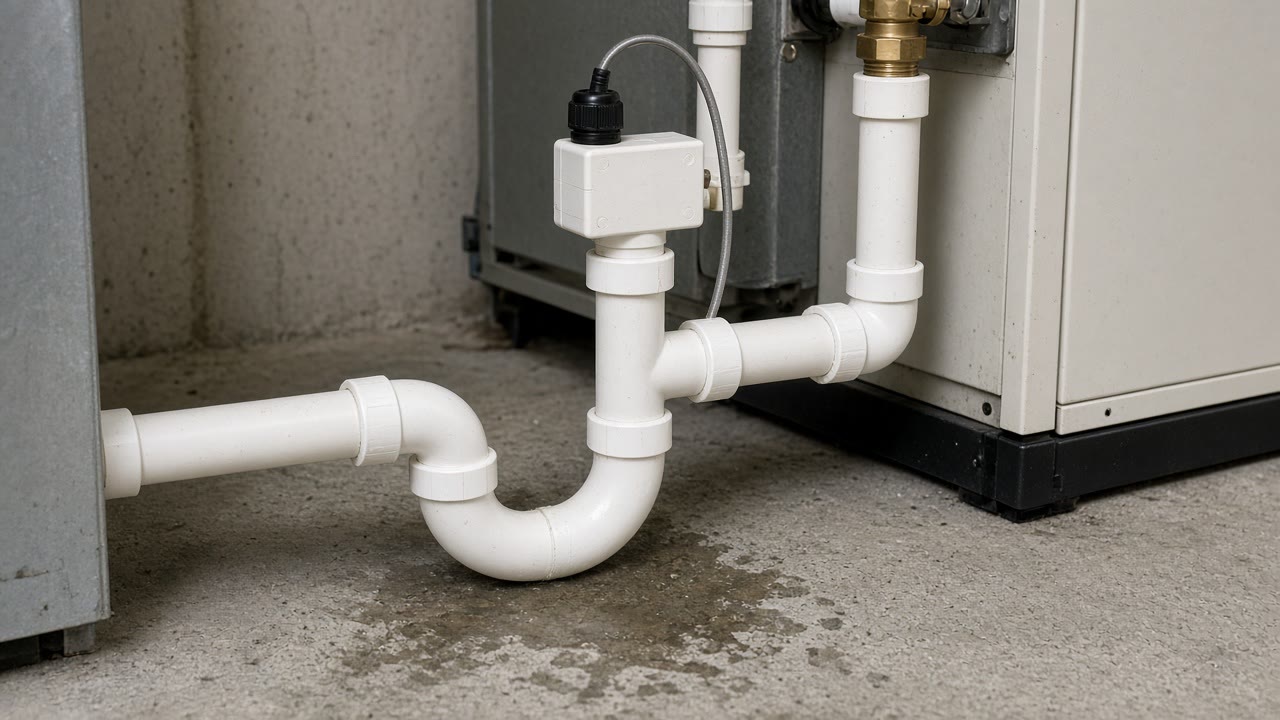
Why access is the variable on a Marcellus hydronic call
Marcellus village has a median year built of 1952 plus or minus ten years with 38.4 percent of its 1,031 units built in 1939 or earlier, and the town around it a median of 1963 plus or minus five with 31.8 percent prewar. Houses of that age did not arrive with central heating, so what is there was threaded through a building that already existed: pipe runs taken through closets and chases, appliances placed where there happened to be room, and later work boxed in behind finishes that were added afterwards. On a leak, an airlock or a dead circuit, that history is where the hours go, and the hours are usually a bigger number than the parts.
Know where the pipes run?
Write it down before anybody arrives. Send the Marcellus address with what you know and the search gets a lot shorter.
Marcellus questions about old pipework and hidden runs
Why does a leak in my old Marcellus house cost so much to find?
Because finding it is the job and fixing it often is not. In housing that is roughly a third prewar on both sides of the village line, central heating was added rather than designed in, so pipework was taken wherever it would fit and much of it has since been finished over: ceilings closed in, closets built around risers, floors laid over runs. Water also travels, so the wet patch is frequently some distance from the leak. What genuinely shortens this is what you know about the building. Anything you can tell us about where pipes have been seen, what has been renovated and when, changes the size of the search area.
I keep adding water to the boiler. How urgent is that?
Urgent enough to investigate rather than to live with. A closed hydronic system should hold the same water for years, so topping it up regularly means it is going somewhere, and every refill brings fresh oxygen and minerals into a system that was never meant to see them. That accelerates corrosion in exactly the buried and boxed-in sections that are hardest to reach later. Note how often you are doing it and how much you add, and tell us both. On a retrofitted system in an older Marcellus house, that record is often the most useful thing anybody brings to the first visit.
Tell us what the Marcellus boiler is doing
How often you top it up, what has been renovated, village or town, and the ZIP code. There is no obligation.