
Boiler Repair in Fayetteville, and Where the Alarm Belongs
The code names the places people put a carbon monoxide alarm for convenience, and rules them out. Two of them are in most basements.
Boiler Repair quote in Fayetteville
Share a few details so we can confirm coverage and arrange the right next step.
Would you rather talk it through? Call (315) 640-3590, answered 24/7.
$100 off your first job
Credited by us on your first booked job.
- One credit per customer per property, on your first booked job.
- Valid through December 31, 2026.
Mention this offer when you book. Full terms.
The three things to settle on a hydronic visit here
First the fault, in the usual order: one cold emitter is a valve, a vent or trapped air, a whole cold house is the circulator, the water level or the controls, and a boiler firing while nothing warms is circulation rather than combustion. Second the flue, because in a village where a fifth of the housing predates 1940 the chimney has often outlived the appliance in front of it. Third the detection, which is where the code detail actually helps you. An alarm sitting in still air in a corner, or clipped beside a return air grille because that was the convenient outlet, is in one of the places the code specifically names. The Fire Code also expects alarms to take primary power from the building wiring where a commercial supply serves it, with battery backup, and to be listed and labeled as complying with UL 2034 or CAN/CSA 6.19, with combination smoke and carbon monoxide alarms permitted as an alternative.
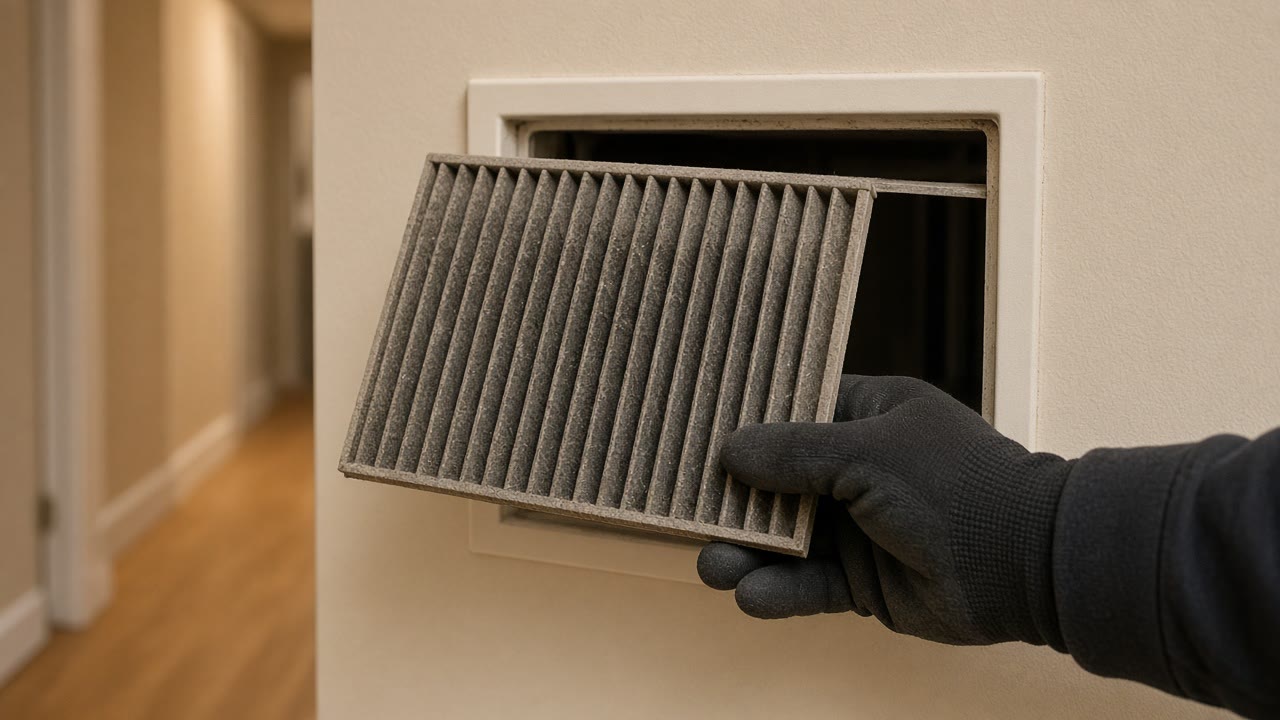
Move it away from the return grille
The code requires detectors to be sited away from fresh air returns, ducts, turbulent air and dead air spaces, because all of those can carry the gas past the sensor rather than to it. A convenient outlet is often exactly the wrong place.
Where the code and the manufacturer disagree, the stricter wins
Section 915.3 says that where the code and the device manufacturer's instructions conflict on location, the more restrictive governs. That is a useful sentence when somebody tells you the box said it was fine.
The flue is part of a boiler quote in this village
With 434 of 2,092 units built in 1939 or earlier, masonry chimneys serving newer appliances are common here. Ask for the state of the flue to be recorded alongside whatever component failed.
915.3.1, 434 prewar homes, and the county's highest gas share
Section 915.3.1 of the Fire Code of New York State requires carbon monoxide detection to be installed in residential and commercial buildings in all rooms, occupiable space, dwelling units, sleeping areas and sleeping units that contain a fuel-burning appliance. Section 915.3 adds that all carbon monoxide detectors must be installed in locations that avoid dead air spaces, turbulent air spaces, fresh air returns, open windows, HVAC ducts, closed doors and other obstructions that could prevent carbon monoxide from reaching the detector, and that where the code and the device manufacturer disagree on location, the more restrictive governs.
Source: Fire Code of New York State 2020, Section 915.3 and 915.3.1, Detection Locations, via UpCodes, accessed 2026-09-13
The American Community Survey 2020-2024 five-year estimates put the median year structure built in Fayetteville village at 1961, plus or minus 5 years. Of 2,092 housing units, 434 were built in 1939 or earlier, 20.7 percent, 1,616 before 1980, 77.2 percent, and 170, 8.1 percent, in 2000 or later.
Source: US Census Bureau, American Community Survey 2020-2024 5-year estimates, tables B25034, B25035, B25040 and B25003, Fayetteville village, New York, accessed 2026-09-13
The Fire Code of New York State requires carbon monoxide alarms to take their primary power from the building wiring where that wiring is served from a commercial source, with battery backup when primary power is interrupted, and permanent wiring without a disconnecting switch other than overcurrent protection. Exceptions allow an alarm powered by a 10 year battery in residential and commercial buildings without commercial power, and in existing residential and commercial buildings unless the Uniform Code otherwise requires. Alarms must be listed and labeled as complying with UL 2034 or CAN/CSA 6.19. A combination carbon monoxide and smoke alarm is an acceptable alternative.
Source: Fire Code of New York State 2020, Sections 915.4, 915.4.1.1 and 915.4.1.2, via UpCodes, accessed 2026-09-13
Of 1,845 occupied housing units in Fayetteville village, the American Community Survey 2020-2024 five-year estimates report 1,531 heated with utility gas, 83.0 percent, the highest utility gas share of any place in Onondaga County, with 285 on electricity, 15.4 percent, and 20 on bottled, tank or LP gas, 1.1 percent. No units are recorded on fuel oil. Of the occupied units, 1,418, 76.9 percent, are owner occupied.
Source: US Census Bureau, American Community Survey 2020-2024 5-year estimates, tables B25040 House Heating Fuel and B25003 Tenure, Fayetteville village, New York, accessed 2026-09-13
What boiler repair involves
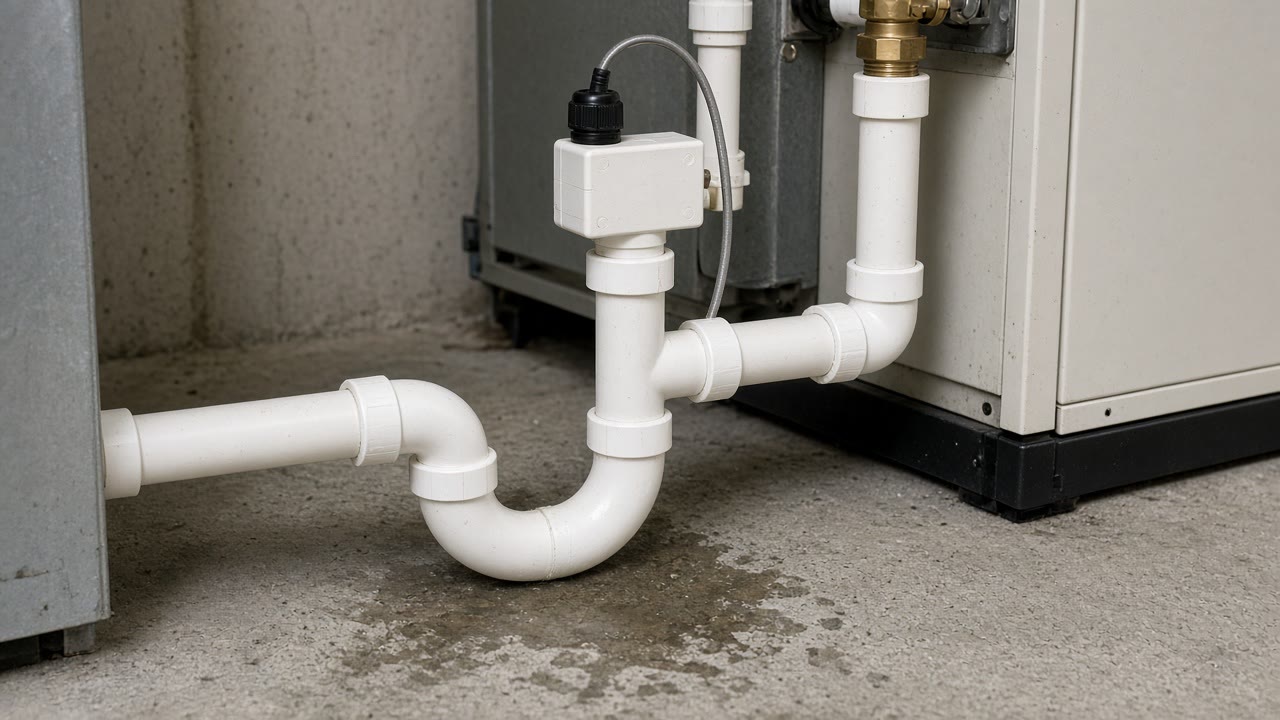
The alarm rules that apply to a Fayetteville boiler room
434 of Fayetteville's 2,092 housing units were built in 1939 or earlier and the village has the highest utility gas share in Onondaga County, so a basement here very often contains a fuel-burning boiler and a set of decisions about detection that most people get wrong by accident. Section 915.3.1 of the Fire Code requires carbon monoxide detection in all rooms, occupiable spaces, dwelling units, sleeping areas and sleeping units containing a fuel-burning appliance. Section 915.3 goes further and names what to avoid: dead air spaces, turbulent air, fresh air returns, open windows, ducts, closed doors and other obstructions that could prevent the gas from reaching the detector.
Boiler work booked? Ask about the alarm too
It takes a minute while somebody is already in the room. Send the Fayetteville address and the fault and we will arrange both.
Fayetteville questions about boilers and detection
Where should the carbon monoxide alarm go in my Fayetteville basement?
In the room that contains the boiler, and away from four specific places the code calls out. Section 915.3.1 requires detection in all rooms and occupiable spaces containing a fuel-burning appliance. Section 915.3 requires detectors to be installed in locations that avoid dead air spaces, turbulent air spaces, fresh air returns, open windows, ducts, closed doors and other obstructions that could prevent carbon monoxide reaching the device. And where the code and the manufacturer's instructions differ on placement, the more restrictive of the two governs. If yours is tucked in a corner behind the stairs or clipped next to the return duct, it is worth moving.
Does the alarm need to be wired in, or is a battery one enough?
The Fire Code requires carbon monoxide alarms to take primary power from the building wiring where that wiring is served from a commercial source, with battery backup for when the primary power is interrupted, and permanent wiring with no disconnecting switch other than overcurrent protection. There are exceptions: an alarm powered by a ten year battery is permitted in buildings without commercial power, and in existing buildings unless the Uniform Code requires otherwise. Whatever the power source, it has to be listed and labeled as complying with UL 2034 or CAN/CSA 6.19, and a combination smoke and carbon monoxide alarm is an acceptable alternative.
Tell us what the Fayetteville boiler is doing
Cold radiators, short cycling, or no fire at all, plus the ZIP code. There is no obligation either way.